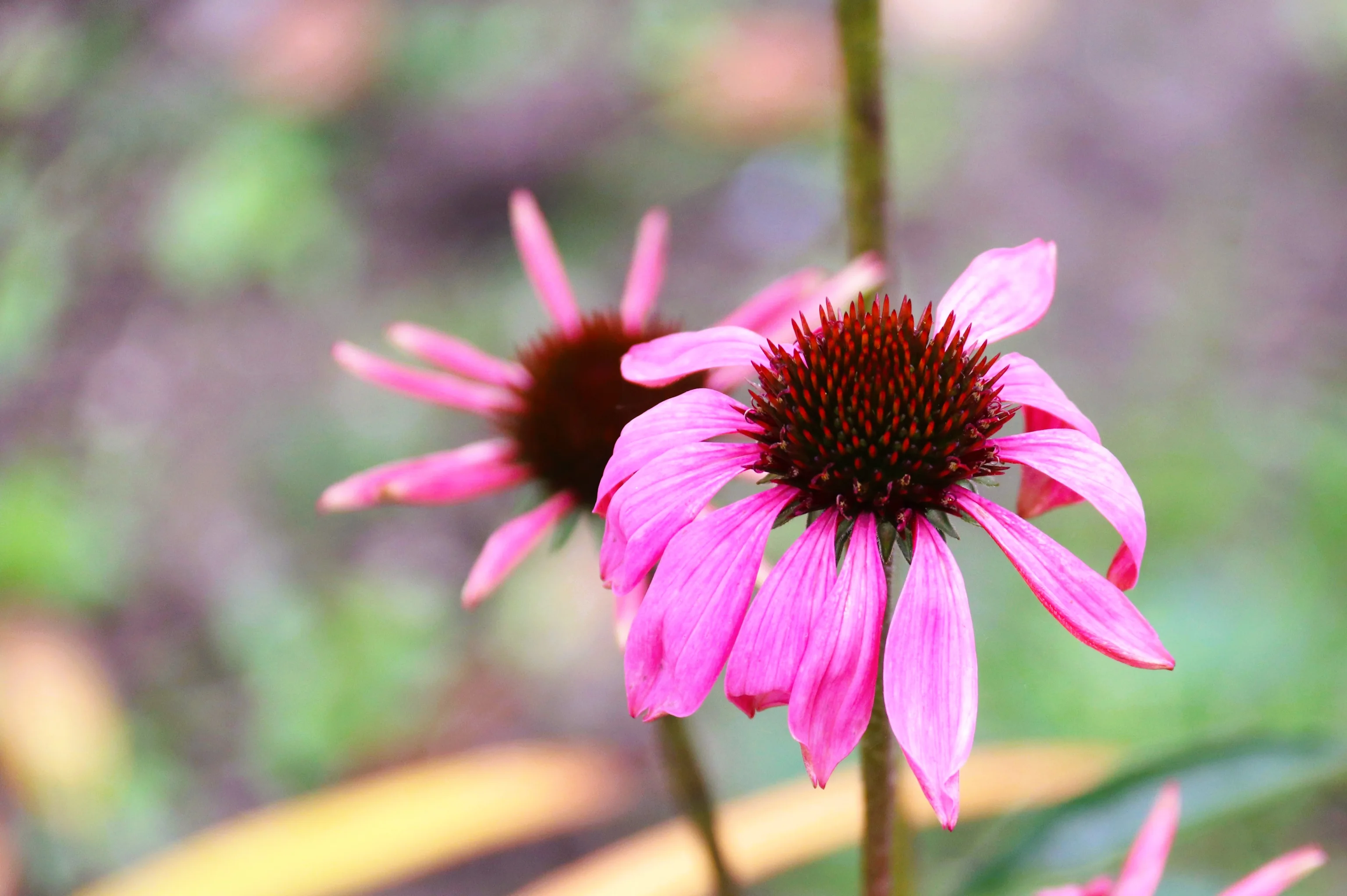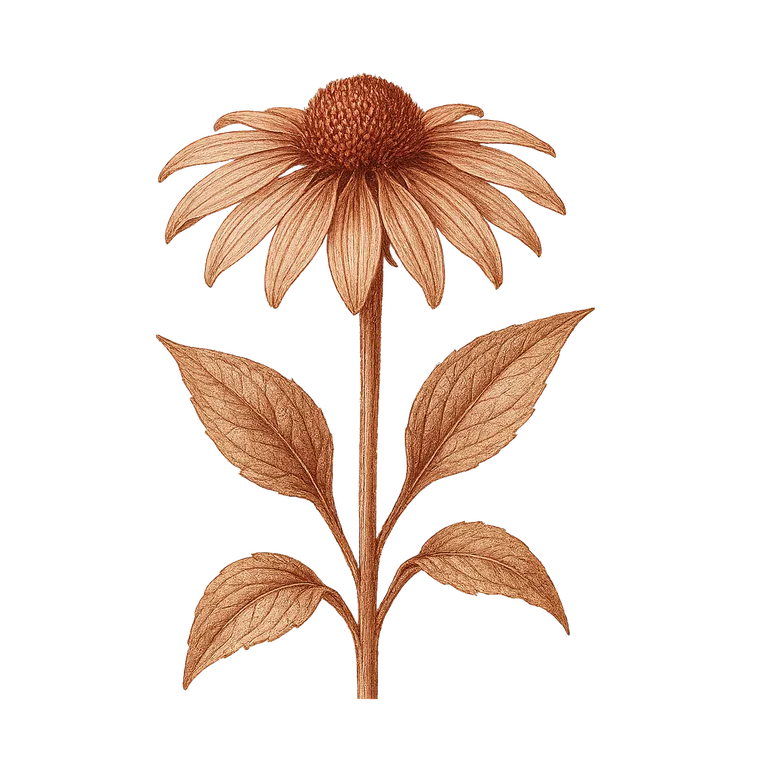
A purple coneflower looks like one flower, but it is many. The cone in the middle is a dome packed with tiny flowers. The purple petals around the edge are flowers too, of a different kind that makes no seed.
Bumblebees, honey bees and butterflies such as monarchs and swallowtails all visit it.
When the seeds ripen, the cone becomes spiky, which gave the plant its scientific name. Echinacea comes from the Greek word for a sea urchin or hedgehog. Finches eat the seeds and help spread them.
It grows wild in the east of North America, on prairies and in open woodland. It stands up to a metre and twenty tall. Once established, it can survive a drought.
Native Americans used it as medicine for many illnesses, and it is still sold today as a remedy for colds.