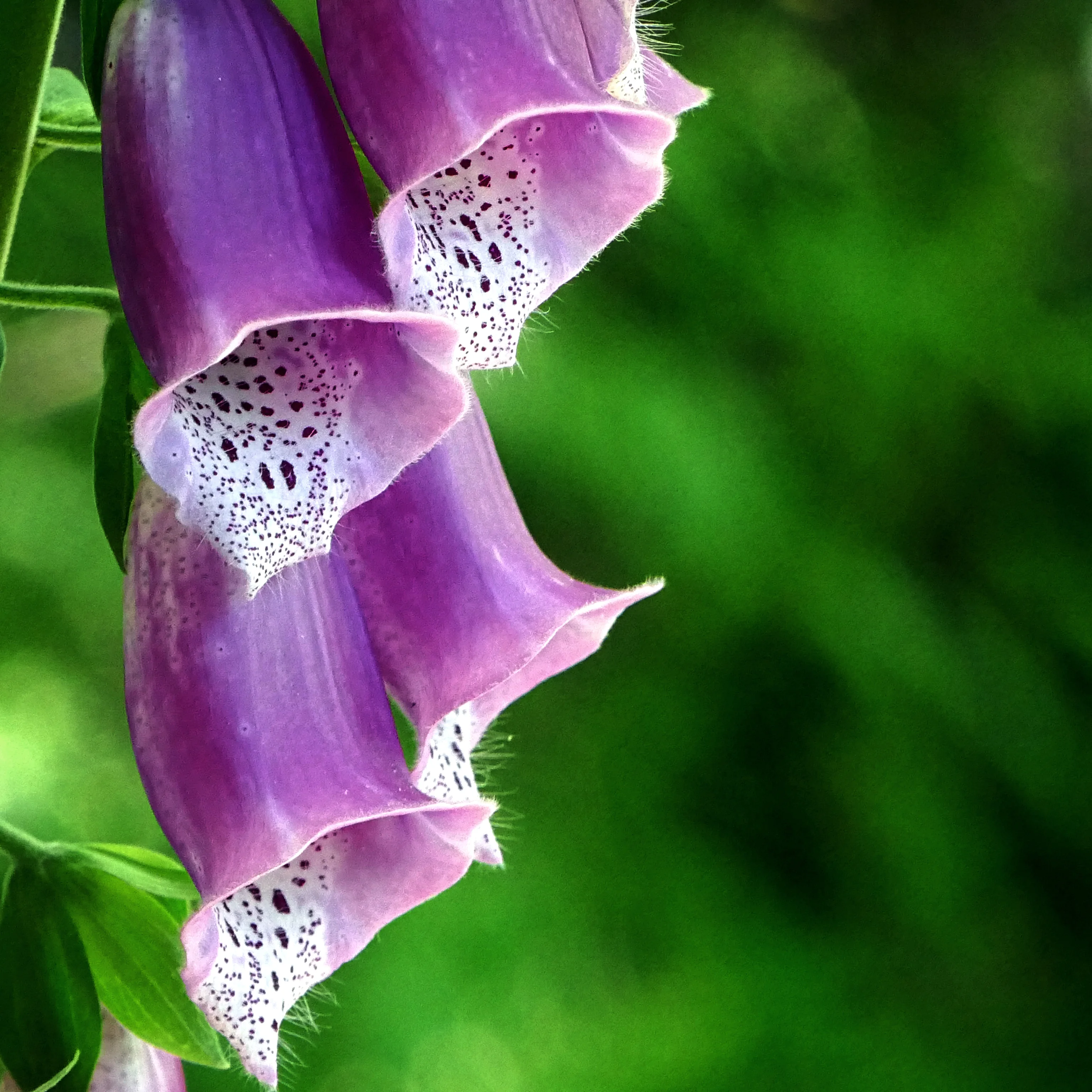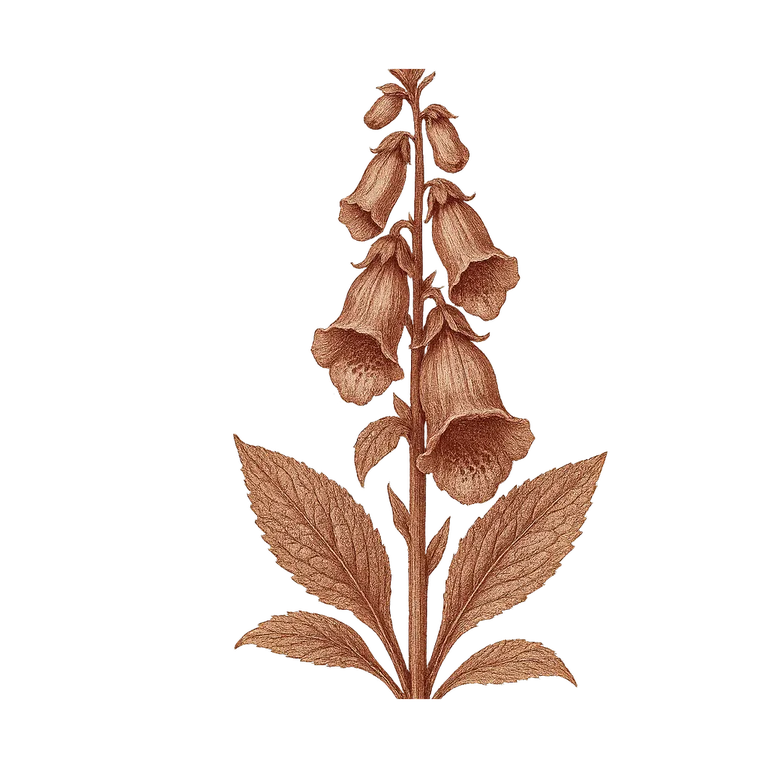
Every part of the foxglove is poisonous. Its leaves, flowers and seeds can slow the heartbeat, and in a large dose they can stop the heart.
Yet the same substances make a medicine. Drugs for failing hearts are made from foxglove leaves. The dose that helps is not far from the dose that harms, so it must be used with great care.
An English doctor, William Withering, was the first to study it properly. He noticed it made a weak heart beat more slowly and strongly, and published his findings in 1785.
The foxglove grows wild in western Europe and lives for two years. In its first year it makes a low rosette of leaves. In its second it sends up a spike of flowers one or two metres tall, then dies.
Each flower is a spotted tube. Bumblebees crawl right inside to reach the nectar. Its name comes from the Old English foxes glofa, the fox's glove.