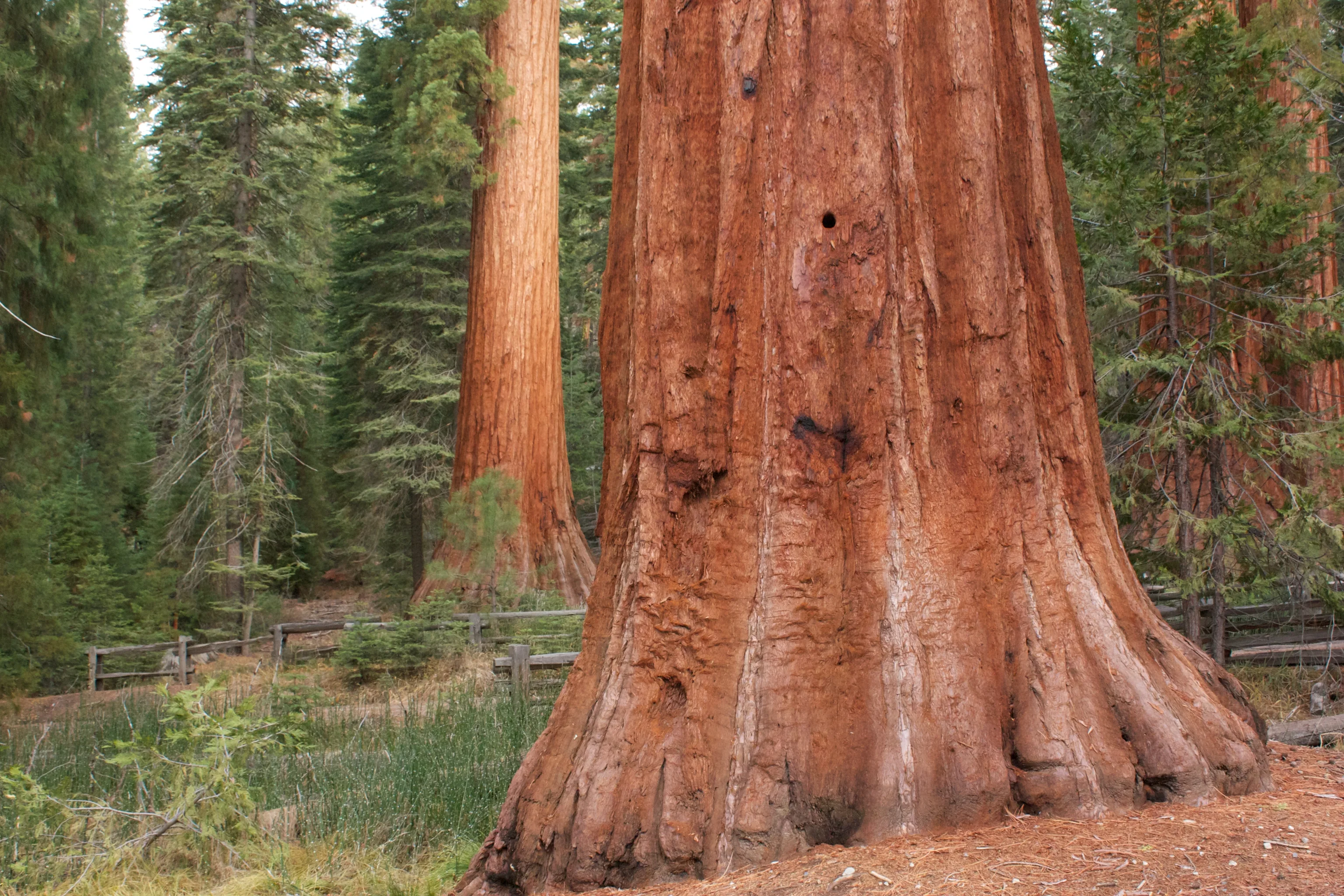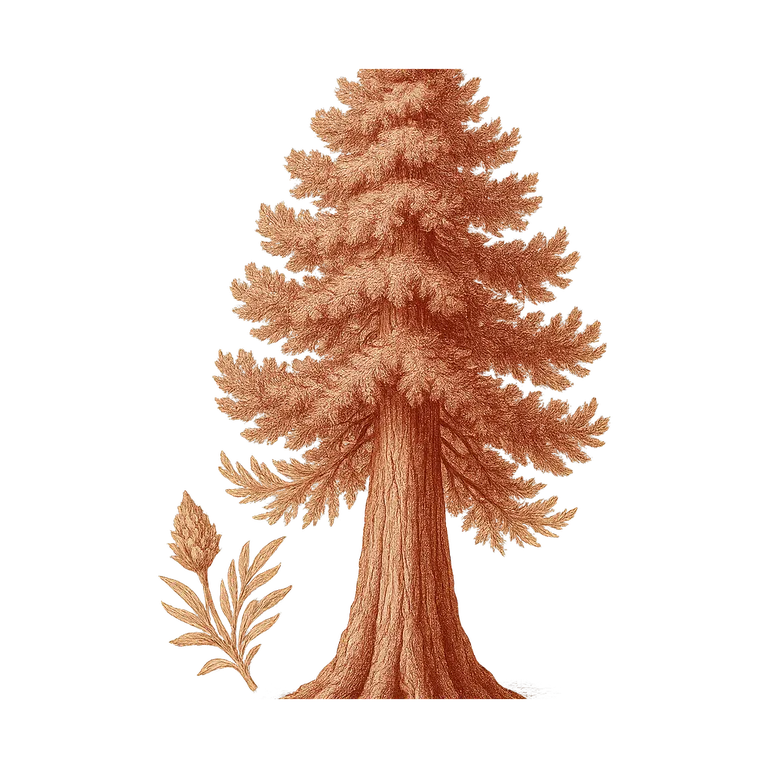
The giant sequoia, the biggest tree on Earth, needs fire to raise its young.
It keeps its seeds in closed cones, sometimes for twenty years. The seeds are tiny, each the size of a flake of oatmeal. When a fire passes below, the heat dries the cones. Within a week or two they open and rain seeds down. The giant sequoia is a redwood, a cousin of the coast redwood, which is taller but slimmer.
The seeds land on soil the fire has just burnt bare, the only kind they can sprout in. The fire has also cleared away the smaller trees that would shade a seedling.
The parent survives inside fibrous bark up to forty-six centimetres thick. The rings of old sequoias still show the scars of past fires. For two thousand years, a fire came through every six to thirty-five years.
Giant sequoias grow wild only on the western slopes of the Sierra Nevada, in California. They can live more than three thousand years. One of them, the General Sherman tree, is the largest single tree in the world by volume.