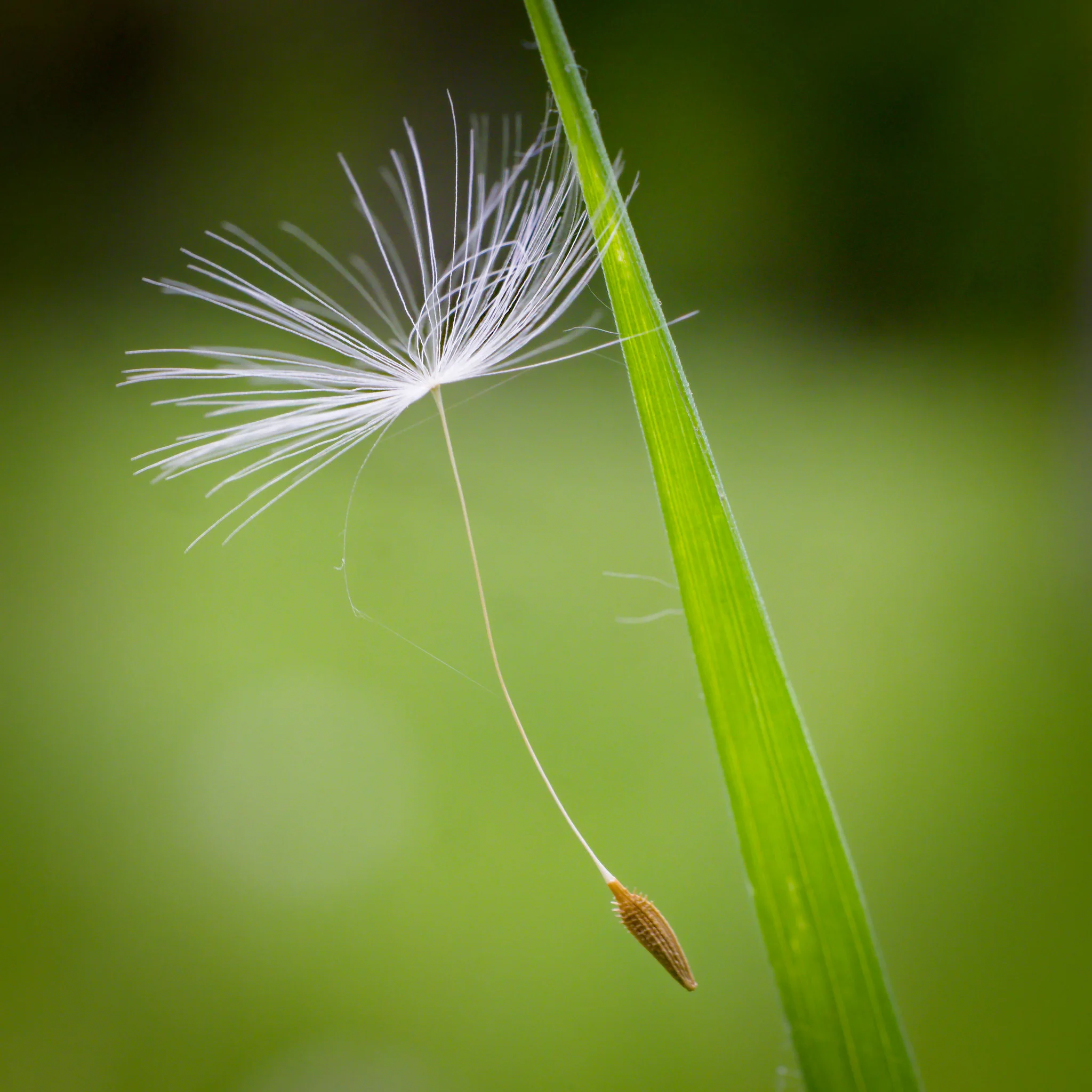
A dandelion seed floats on a tiny parachute of fine hairs. In 2018 scientists discovered how a parachute full of gaps can work. Air flowing through the hairs forms a spinning ring of air just above them, and the ring helps hold the seed up.
Most seeds land within a few metres, but some can travel a hundred kilometres on the wind. The dandelion is a weed to many gardeners, but its leaves, roots and flowers can all be eaten.
Many dandelion seeds are made without pollination, so each seedling is an exact copy of its parent.
The yellow flower head is a crowd of tiny flowers. When they finish, it becomes a fluffy ball of seeds, often called a clock.
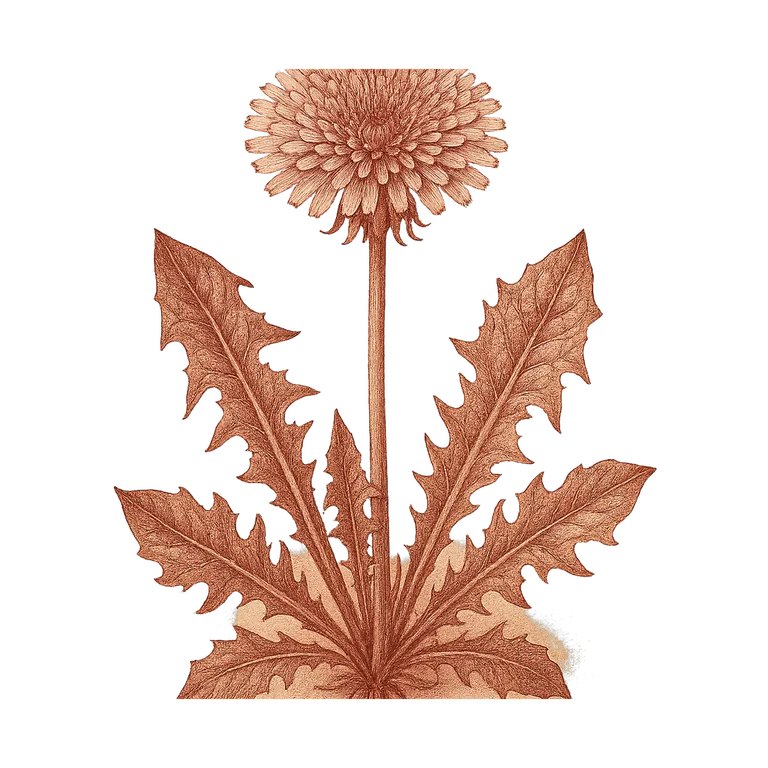
The name comes from the French dent de lion, meaning lion's tooth, after its jagged leaves. People eat the leaves in salads, make wine from the flowers and roast the roots to make a drink like coffee.