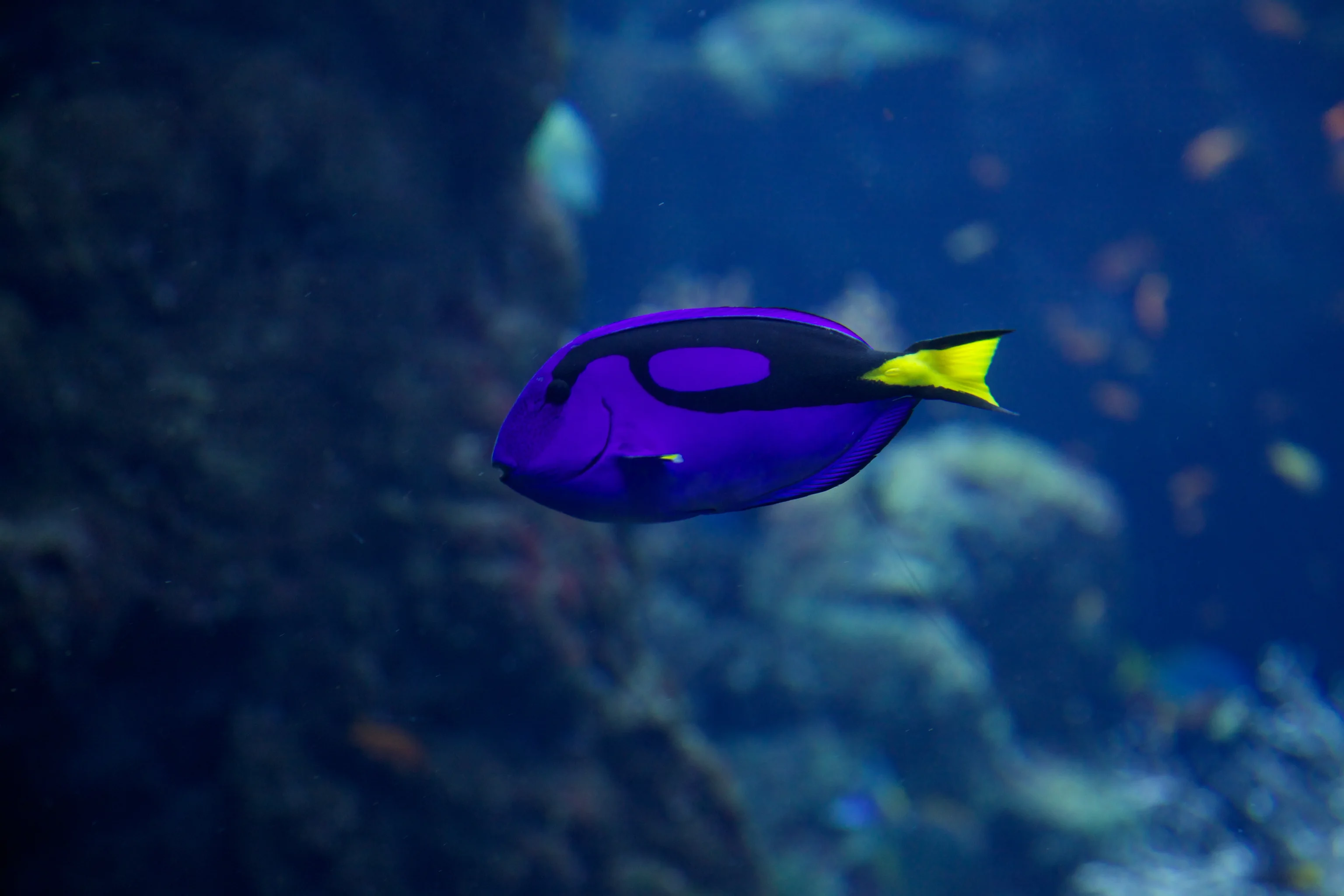
Almost every blue tang in an aquarium was caught wild on a reef. That is surprising for one of the most popular sea fish in the world. People tried for years to breed them, but the first success came only in 2016, after six years of work.
That was the same year as Finding Dory, a film about a forgetful blue tang. Many people feared it would make children demand one. Online searches for the fish rose for a few weeks, but imports did not really increase. The blue tang is not poisonous, but a sharp spine near its tail can cut.
On the reef, young blue tangs shelter among branching corals. Adults graze on algae, which helps the coral, since too much algae can smother it.
It is royal blue with a yellow tail, but it is not as gentle as it looks. On each side of its tail is a sharp spine, like a blade. When the fish lashes its tail, it can cut deep. That is why its family is called surgeonfish.