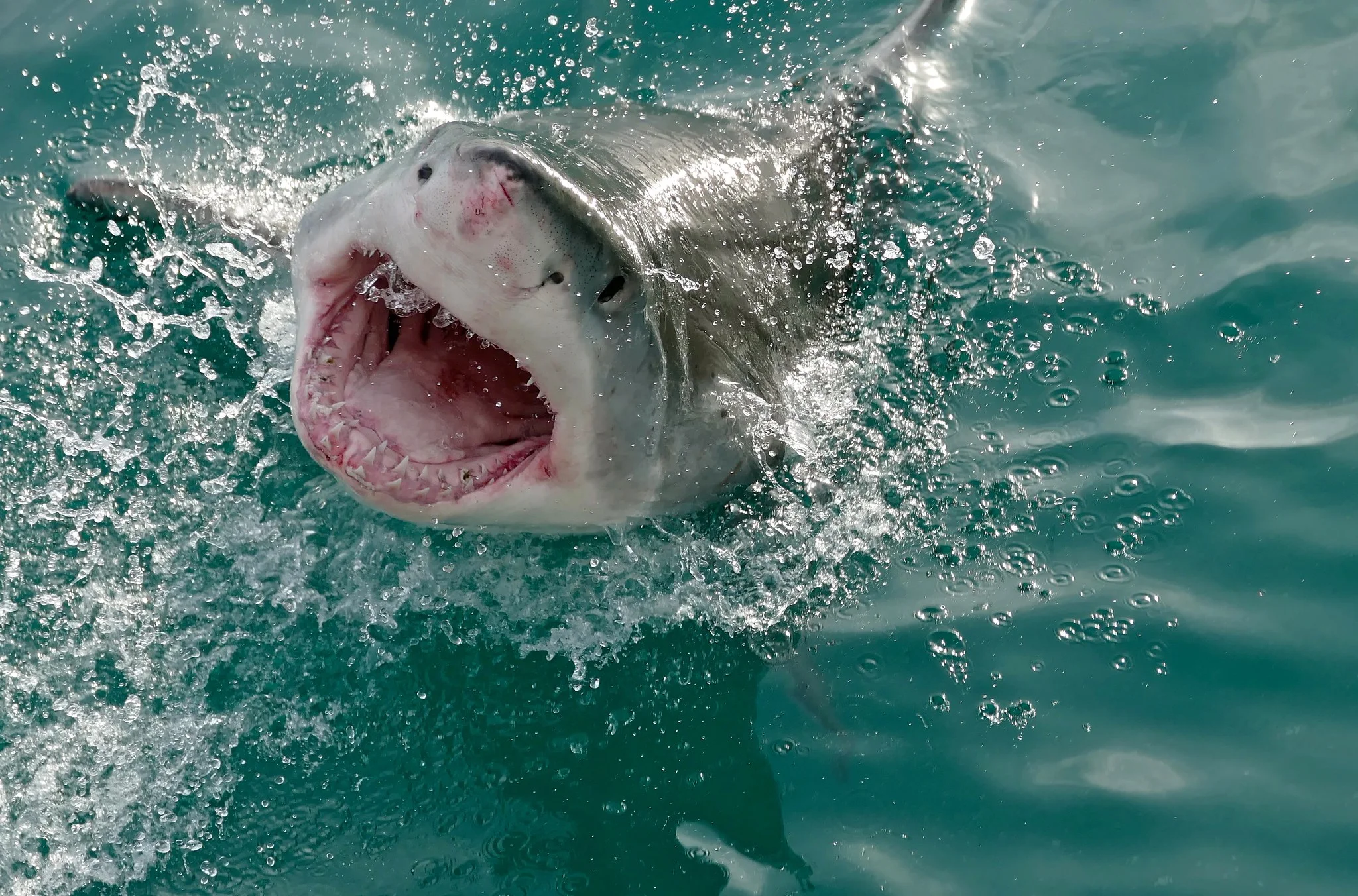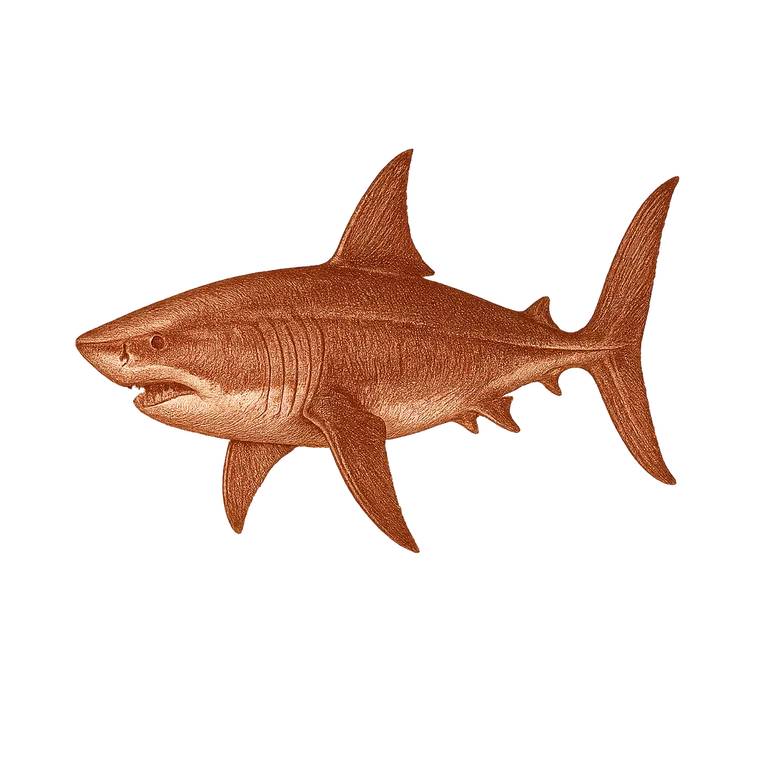
The great white shark is the largest hunting fish in the sea. It can grow to about six metres, live more than seventy years, and leap clean out of the water after a seal.
Its teeth grow in rows, about three hundred at a time. When a front tooth breaks or falls out, one from the row behind moves forward to take its place. A great white shark is much smaller than the big whales. The largest fish is the whale shark.
Very little hunts a great white. The exception is the orca, or killer whale. The first attack anyone saw was off California in 1997, when an orca killed a white shark three or four metres long.
Off South Africa, orcas now hunt white sharks in small groups. They seem to flip a shark onto its back, which makes sharks go limp for a while. Then they take the liver, which is large and rich in fat, and leave the rest.
White sharks seem to know the danger. When orcas arrive, they leave the area, sometimes for months.
The 1975 film Jaws taught the world to fear this shark. Peter Benchley, who wrote the book it came from, later regretted it and spent years working to protect sharks.