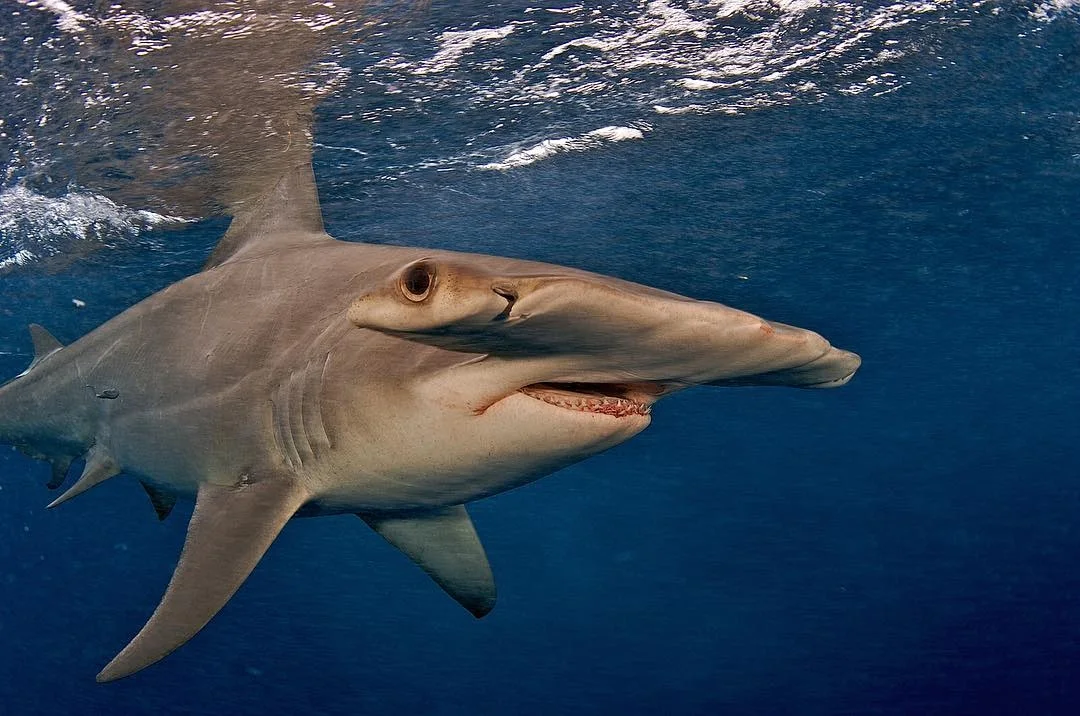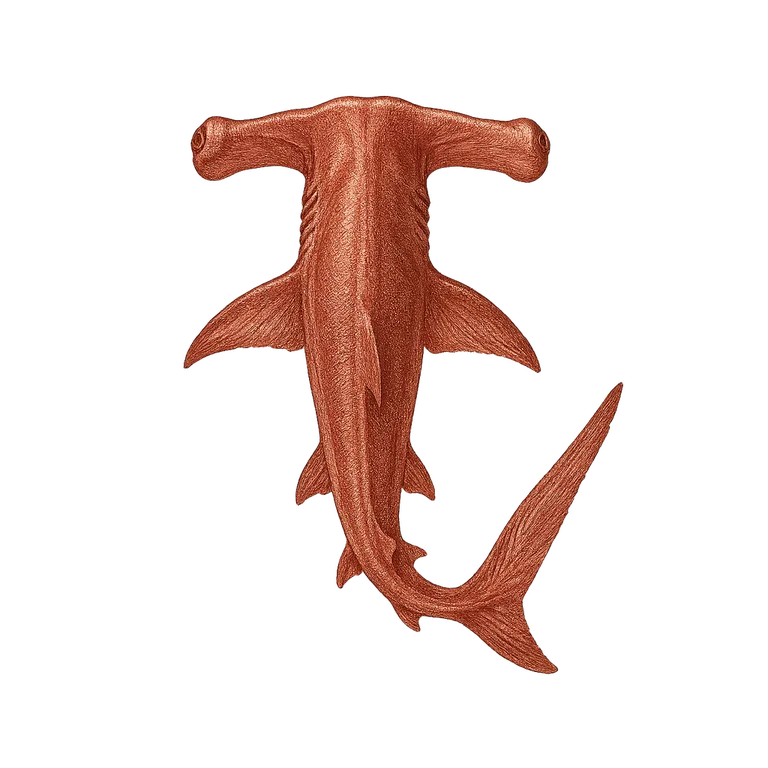
The great hammerhead's strange head is built for finding stingrays, its favourite food. Stingrays bury themselves in sand, but they cannot hide their faint electrical signals.
The underside of the hammer is covered in sensors that pick up those signals. The shark swims low and sweeps its wide head over the sea floor, like someone with a metal detector. Great hammerheads have rarely attacked people, and no one is known to have been killed by one.
When it finds a ray, it uses its head as a weapon. In the Bahamas, a hammerhead was seen pinning a stingray to the sea floor with its head. Then it bit off the ray's wings so it could not escape.
The ray's sting does not seem to bother it. One shark caught off Florida had ninety-six stingray spines stuck in and around its mouth.
It often swims tilted on its side, which a 2016 study found saves about a tenth of its energy. The great hammerhead is critically endangered, mainly because it is caught for its large fins.