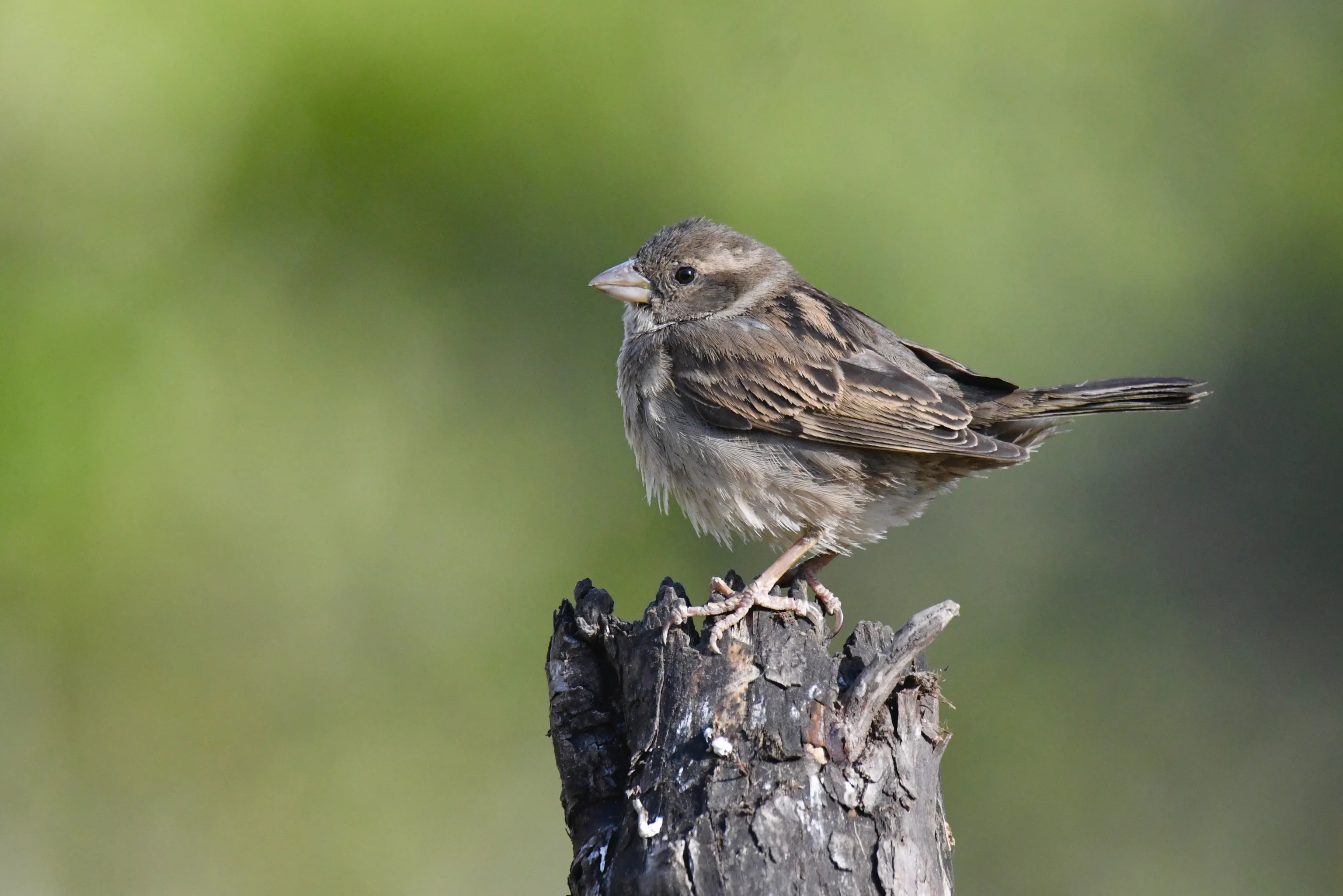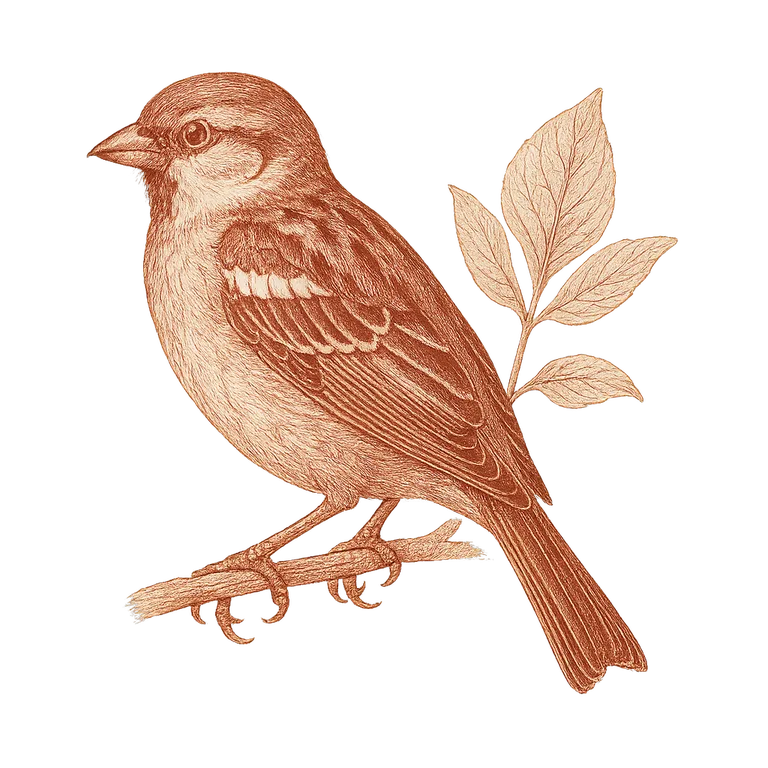
A pair of house sparrows once raised a family in an English coal mine, 640 metres underground. Another was seen feeding at night on the viewing deck of the Empire State Building.
The house sparrow goes wherever people go. It began in the Middle East and spread with farming, and it has lived beside people for about ten thousand years. No wild bird is found in more of the world. A house sparrow is not a finch, though they look alike. It belongs to the Old World sparrow family.
People helped it spread. In 1852 sparrows from England were released in New York to eat moth caterpillars that were stripping the trees. From there they spread across North America.
It has learned our habits. It nests in gaps in buildings and inside warm street lights. Some have even learned to open the automatic doors of supermarkets.
There are about 1.4 billion house sparrows in the world. Yet in Britain there are now about two thirds fewer than in the 1970s, and they have almost vanished from central London. Nobody is sure why.