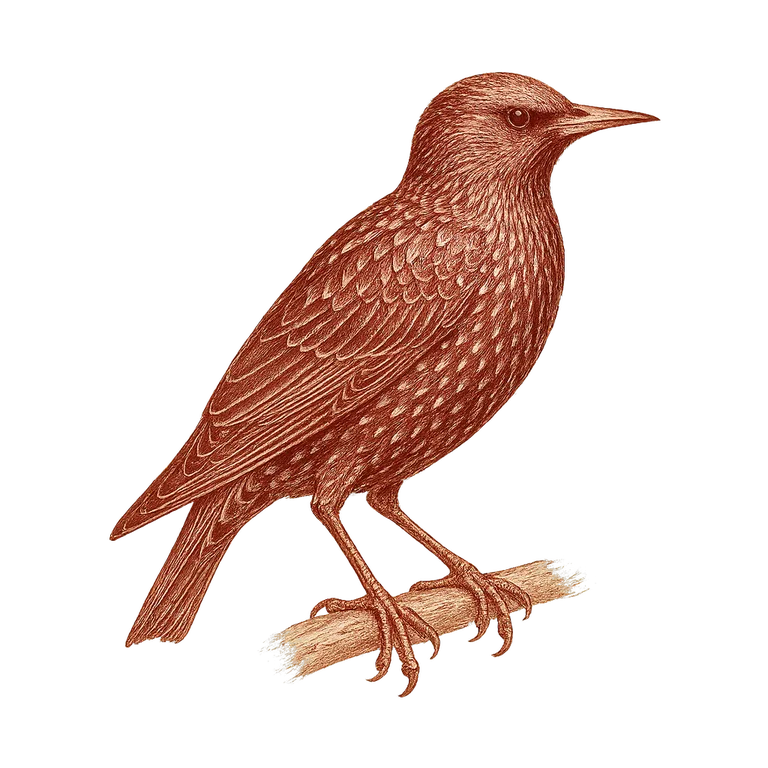
In May 1784 the composer Mozart bought a starling in a shop in Vienna. In his notebook he wrote down the price. Next to it he wrote out the tune the bird was singing.
It was his own. It was the opening of the last part of a piano concerto he had finished only a few weeks before. The bird had one note wrong and held another too long. Mozart wrote underneath it, that was beautiful. The starling is a songbird, and a skilled mimic.
Nobody knows how the bird learned a tune that new. Perhaps Mozart taught it in the shop himself. Starlings are brilliant mimics, and a male's song is full of borrowed sounds.
Mozart kept the bird for three years. When it died, he held a funeral in his garden. His friends sang, and he read a poem he had written for it.
Starlings are famous for something else too. At dusk, huge flocks wheel across the sky in shifting shapes, each bird matching the moves of its nearest neighbours.