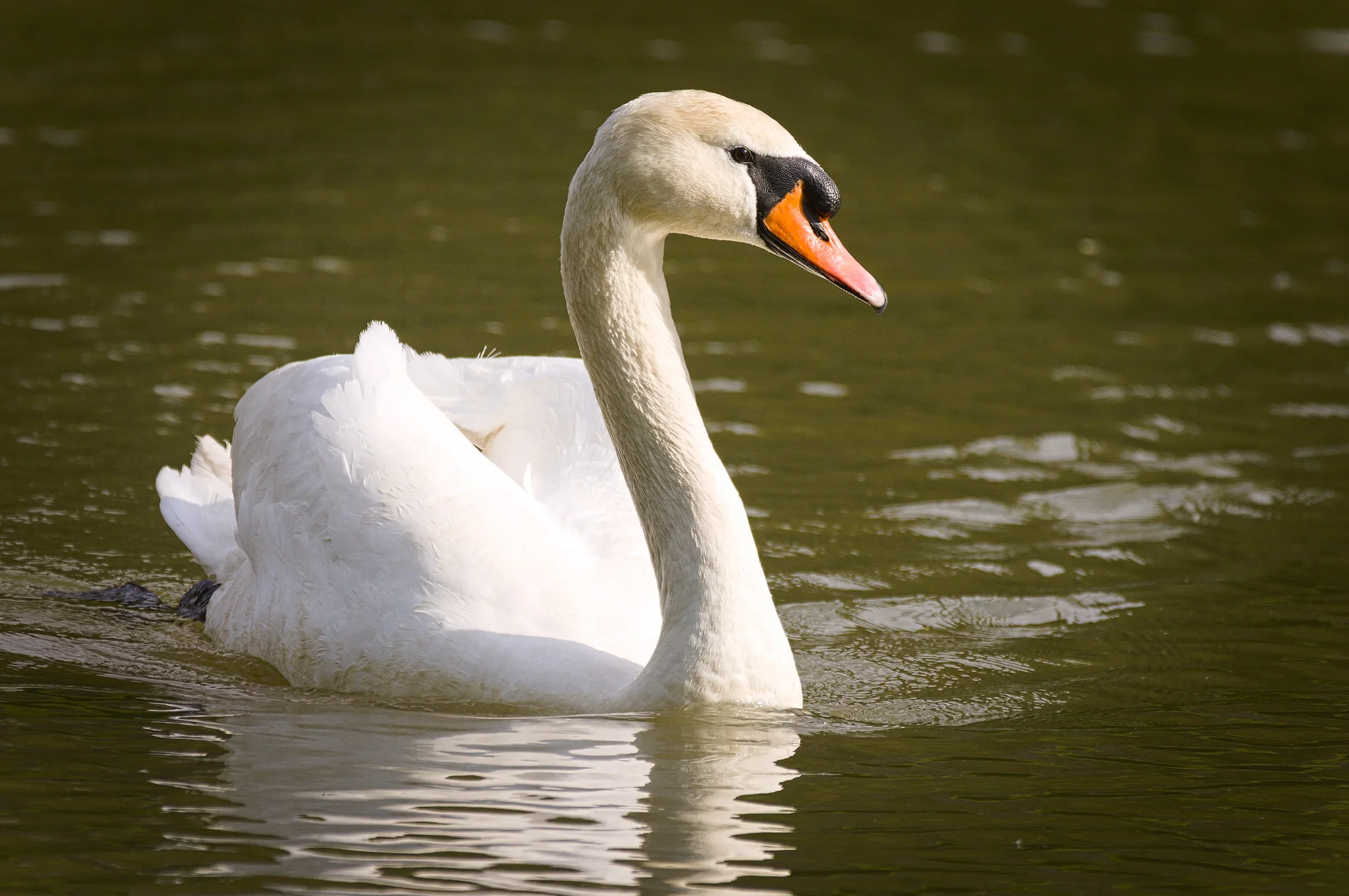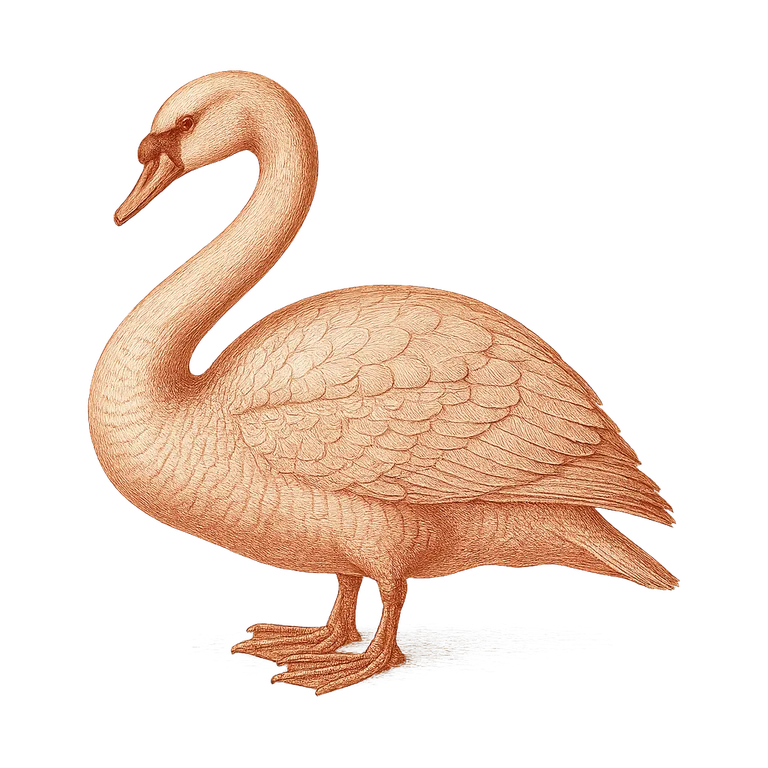
In Britain, the King owns the swans. More exactly, he has the right to every unmarked mute swan on open water. The right goes back to the Middle Ages.
Once a year, the right is still put to use. In the third week of July, rowers in red uniforms set off up the River Thames in wooden boats. With them go the crews of two old London trade companies, the Vintners and the Dyers, who own swans too. A swan is not a goose, though both belong to the same family as ducks.
For five days they catch every family of swans they meet and count them. It is called swan upping, and it has been done since the twelfth century. Today the young swans, called cygnets, are weighed, measured, checked for injuries and ringed, then released.
Long ago, swans were marked by nicks cut in their beaks. There are still pubs called The Swan with Two Necks, which is said to be a mistake for two nicks.
The mute swan is not really mute. It hisses when angry, and its wings make a loud humming as it flies.