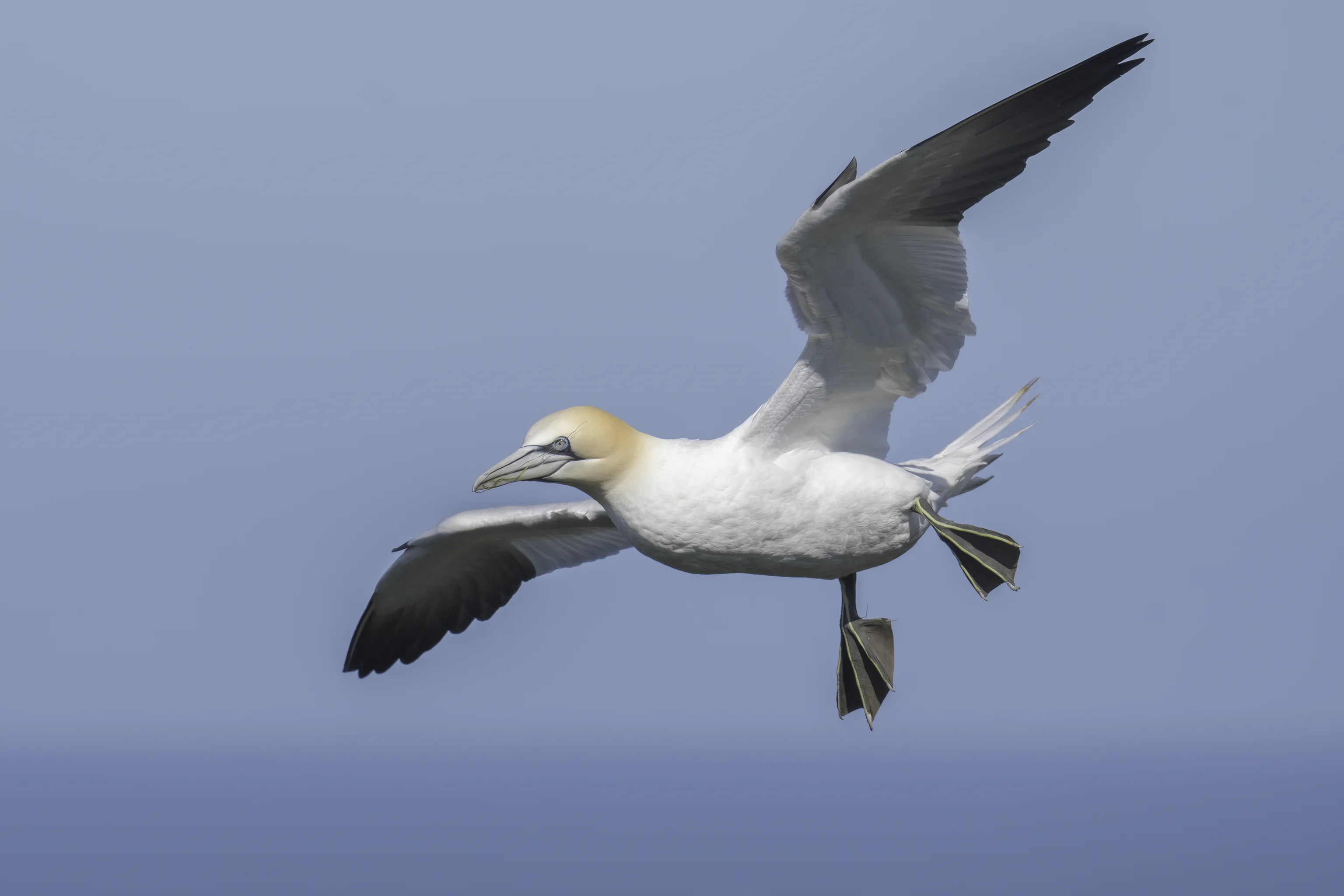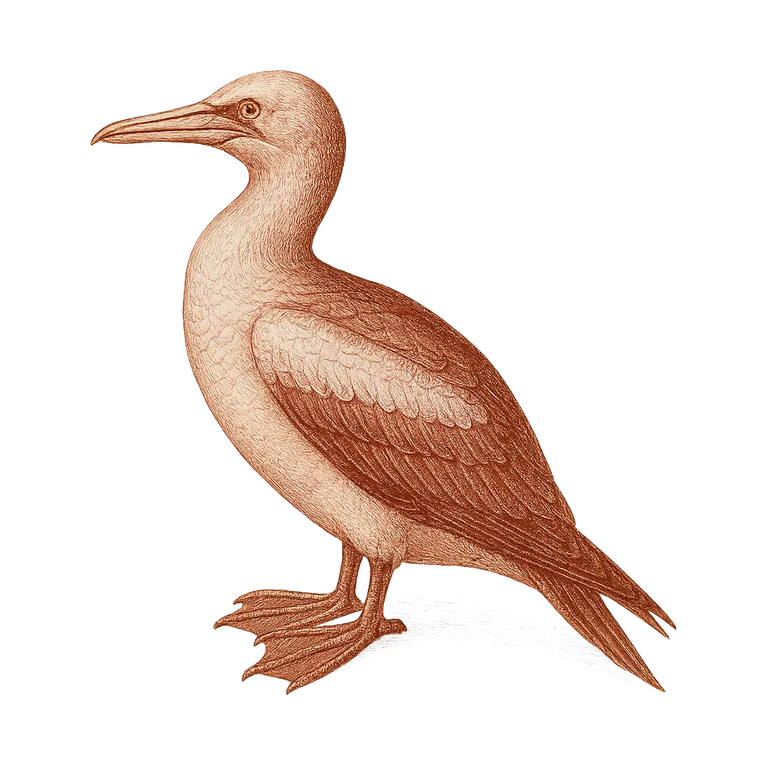
The northern gannet hunts by falling out of the sky. It flies up to seventy metres above the sea, watching for fish. Then it folds its wings and drops, hitting the water at up to a hundred kilometres an hour.
Its body is built to survive the impact. Its nostrils are inside its beak, so no water rushes in. A tough third eyelid protects its eyes. Air sacs under its skin cushion the blow, like bubble wrap. A gannet is not a gull. It is a seabird of the booby family.
The dive takes it about eleven metres down, and it swims deeper after the fish. Gannets eat so eagerly that gannet has become a word for a greedy person.
It is the largest seabird of the North Atlantic, with wings nearly two metres across. Its biggest colony is on Bass Rock, an island off Scotland, with more than seventy-five thousand nests. Its scientific name, bassanus, comes from the rock.
Each pair has a single egg and keeps it warm under their webbed feet. When one bird returns to the nest, the pair greet each other by fencing with their beaks.