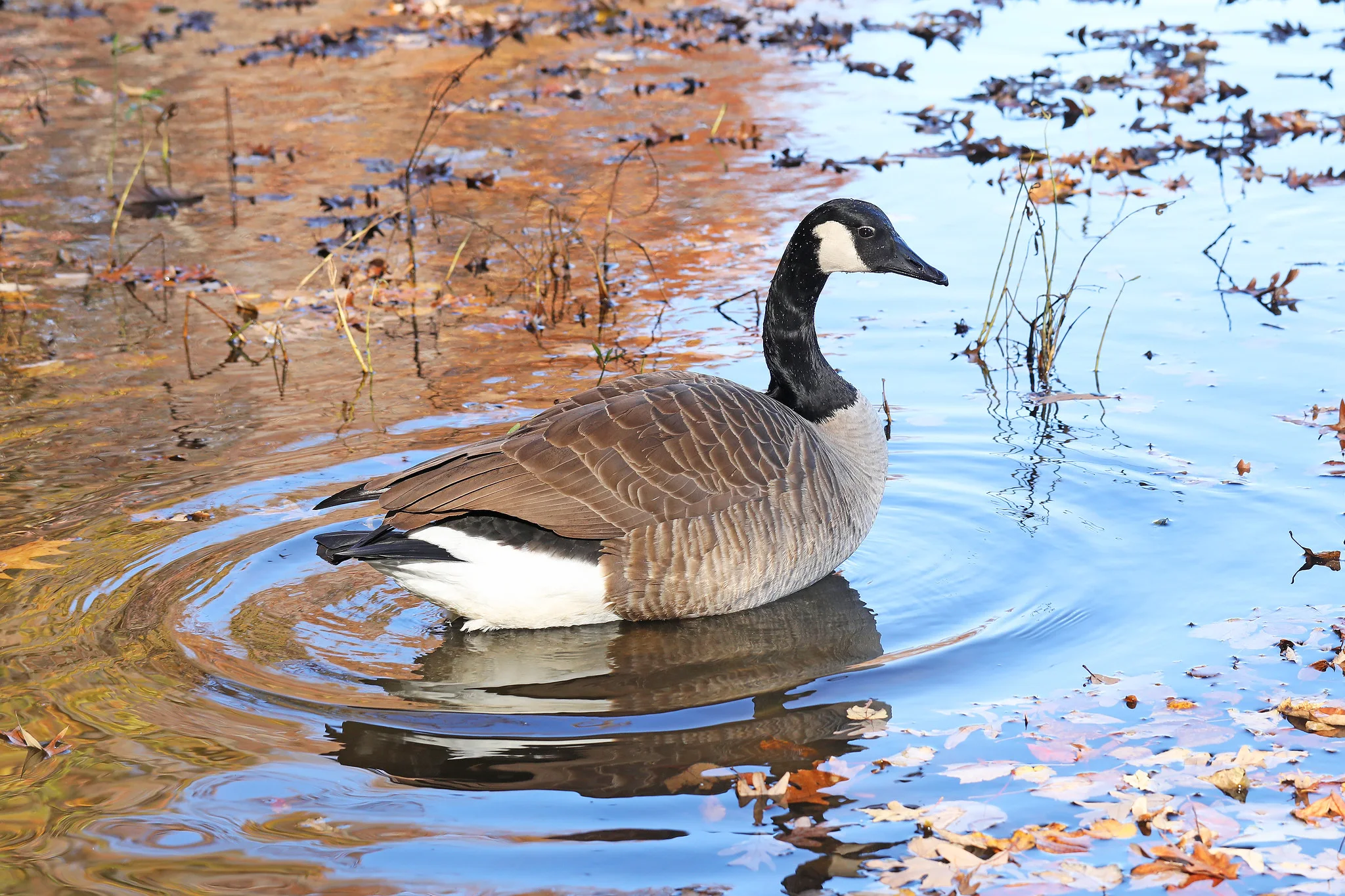
In the 1950s, the giant Canada goose, the largest kind, was thought to be extinct. Too much hunting and the loss of its wetlands seemed to have finished it.
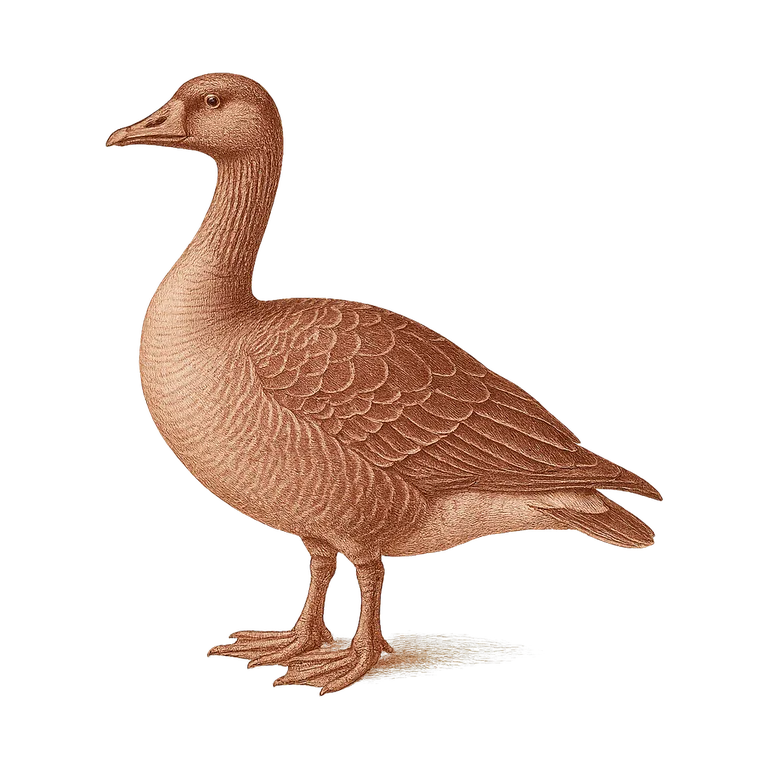
Then in 1962 a scientist called Harold Hanson went to look at a flock of geese spending the winter in Rochester, Minnesota. They were giant Canada geese. A small flock had survived all along, in the middle of a town. A goose is not a duck, though both belong to the same family of waterbirds. Geese are bigger, with longer necks.
People began breeding them and setting them free. It worked almost too well. By 2000 North America had four to five million Canada geese. Many no longer migrate, and live year-round on golf courses, parks and sports fields.
Most pairs stay together for life. On long flights they travel in a V shape and take turns at the front, where flying is hardest.
They can be a danger to aircraft. In 2009 a plane leaving New York flew into a flock, and both engines failed. The pilot landed safely on the Hudson River, and everyone on board survived.