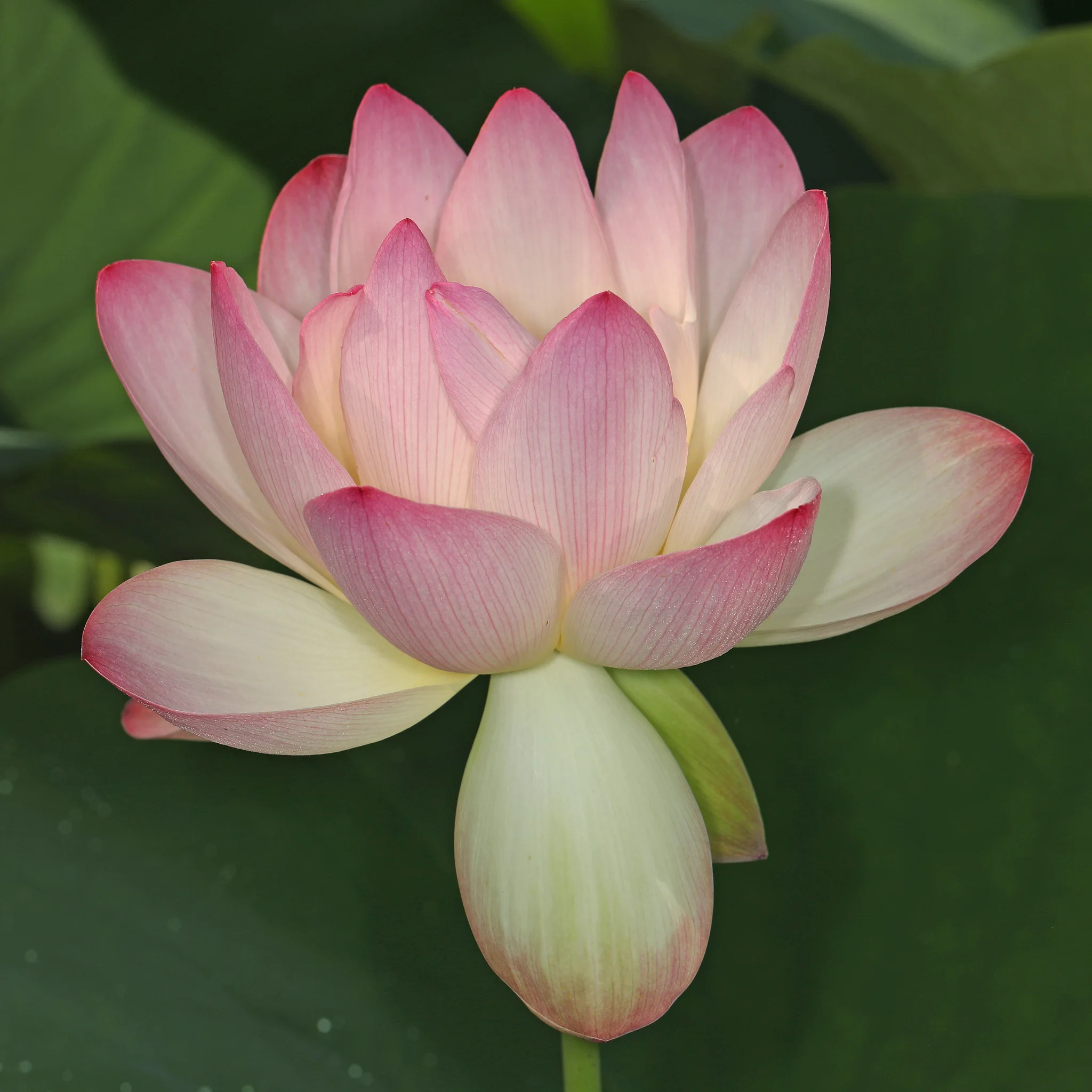
In 1994 scientists planted a lotus seed that had lain in a dry lake bed in China for about thirteen hundred years. It grew.
Its leaves never stay wet. They are covered in tiny waxy bumps, so water rolls off in beads and takes the dirt with it. Engineers have copied this for self-cleaning surfaces, and call it the lotus effect.
Its flower can also make its own heat. It keeps itself between thirty and thirty-five degrees, even when the air drops to ten. The warmth may help attract the insects that pollinate it.
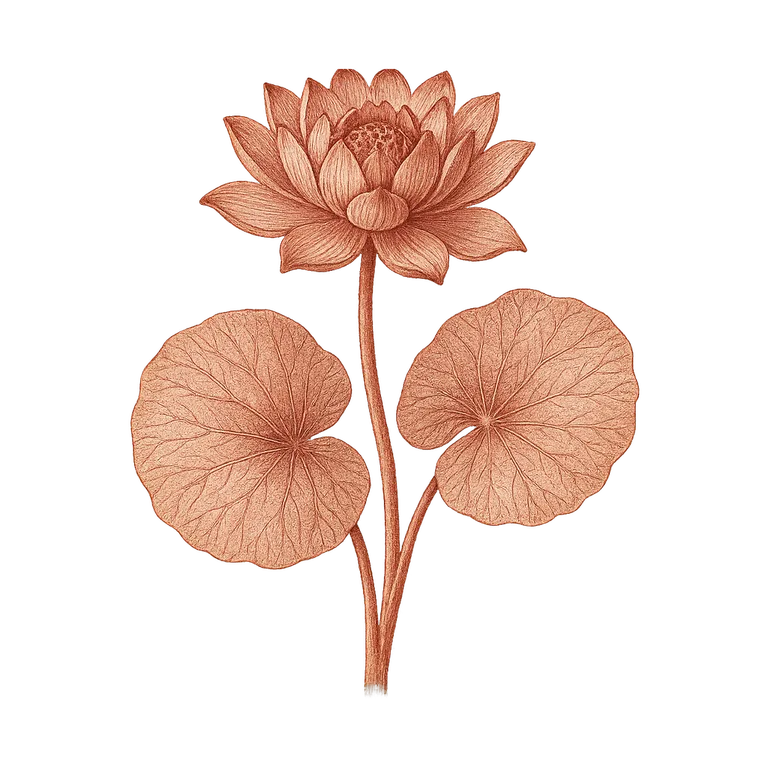
It grows in still, muddy water, with leaves up to a metre across. It is often mistaken for a water lily, but the two are not closely related.
Because it rises clean and beautiful from the mud, Hindus and Buddhists hold it sacred. It is the national flower of India.