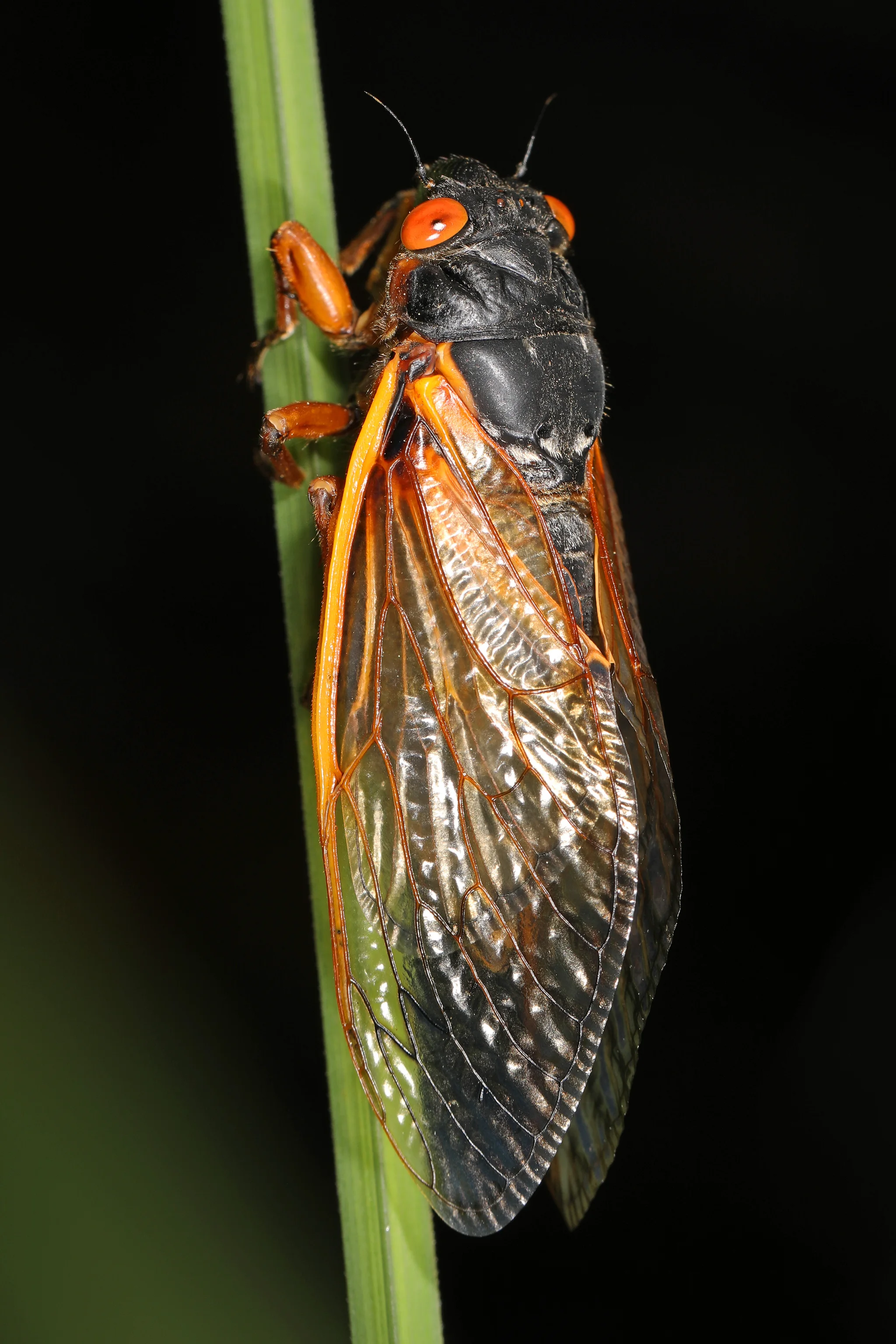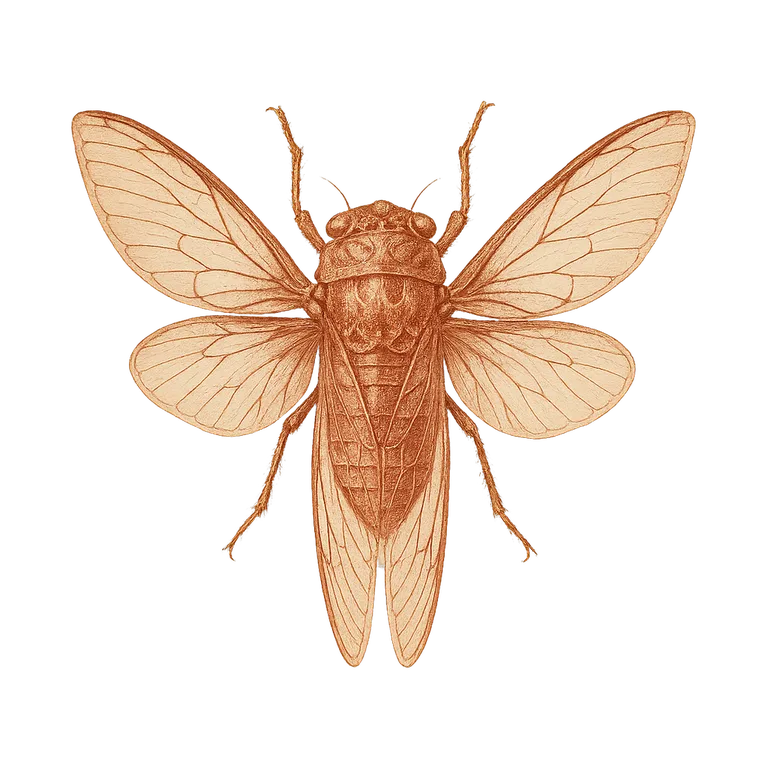
For seventeen years, the pharaoh cicada of North America lives underground, sucking sap from tree roots. Then, on one spring evening when the soil warms up, the whole brood comes up at once.
It seems to count the years through its tree. Each year the leaves fall and grow back, and the sap changes. In one experiment, scientists made trees drop and regrow their leaves twice in a single year. Their cicadas came up after sixteen years instead of seventeen. A cicada is not a locust. Locusts are grasshoppers. Cicadas are bugs that suck sap.
There can be 370 of them on a single square metre. Birds and other animals eat their fill, but most cicadas survive.
Seventeen is a prime number, which may stop predators from timing their own cycles to match.
The males sing together, and the chorus can reach a hundred decibels, as loud as a motorbike. Within four to six weeks the adults are all dead. But their eggs are in the twigs. The young hatch, drop to the ground and burrow down for the next seventeen years.