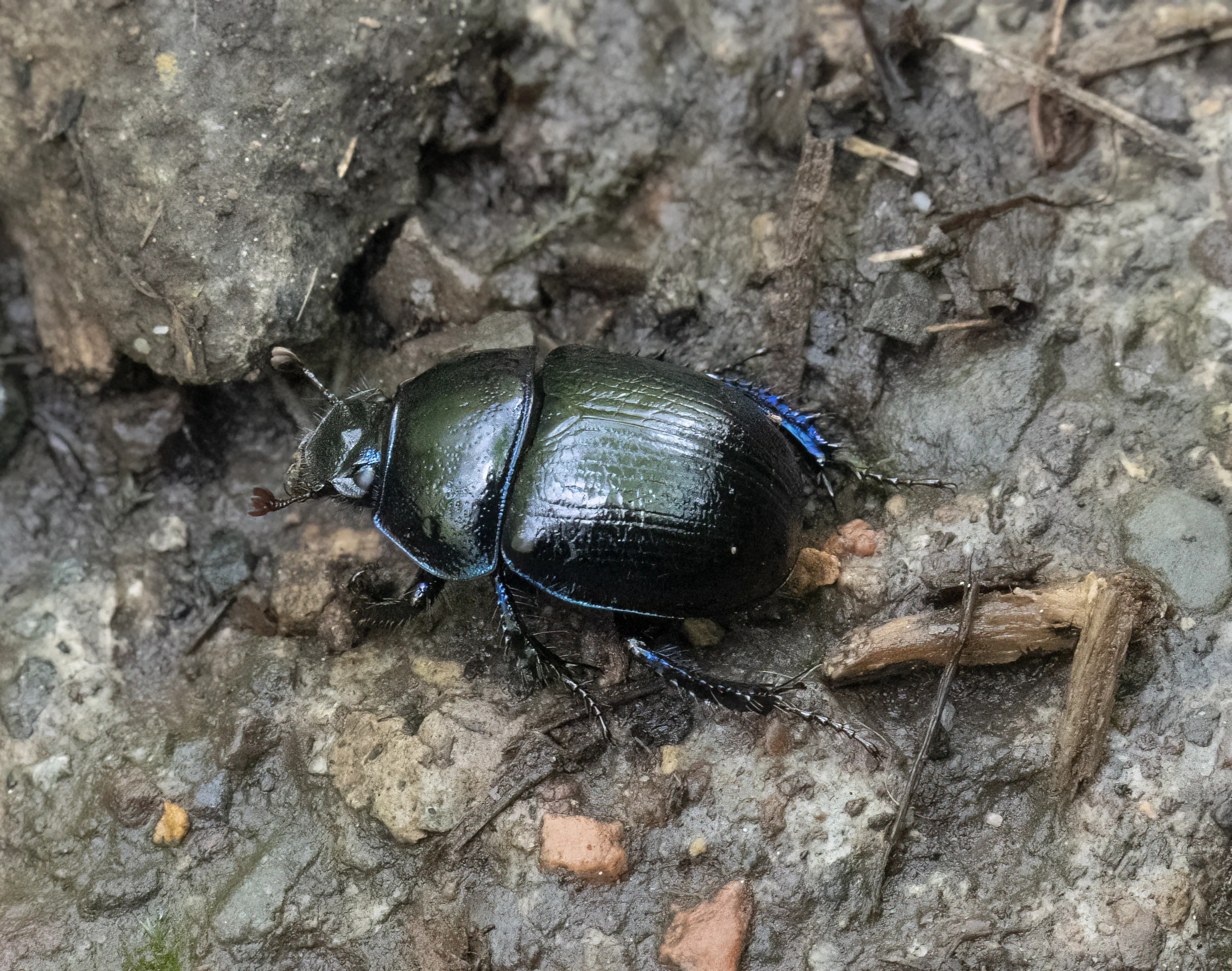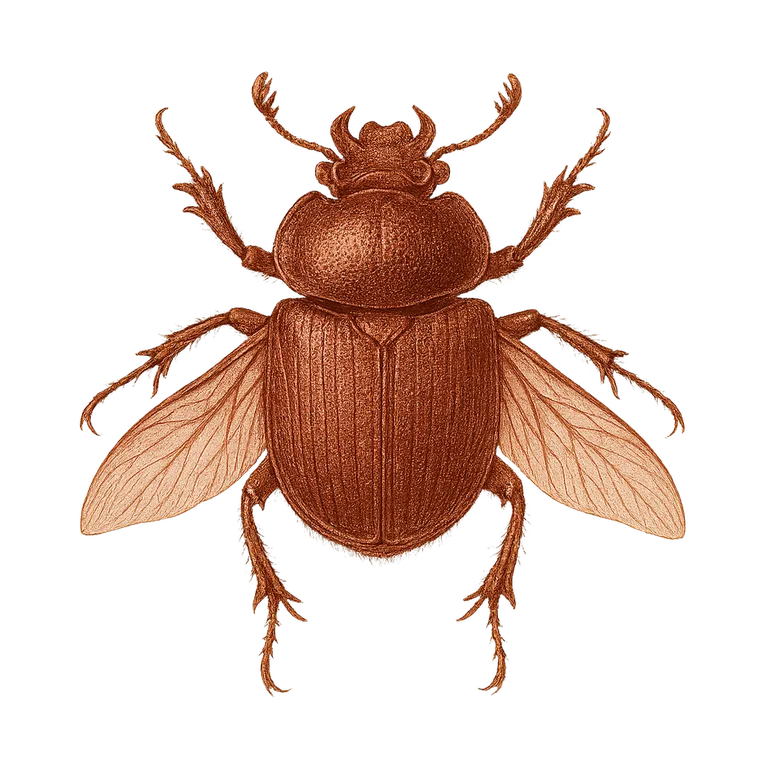
Turn a dor beetle over and you get a surprise. This common dung beetle of Europe is big, black and plain on top. Underneath it shines metallic blue, violet or green.
By late spring many dor beetles carry a crowd of tiny mites on their undersides. They look like a pest but are only passengers. The mites need fresh dung and cannot reach it alone, so they ride there on the beetle. Country people once called it the lousy watchman. The dor beetle is a dung beetle, but not a scarab. It belongs to a family of earth-boring beetles.
The beetle is heading for the dung too, and horse dung is its favourite. You may hear it on a warm evening, buzzing low over a field. Its name comes from dor, an old word for a droning insect.
What it does next happens underground. A pair digs a shaft straight down under the dung, up to half a metre deep. The female makes side rooms off the shaft and packs each with dung and a single egg, then seals it with soil.