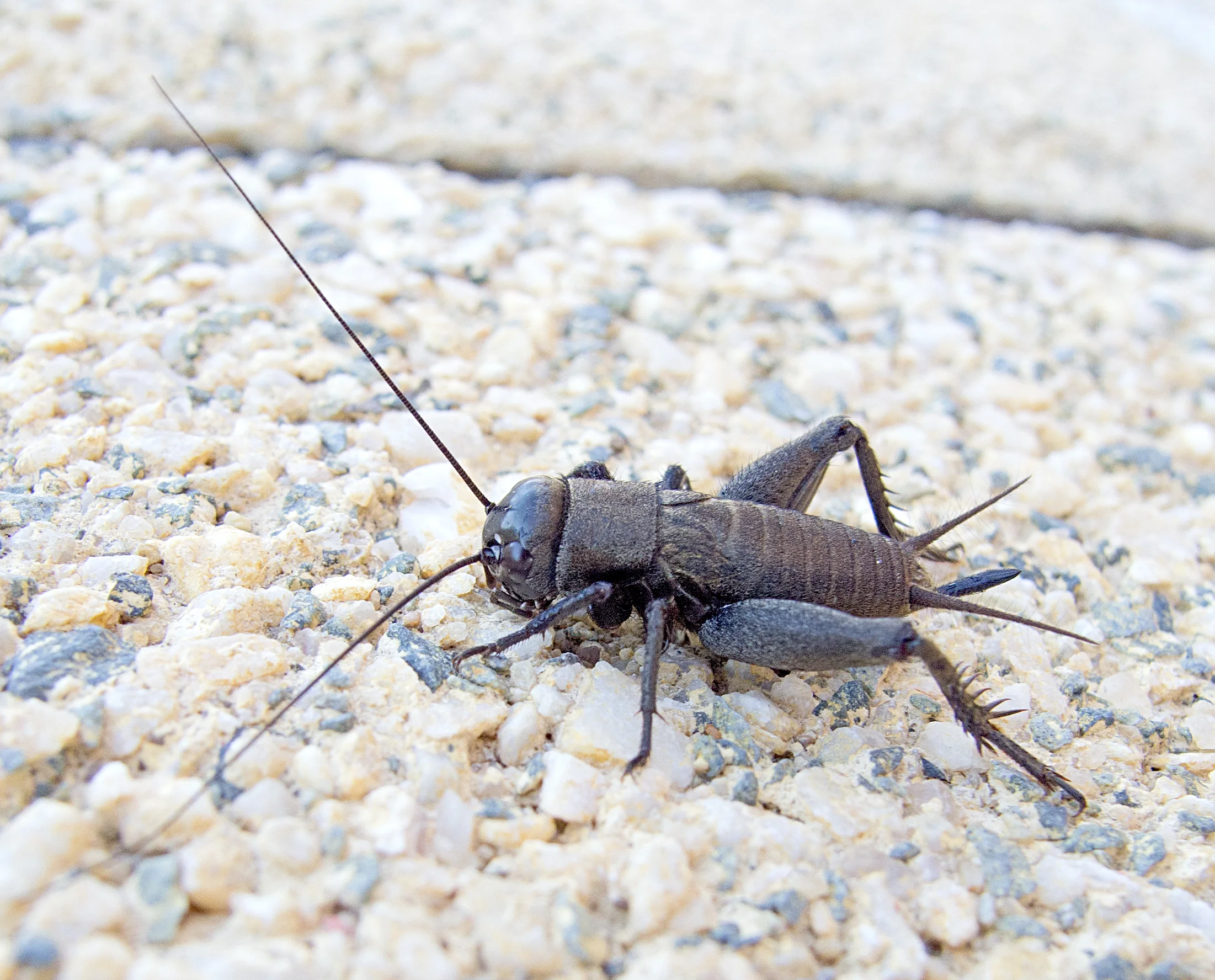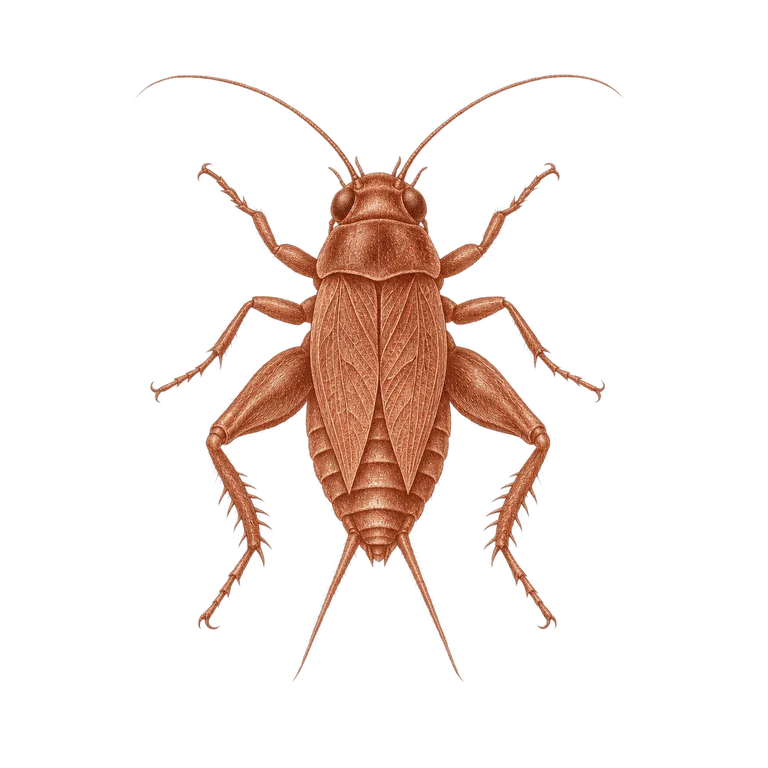
The field cricket sings from his own front doorstep.
The male digs a burrow with a little platform at its mouth. He sits there and sings to bring in a female. A cricket is not a grasshopper, though they are relatives. Crickets have long antennae and sing at night.
He sings by day and into the first part of the night. He will not sing unless it is warm, well above thirteen degrees.
The females do the travelling. They wander, and go to the singers. The males stay at home and fight fiercely for their burrows.
It is a dark insect about two centimetres long, and it cannot fly.
That is its trouble. A cricket that cannot fly rarely comes back to a place it has lost.
By the early 1990s Britain had one colony left, of about a hundred crickets, in Sussex.
So people have carried them. In 2022 seventy crickets from Spain were set loose in a field in Cornwall. The species had last been recorded there in 1906.
A year later a count found about a thousand.
After more than a hundred years, the doorsteps in that field are taken again.