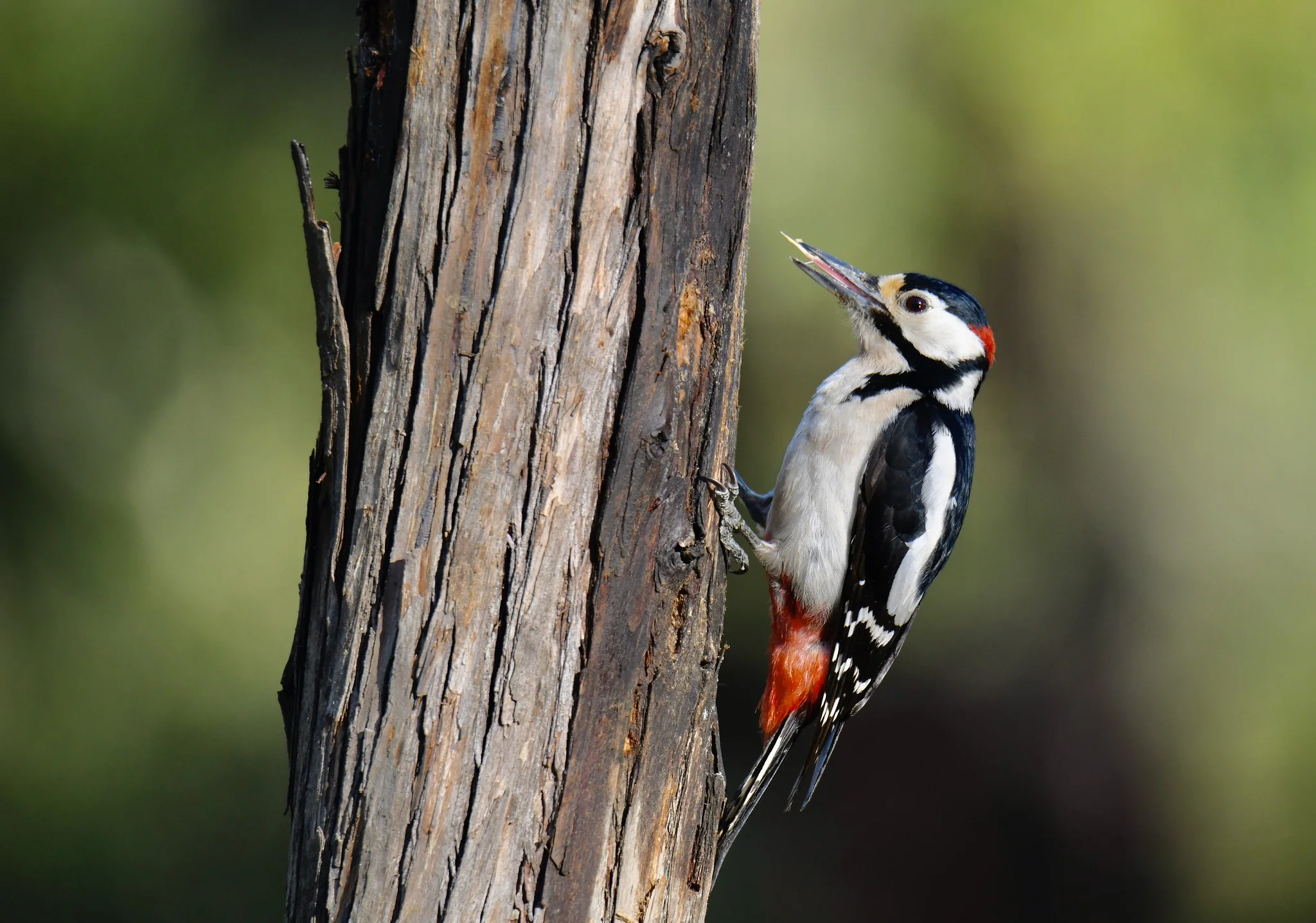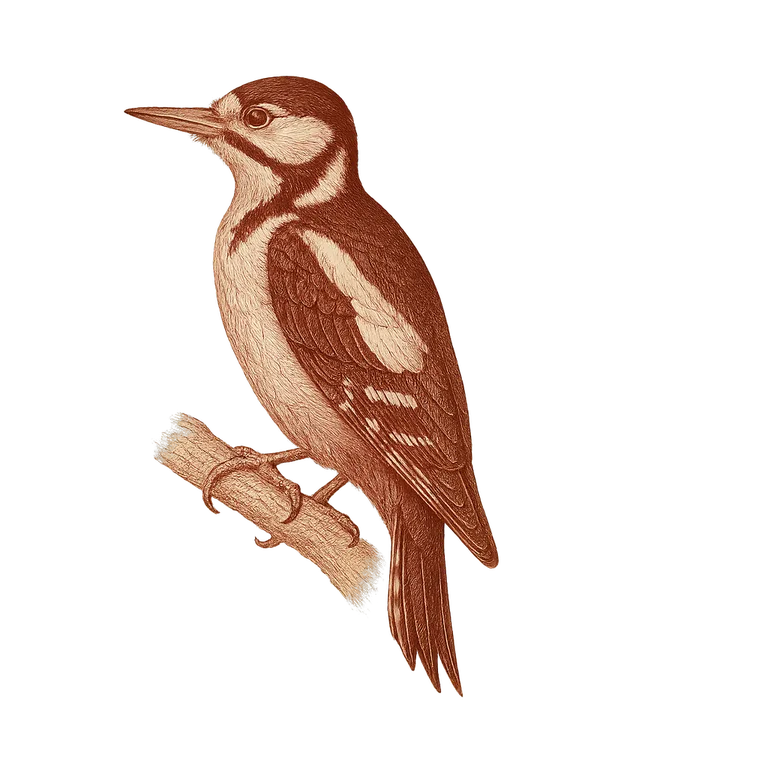
A woodpecker hits a tree with its beak up to twelve thousand times a day. For years, books said its skull worked like a shock absorber, cushioning the brain. Engineers even copied the idea for sports helmets.
In 2022 scientists in Belgium filmed woodpeckers, including the great spotted, with high-speed cameras. They found no cushioning at all. The beak and head stop at the same instant, so the whole head works like a stiff hammer. In Britain and the United States, wild woodpeckers are protected by law.
That makes sense. A cushion would soak up the force of each blow. The bird would then have to hit even harder to dig a hole.
Its brain is safe because it is so small, about seven hundred times smaller than ours. A small brain can take a much sharper stop without harm. The bird would have to strike twice as fast to give itself concussion. It does close its eyes at each blow, to keep out flying splinters.
In spring, the great spotted woodpecker also drums on dead branches, ten to sixteen times a second. It is a signal to other woodpeckers that this patch is taken.