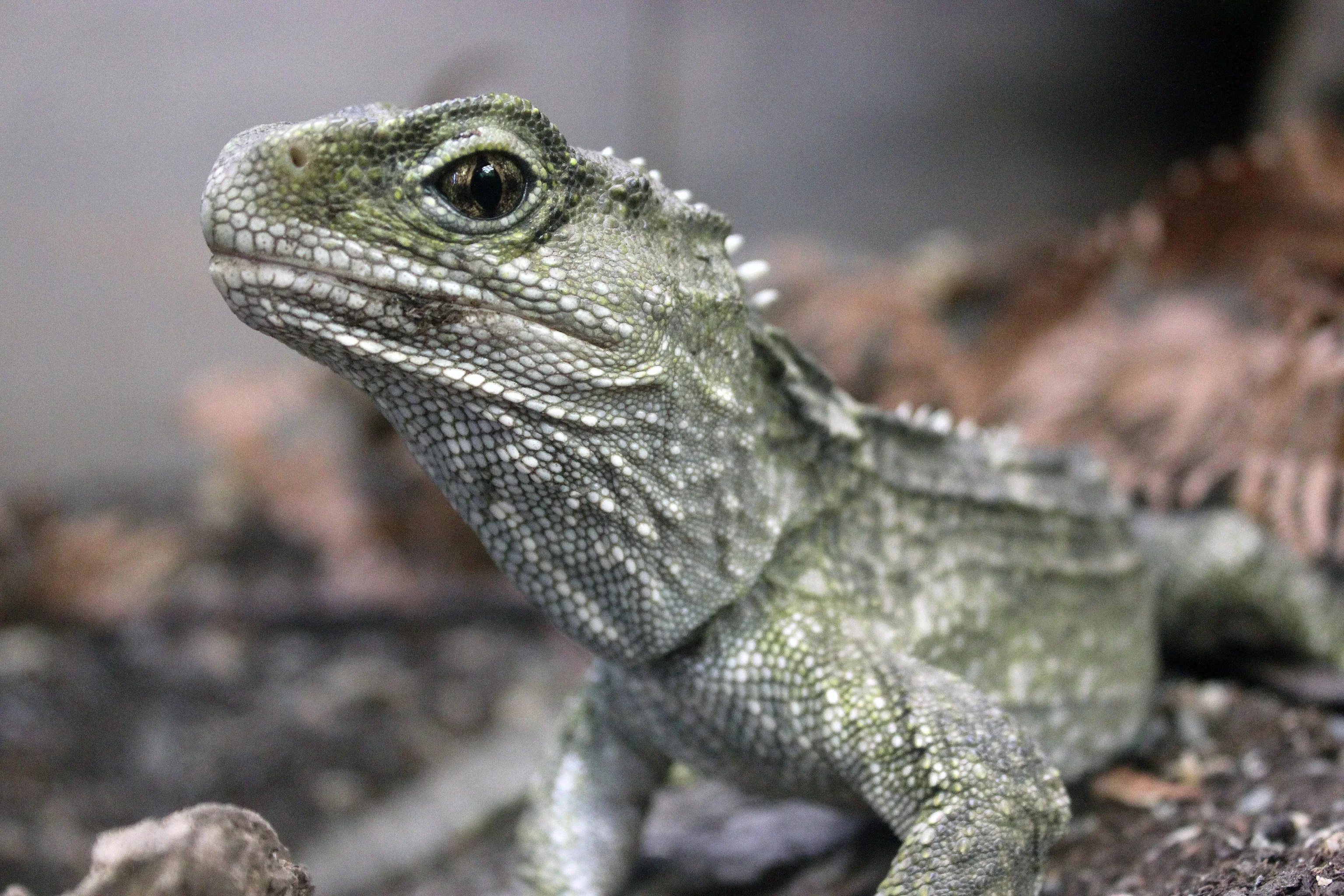
A young tuatara has a third eye on the top of its head. It even has a lens, but after a few years scales grow over it. It is not for seeing. It probably senses light and dark, and helps set the animal's daily rhythms.
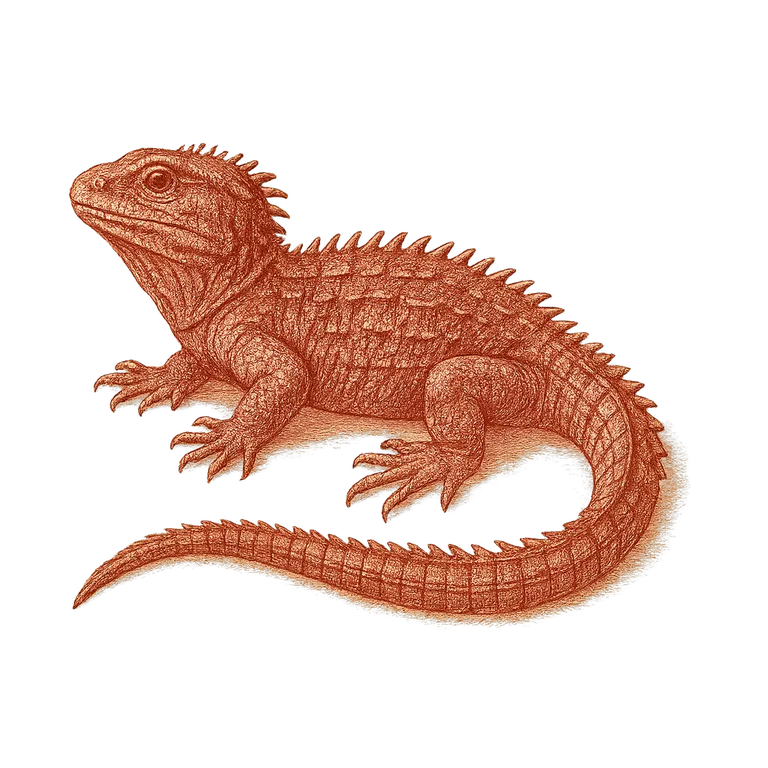
The tuatara looks like a lizard but is not one. It is the last survivor of a group of reptiles that split from lizards and snakes about 250 million years ago. It lives only in New Zealand, and its Māori name means peaks on the back. The tuatara is not a dinosaur. It is the only survivor of an old group of reptiles.
It likes the cold. It stays active at thirteen degrees, a temperature that would stop most reptiles. It often lives in the burrow of a seabird and hunts at night.
Everything about it is slow. A tuatara may be thirteen before it can breed, and a female lays eggs only once in four years. The eggs then stay in the ground for a year or more before they hatch. Tuataras often live past sixty, and some are still breeding at that age.