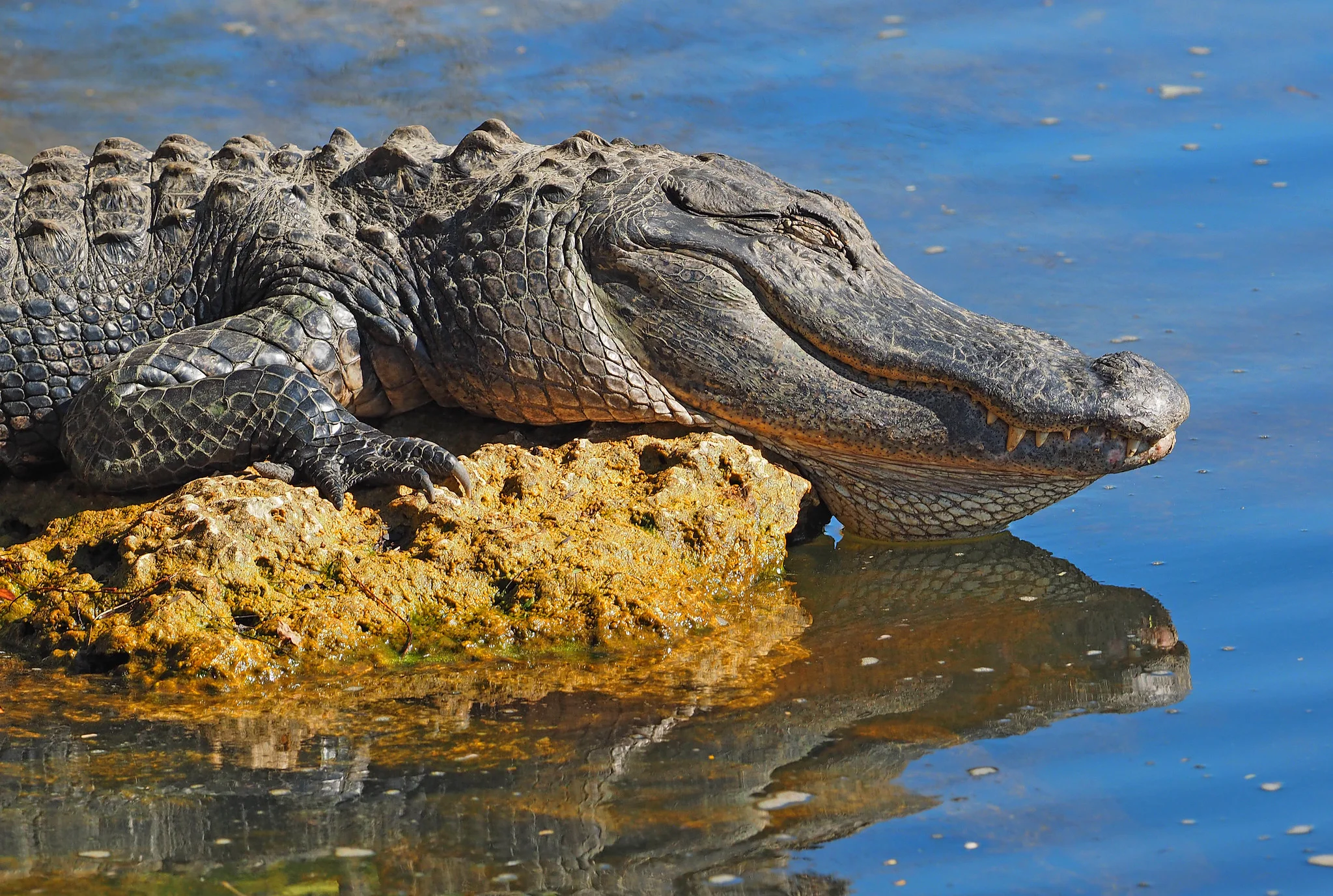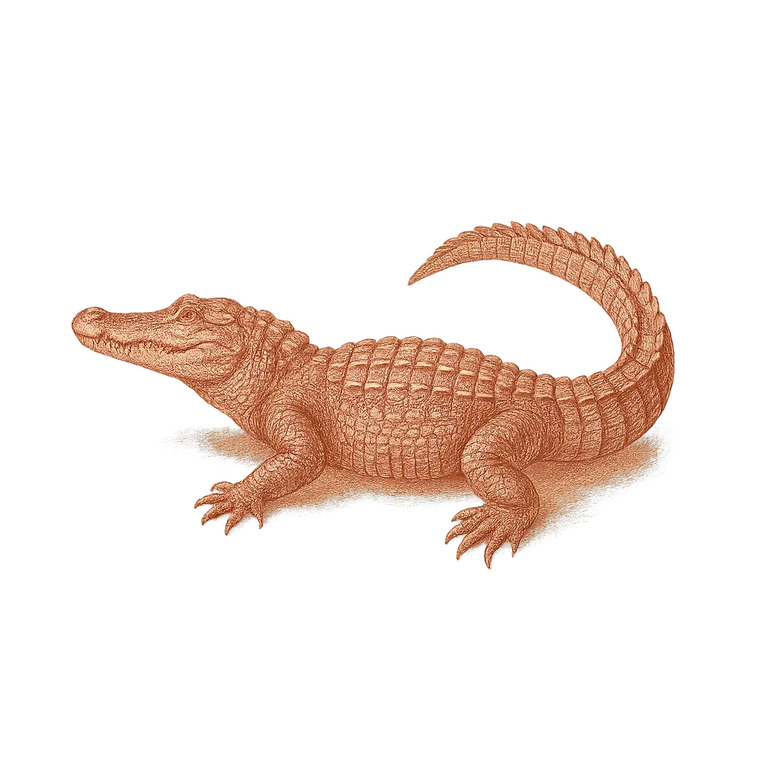
An American alligator digs its own pond. In the dry season, these alligator holes still hold water, and fish, turtles and birds shelter in them. Whole wetlands depend on their alligators in this way.
The alligator lives in the swamps, rivers and lakes of the south-eastern United States. It was hunted so heavily for its skin that in 1967 it was listed as endangered. With protection it recovered, and in 1987 it was taken off the list, one of the great conservation successes. An alligator is a reptile, not a dinosaur, though crocodiles and alligators are the dinosaurs' closest living relatives after birds.
A big male is more than three metres long. He bellows to claim his territory, and the sound is so deep that the water on his back seems to dance.
The temperature of the nest decides whether the eggs hatch as males or females. The mother guards her nest for about two months. When the babies call from inside the eggs, she digs them out and carries them gently to the water in her mouth.