The pheasant, so familiar in English fields, is named after a river in Georgia, on the Black Sea. The ancient Greeks called it the Phasis, and the bird that lived beside it was the bird of the Phasis.
People carried it west. It may have reached Britain with the Romans, and it was living wild there by about 1059. Later it nearly died out, and it had to be brought in all over again. A pheasant is not a chicken, though both belong to the same family.
It has never quite managed on its own. About fifty million pheasants raised in pens are still released in Britain every summer, to be shot.
It travelled further too. In 1881 pheasants were set free in Oregon, and they spread. It is now the state bird of South Dakota.
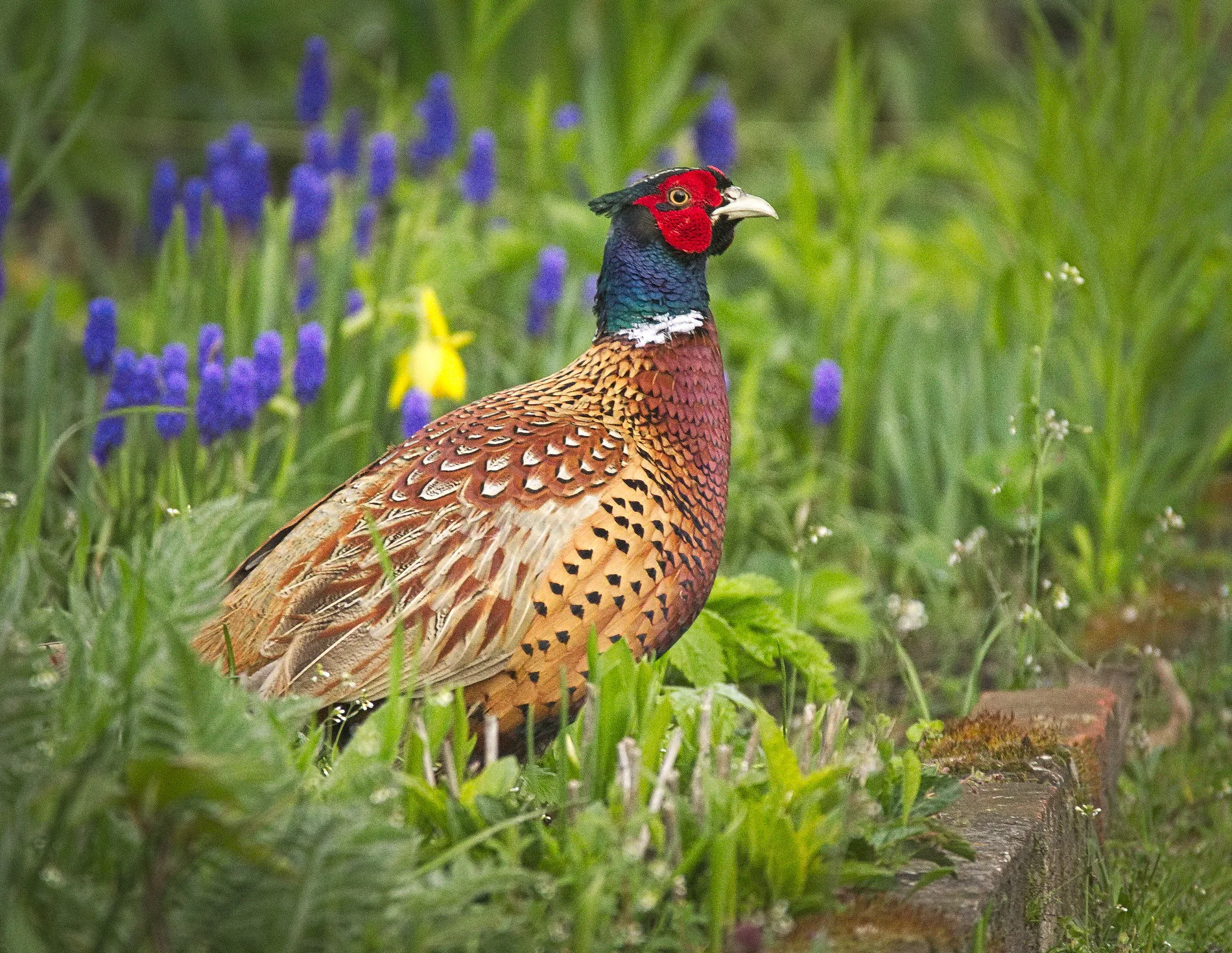
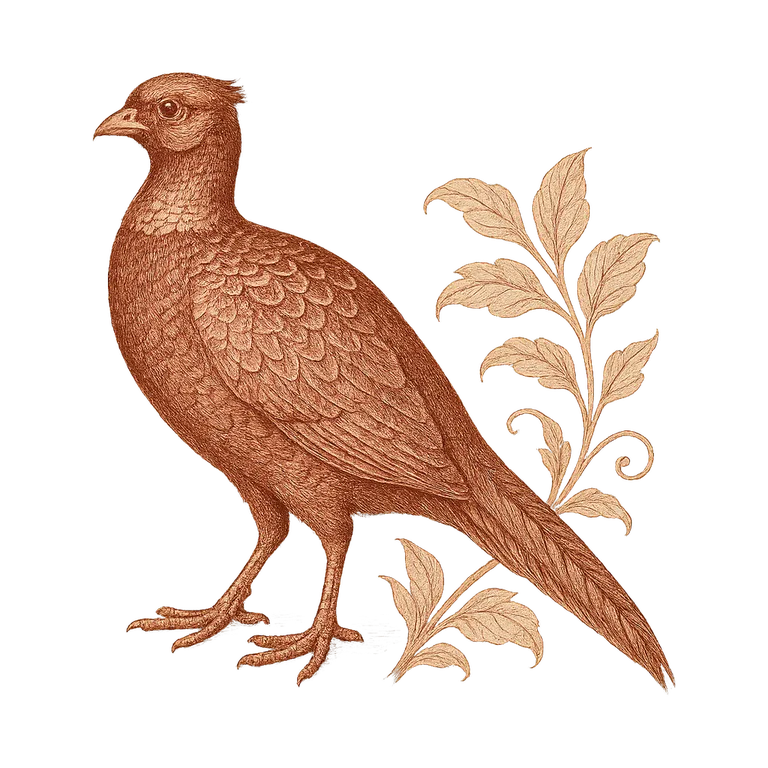
The male is copper and gold, with a bottle-green head and a red face. The female is a mottled brown. A pheasant would rather run than fly, but when startled it bursts upward with a loud whirr of wings.