When the Romans ruled Britain, they shipped its oysters home to Italy, in great numbers.
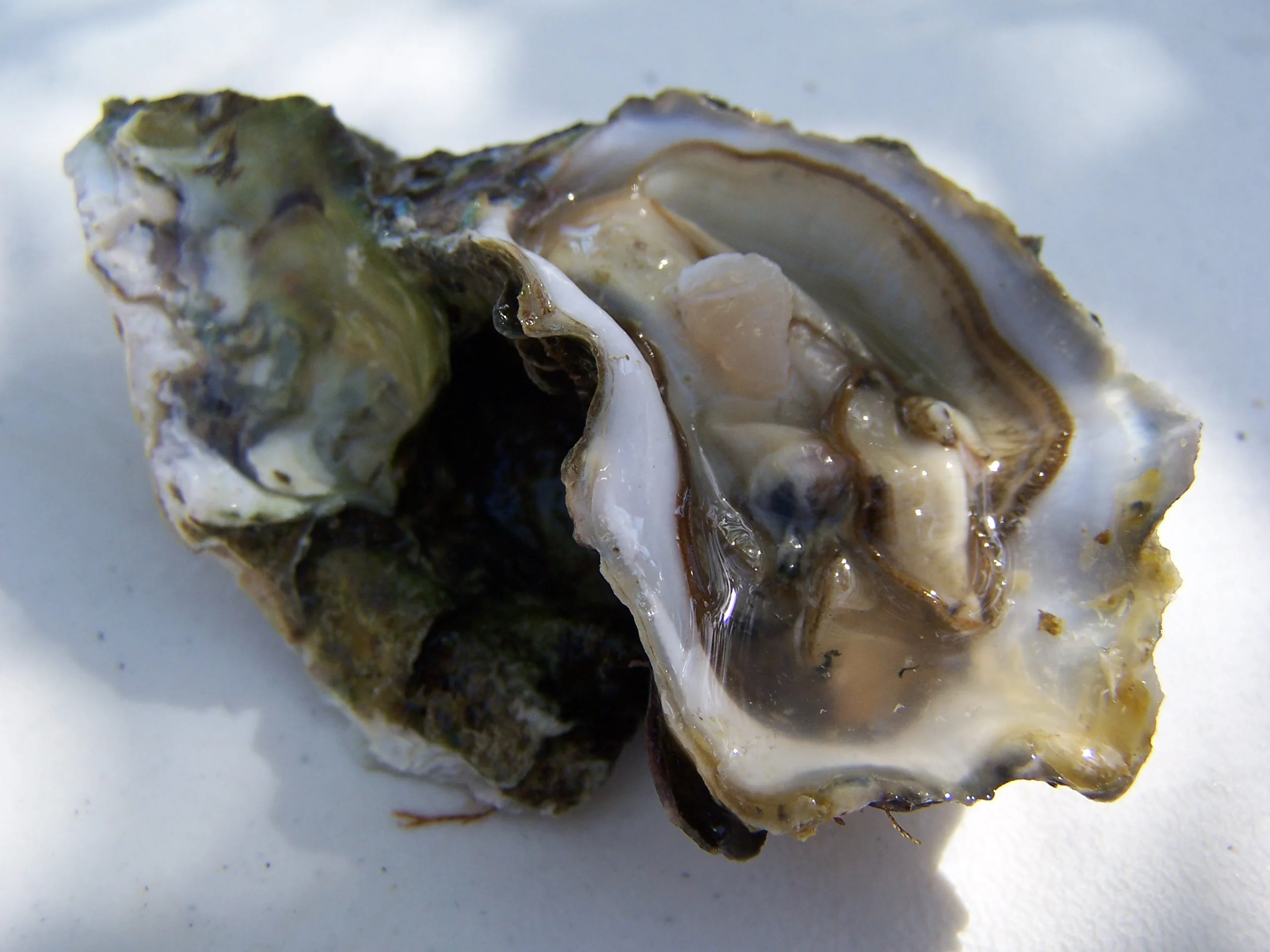
This is that oyster, the flat oyster of Europe. An oyster is a mollusc, related to clams and mussels.
It once made up most of the oysters Europe produced.
What happened to it?
Disease, dirty water and too much fishing. The harvest fell sharply. Today the Pacific oyster makes up more than three quarters of what Europe produces.
The flat oyster is an odd animal. Most begin life as males. Later they may change sex, depending on how warm the water is and on other things.
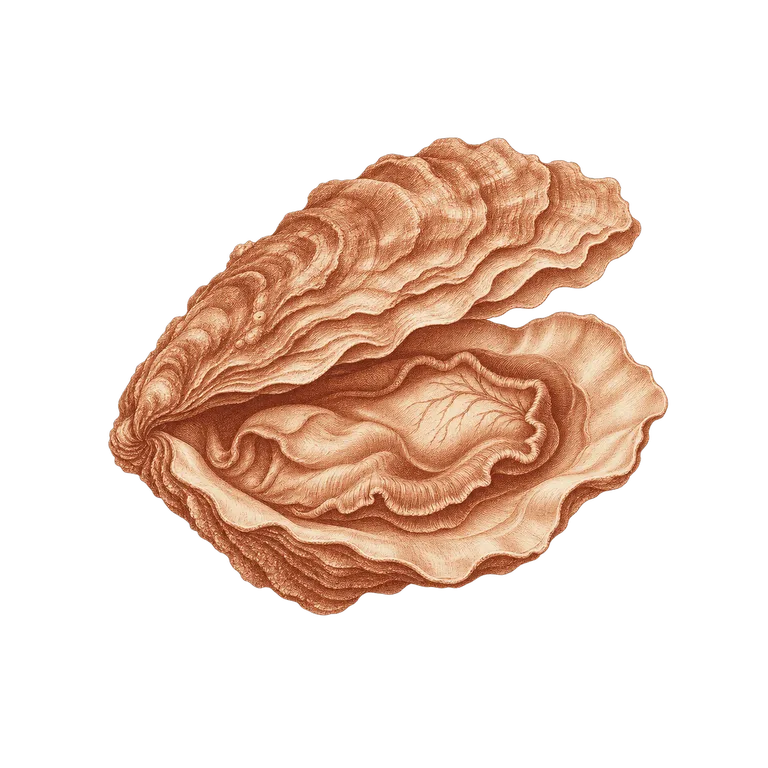
Its two shells are not alike. The lower one is cemented to the rock. The upper one is flatter, and fits inside it like a lid.
The lid does not seal very tightly. Sellers often put a rubber band round the shell to keep the juice in.
It grows up to eleven centimetres across. It usually lives about six years, though it can reach fifteen.
In the 1950s Dutch scientists tried to grow it in Maine, in America. They gave up. About ten years later, wild flat oysters were found living there.
Now people are rebuilding its reefs in Britain, France and Germany.
The Romans thought it worth shipping across a continent. Europe is trying to win it back.