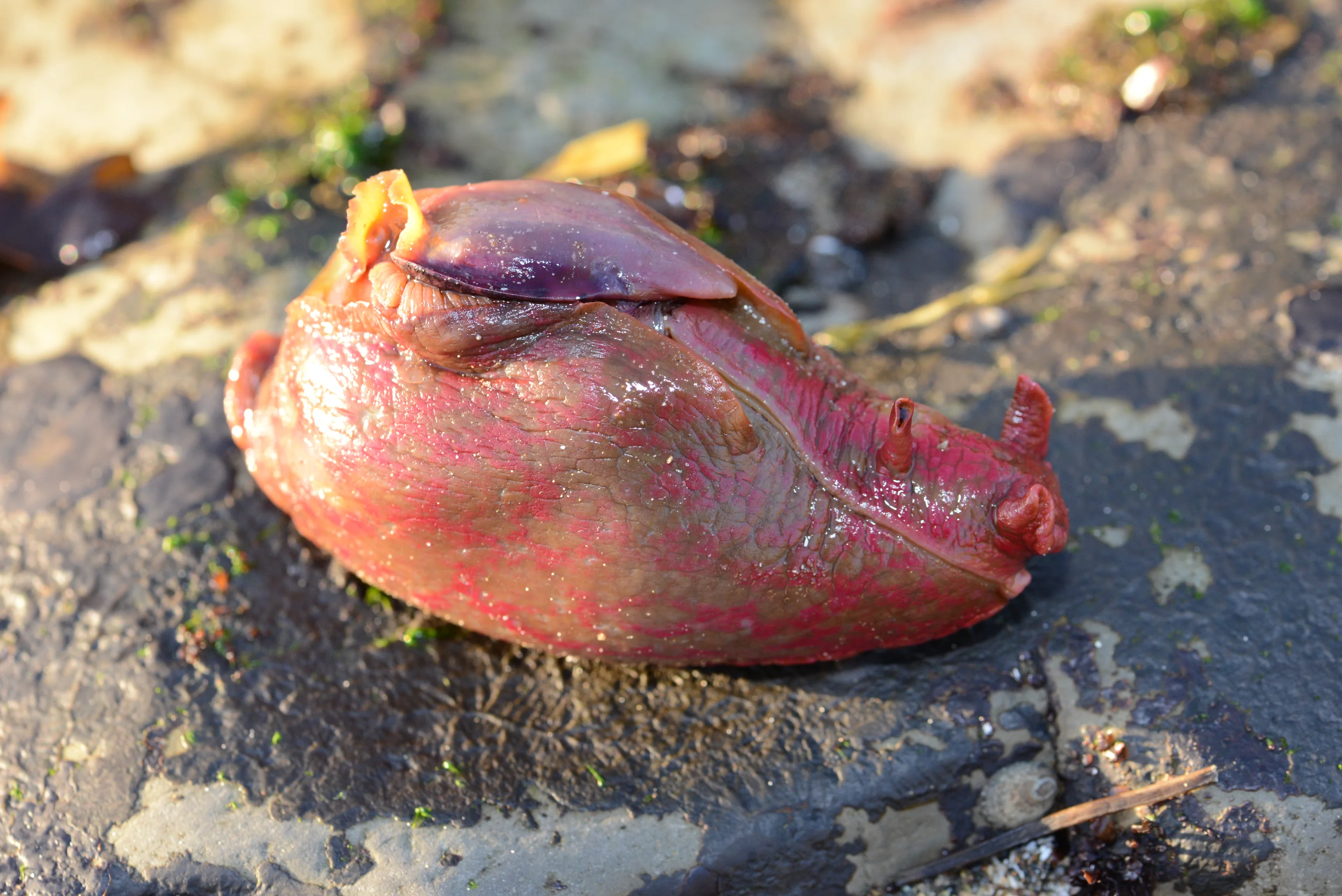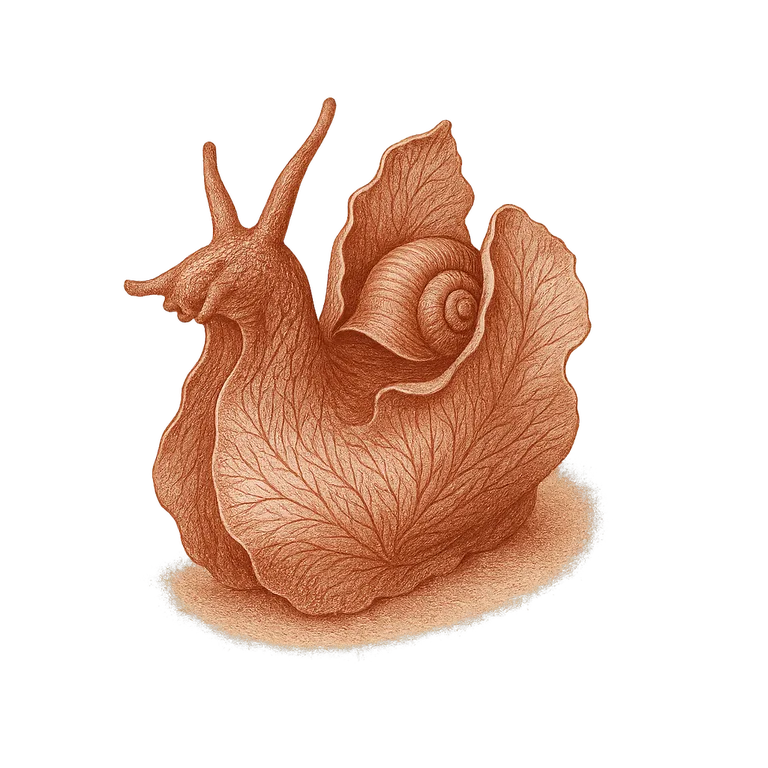
Much of what we know about how the brain stores memories was learned from a sea slug, the California sea hare.
It has only about twenty thousand nerve cells, and some are a millimetre across. They are large enough to study one at a time. Yet it can still learn and remember. Sea hares can be toxic to eat, but they are harmless to touch.
The scientist Eric Kandel studied its nerve cells for years and discovered how they change when a memory forms. He won a Nobel Prize for the work in 2000.
The sea hare is a giant slug, up to seventy-five centimetres long. It is named for two feelers on its head that look like a hare's ears. It eats red seaweed, which colours it red.
When attacked, it squirts a cloud of purple ink and a milky fluid. Lobsters and other predators go for the cloud as if it were food, while the sea hare escapes.