In the hot summer of 1976, England was invaded by ladybirds. Along the eastern and southern coasts, experts estimated there were more than twenty-three billion of them.
It had started with a warm spring. Aphids, the tiny insects ladybirds eat, bred in huge numbers, so the ladybirds did too. Then the summer turned hot and dry. Plants shrivelled, the aphids died off, and billions of hungry ladybirds took to the air in search of food. Ladybirds are harmless to people, but they taste bitter, and a frightened one oozes a yellow fluid.
At the coast, they stopped, too tired and hungry to cross the sea.
People said the ladybirds were biting them, and they were. They were not attacking. They were desperate for moisture, even sweat.
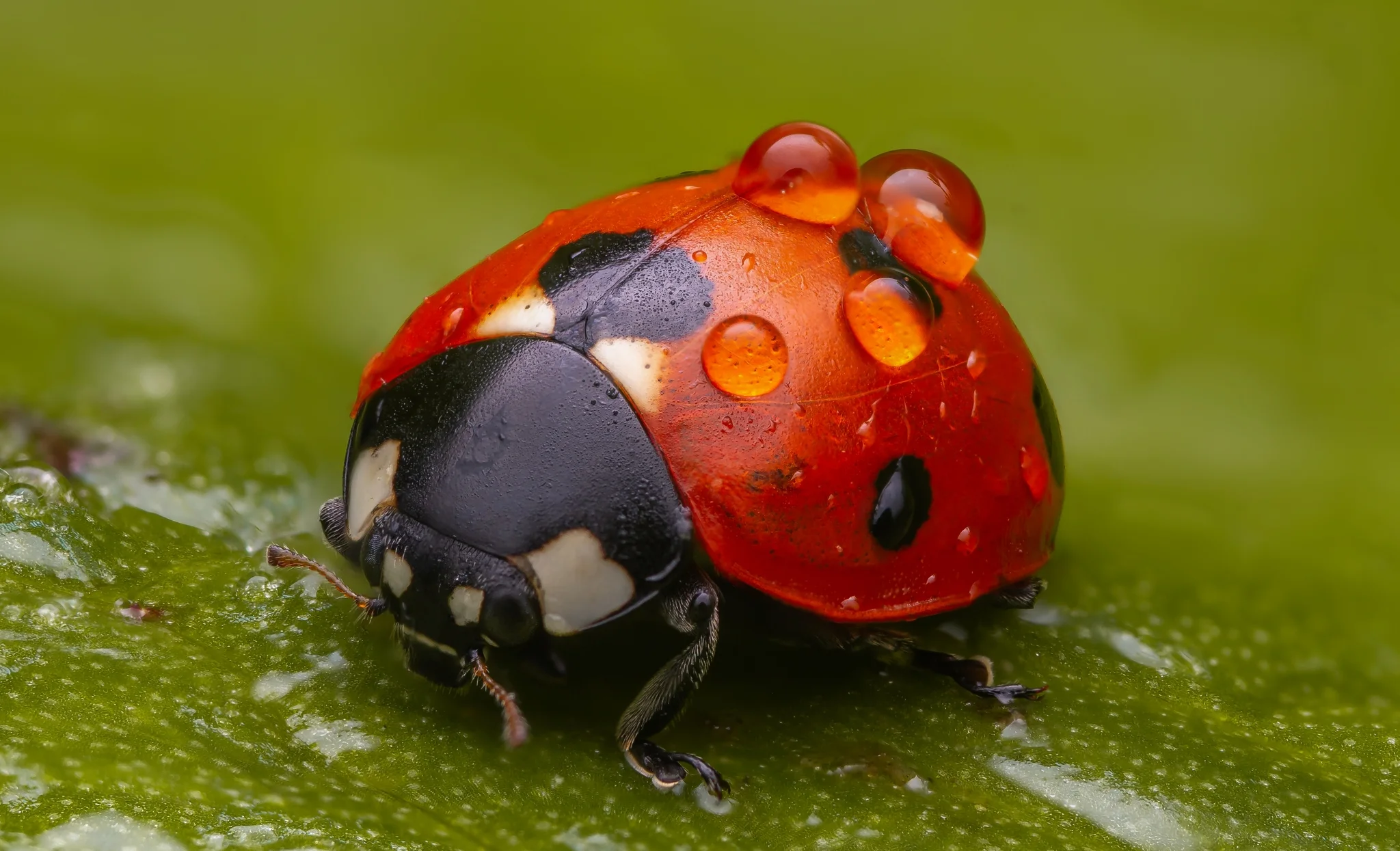
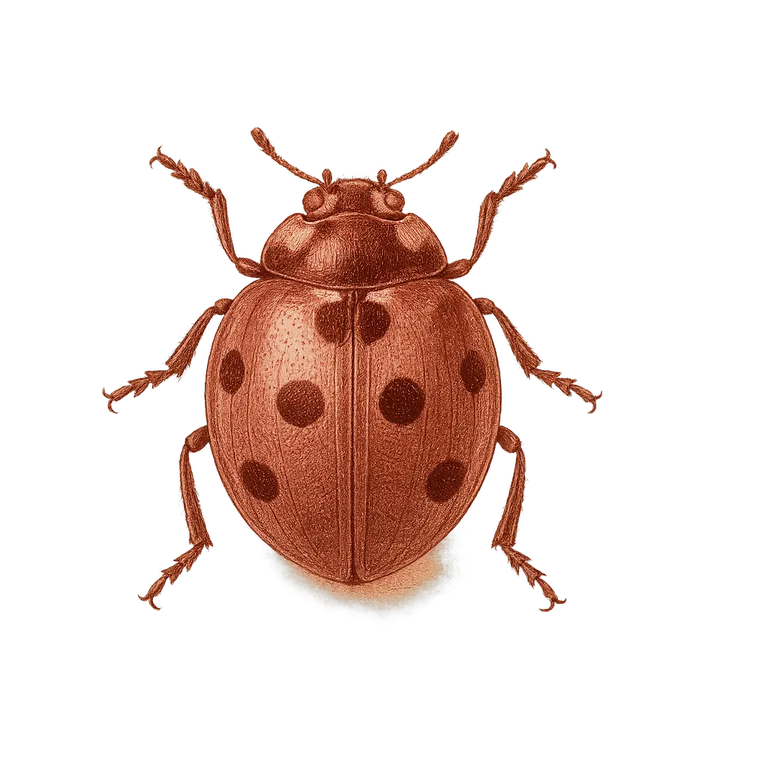
The seven-spot ladybird's bright colours warn birds that it tastes bad. If that fails, it oozes a foul yellow fluid from its leg joints.
Its name is old. In the Middle Ages it was the beetle of Our Lady, the Virgin Mary. Its red wing covers were said to be her red cloak.