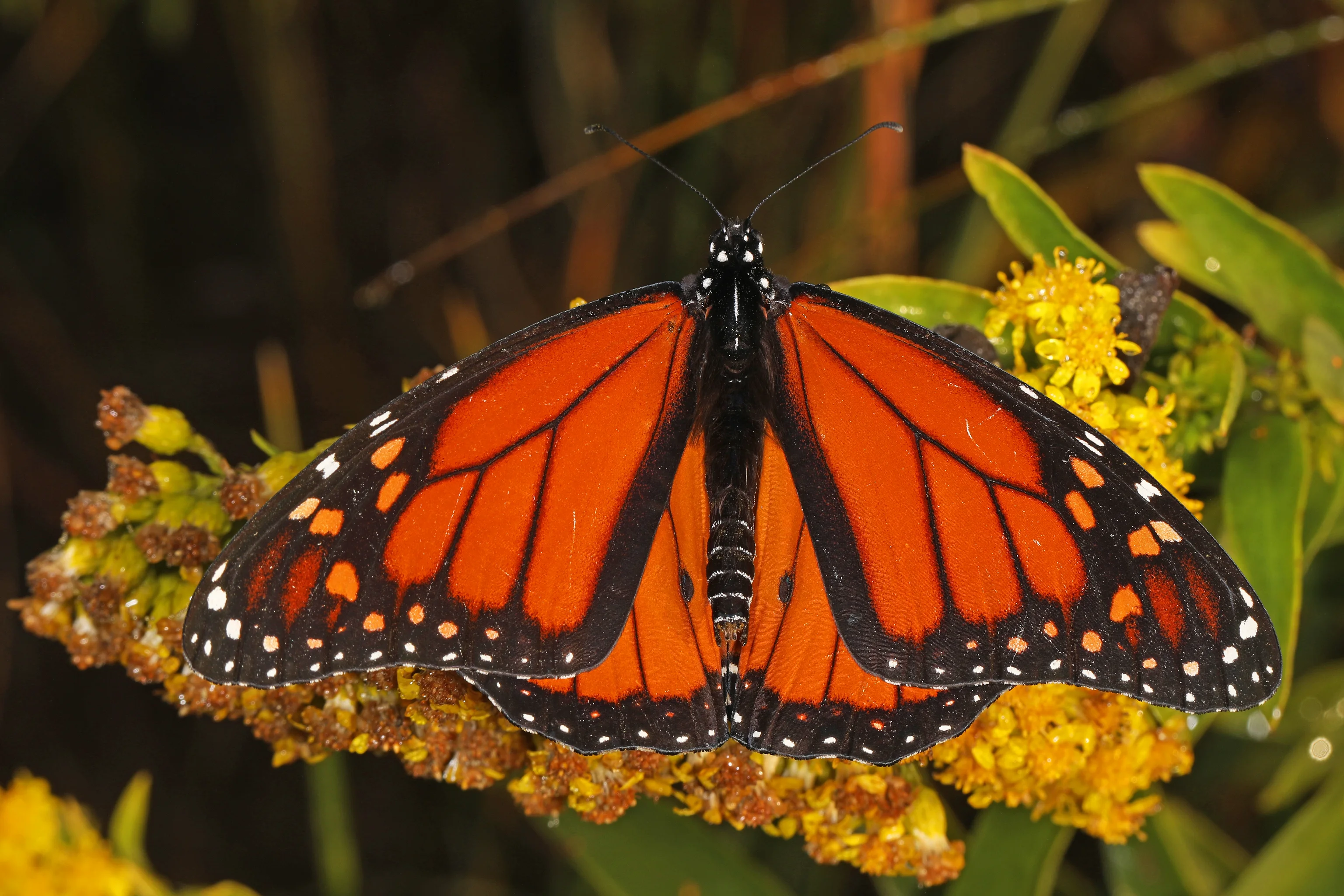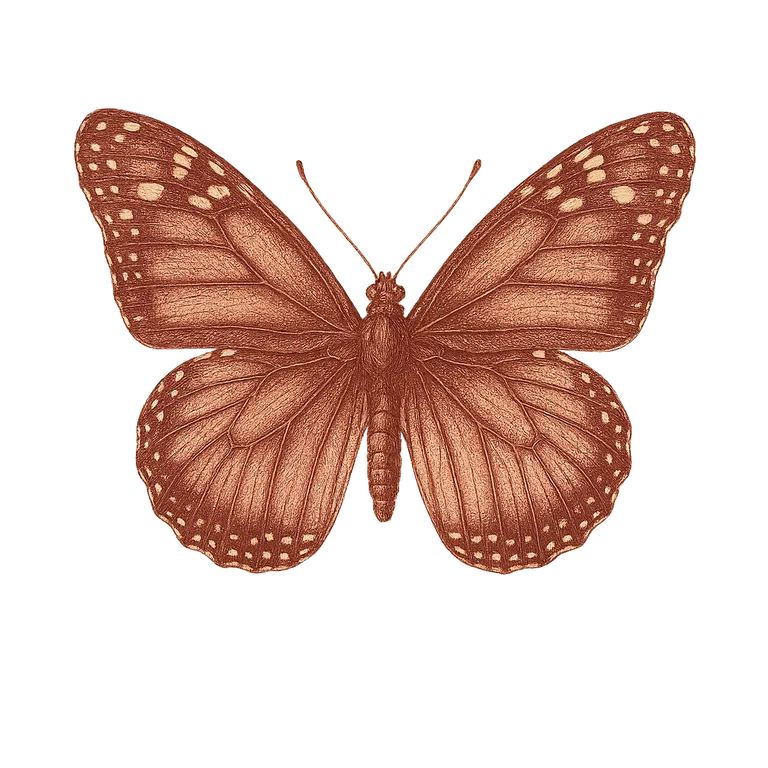
Every autumn, the monarch butterflies of eastern North America fly south to the mountains of central Mexico. The trip can be nearly five thousand kilometres, and none of them has made it before.
They fly by day and rest at night, covering up to 160 kilometres a day. They end up in the same eleven or twelve fir forests, three kilometres above the sea. A monarch weighs less than a gram, yet so many land on one tree that branches break. Monarchs are poisonous to birds, which learn to leave them alone. They are harmless to touch.
No monarch learns the way from its parents. A summer monarch lives only two to six weeks. The ones born at the end of summer are different. They wait to breed, and they can live nine months.
Those long-lived butterflies spend the winter in Mexico. In March they fly north into Texas, lay their eggs and die. Their young carry on north, and so do the next ones. After three or four short-lived generations, the late-summer butterflies turn south to a place none of their family has seen.
How do they find it? Part of the answer is the sun. A monarch steers by it, and a clock in its body corrects for the time of day. In 2014 scientists found a second compass in its antennae, which senses the pull of the Earth. How they home in on the same few mountains is still not known.