If you have ever had an injection, you probably owe something to a horseshoe crab.
Its blood is blue, because it carries oxygen with copper. In that blood are cells that clot the moment they meet certain bacteria. Some bacteria leave poisons that can kill a patient, so medicines and vaccines must be tested for them. For decades the test has been made from this blood. A horseshoe crab is not a crab. Its nearest relatives are spiders and scorpions.
The crabs are caught, part of their blood is drawn, and they are put back in the sea. A man-made version of the test is now starting to replace it.
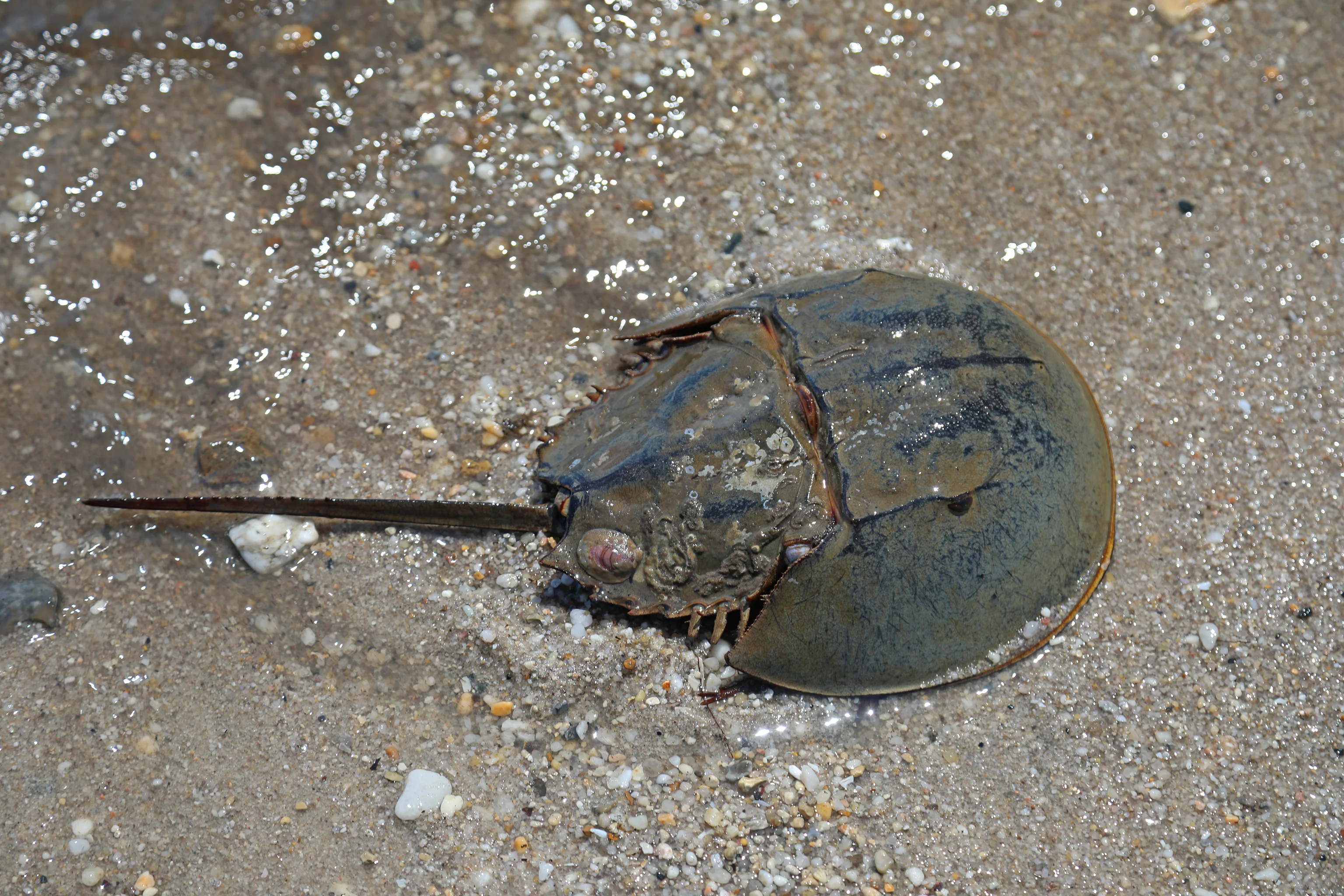
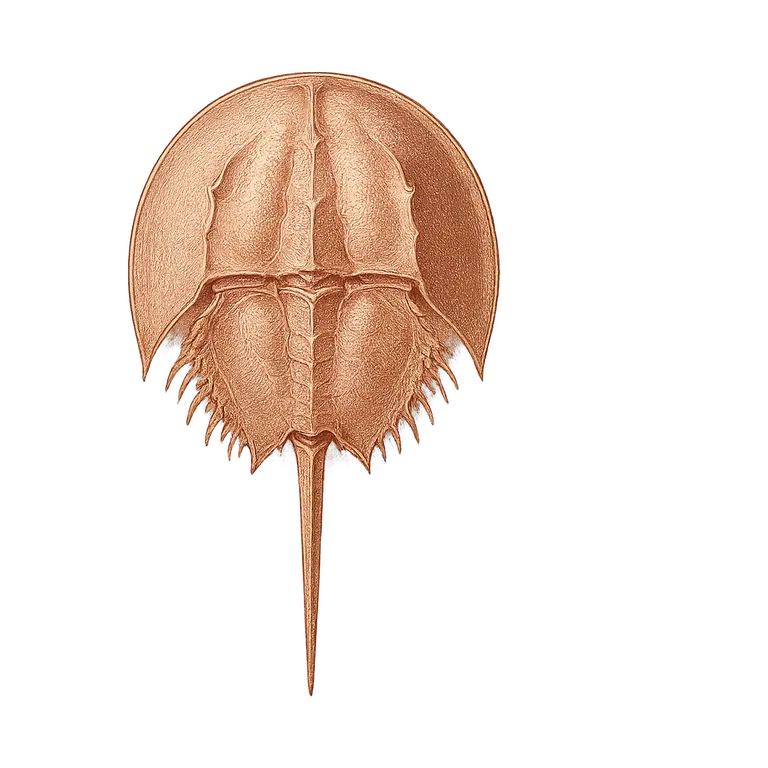
Despite its name, it is not a crab. Its closest relatives are spiders and scorpions. Its family goes back about 450 million years, long before the first dinosaurs. It has ten eyes, and it uses its spiky tail to steer and to flip itself over.
In late spring, horseshoe crabs crawl up the beaches of Delaware Bay in their thousands. They come on the highest tides of the month to lay their eggs. A female can lay twenty thousand in a night.