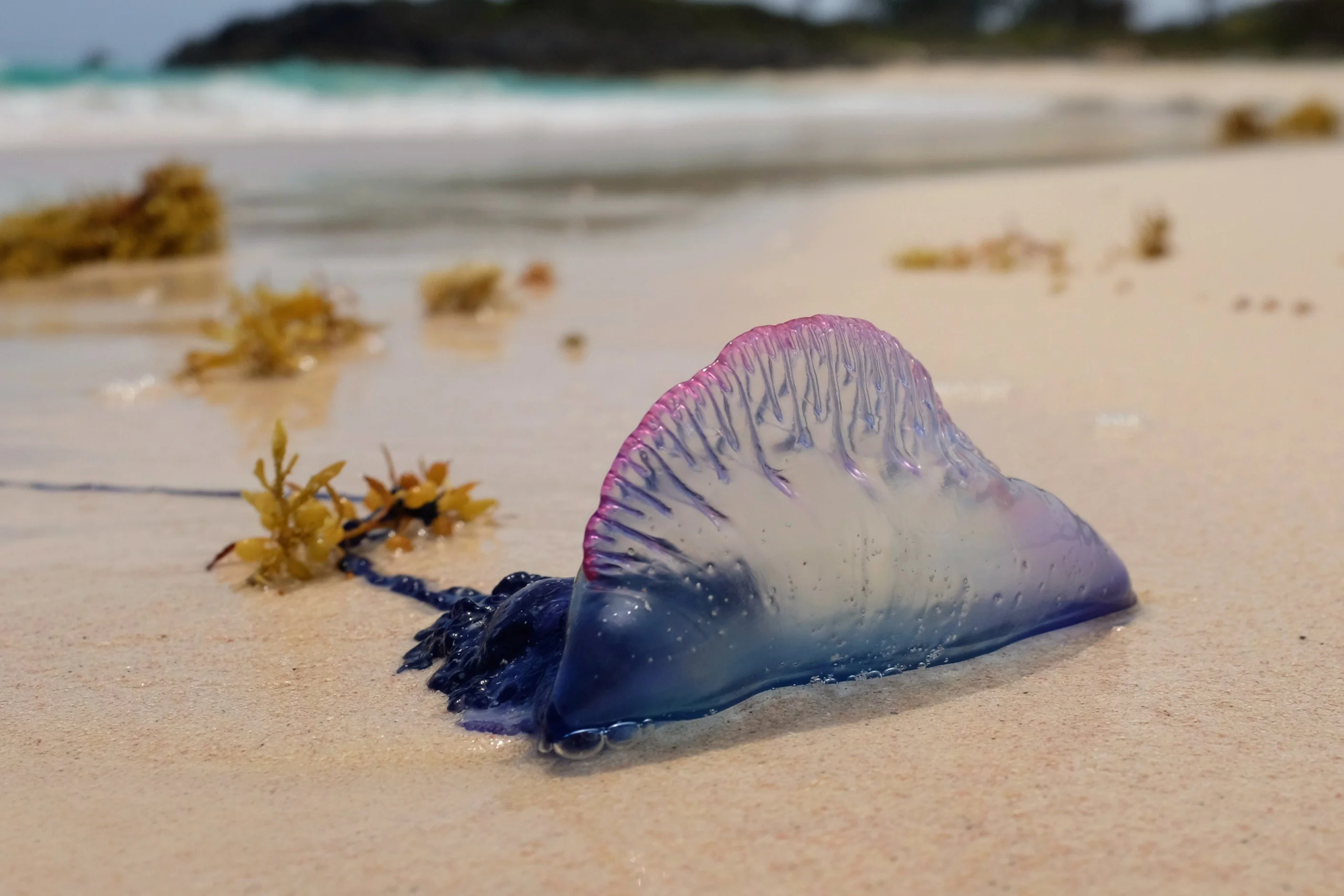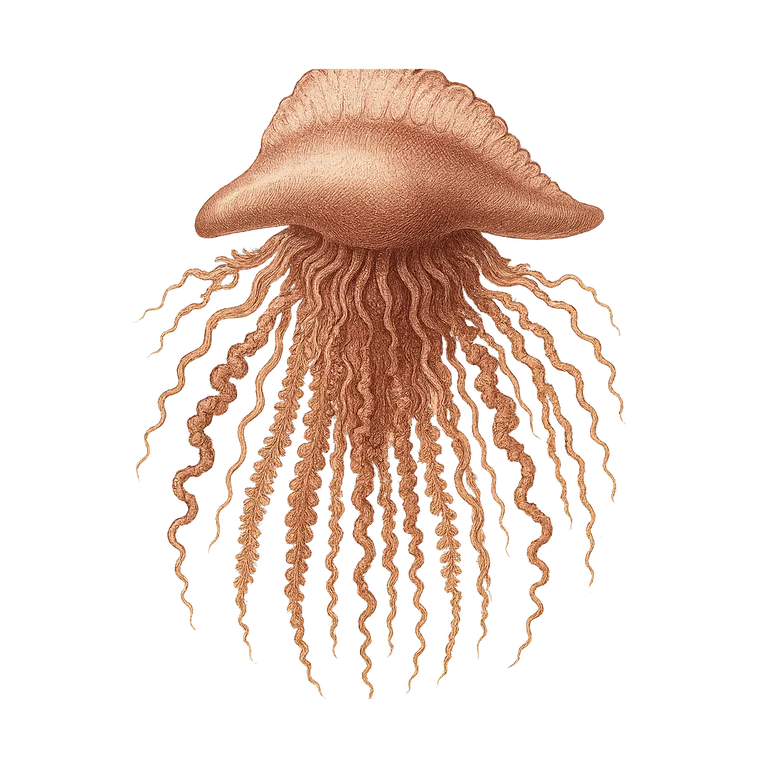
A Portuguese man o' war looks like one animal, but it is a colony of many small animals joined together. Each has its own job. Some catch food, some digest it, and some produce eggs or sperm.
One forms the float, a gas-filled bag up to thirty centimetres long that also works as a sail. It cannot swim or steer. The wind carries it. It is not a true jellyfish, though it is a close relative. Its sting is very painful, and rarely deadly.
There is a clever trick in the sail. Some are built to sail to the left of the wind and some to the right. So a wind that blows some of them ashore carries the others safely out to sea.
Below the float hang tentacles, usually ten metres long and sometimes thirty. The sting is extremely painful, and a dead one on a beach can still sting for days.
Its name comes from a Portuguese warship of the 1400s, which it was thought to look like under full sail.