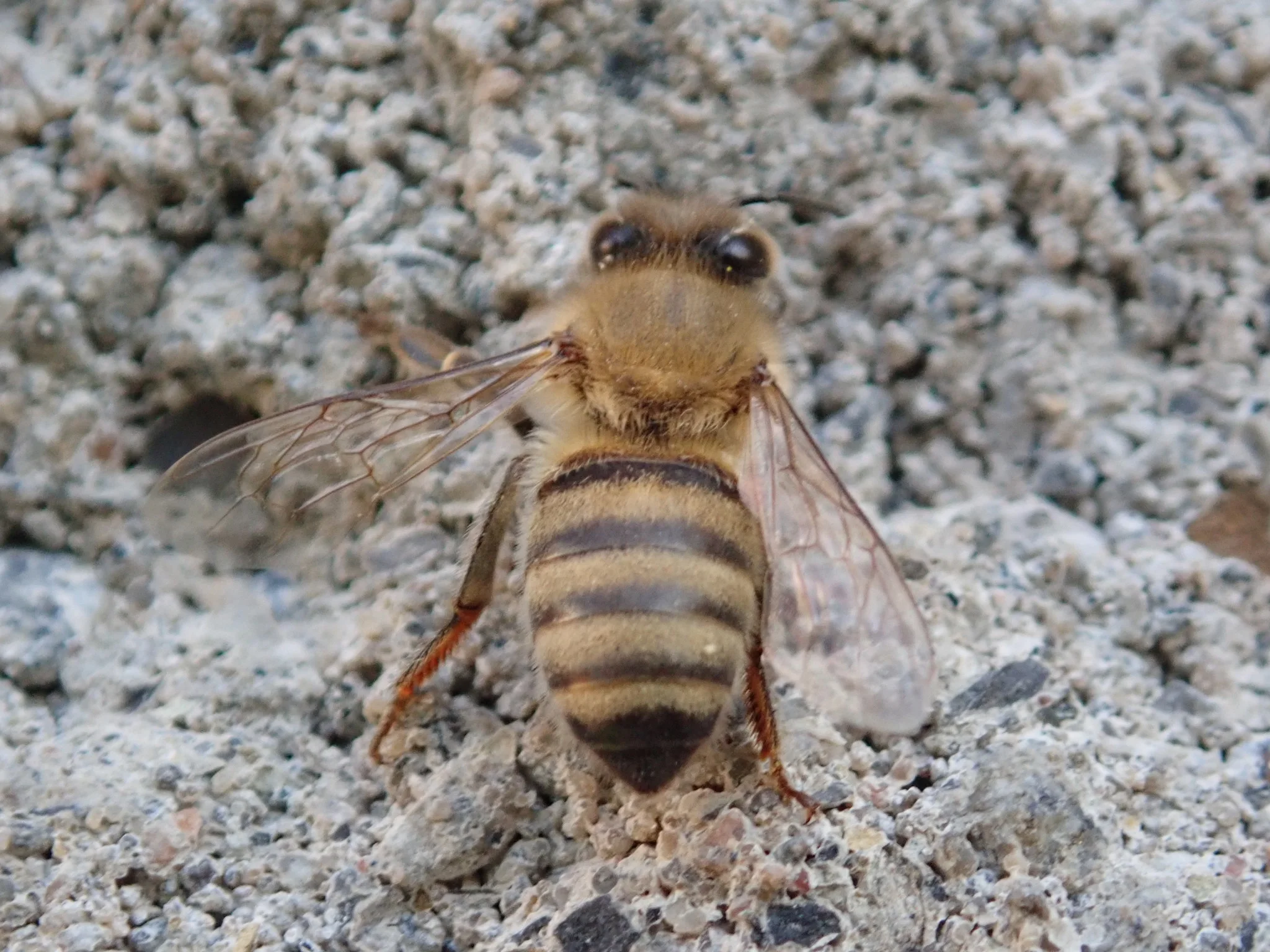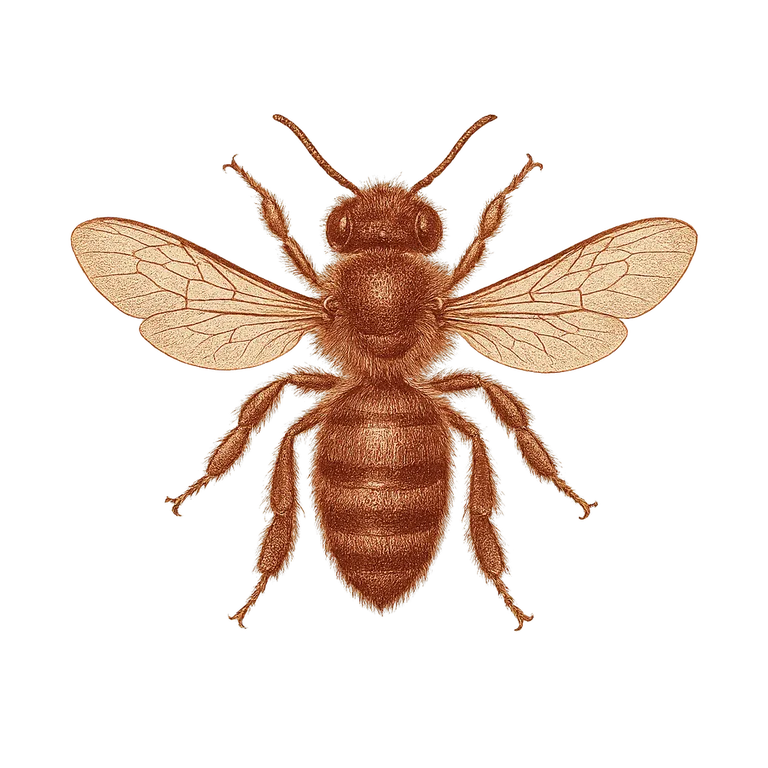
Imagine giving someone directions by dancing them, in the dark, on a wall. A honey bee does exactly that.
When a bee finds good flowers, she flies home to tell her sisters where they are. The hive is pitch black, and the honeycomb hangs straight up and down. So she dances on it. She runs in a straight line, waggling her body, then circles back and does it again. A honey bee is not a bumblebee. It is slimmer, and lives in much bigger colonies.
The angle of the run shows the direction. Running straight up the comb means fly towards the sun. Running to the right of straight up means fly that same angle to the right of the sun.
The length of the waggle shows the distance. The further the flowers, the longer she waggles. If she dances for a long time, she even shifts the angle to allow for the sun moving across the sky.
The Austrian scientist Karl von Frisch decoded this waggle dance and won a Nobel Prize for it in 1973. Different kinds of honey bee even dance in different dialects.