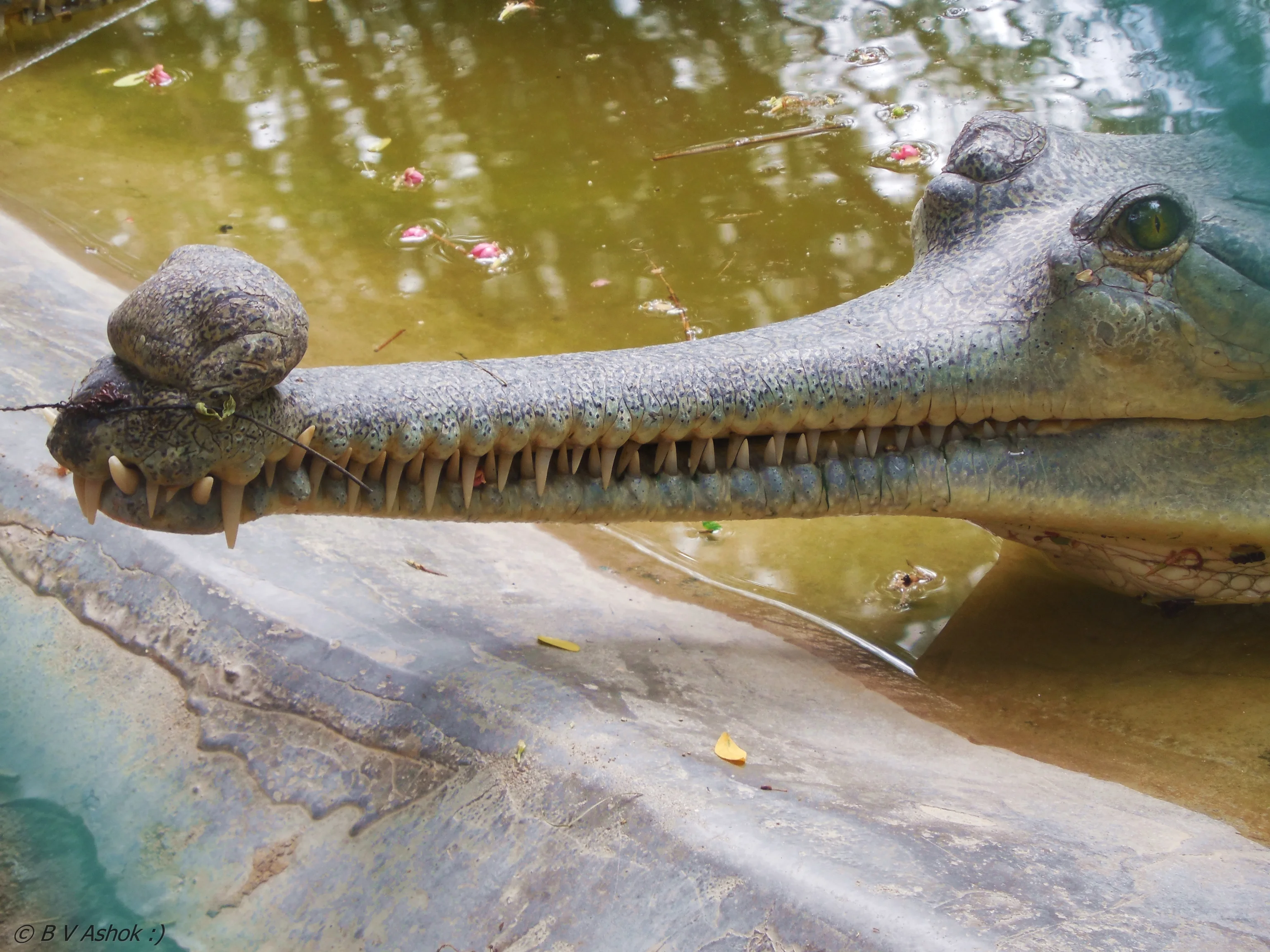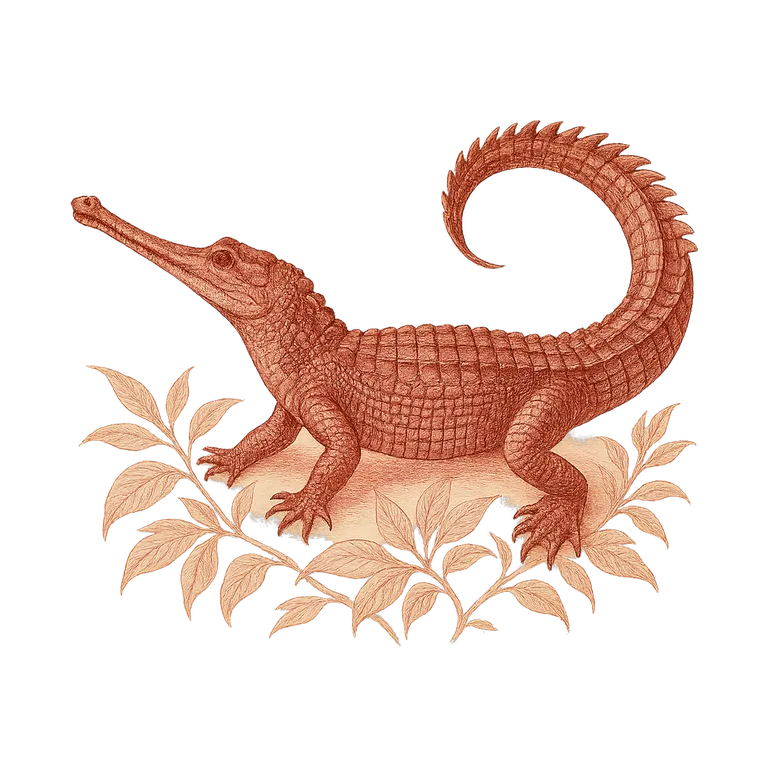
A grown male gharial has a bulb on the end of his nose. It is called a ghara, the Hindi word for a clay pot, which gives the animal its name.
The bulb makes his hiss louder, and the sound can be heard seventy-five metres away. A gharial is almost no danger to people. Its thin snout is made for catching fish.
The gharial is a relative of the crocodiles, with a very long, thin snout lined with about 110 sharp teeth. It eats mainly fish, sweeping its narrow jaws sideways through the water to catch them. Males can grow six metres long.
It is one of the rarest crocodilians. In 1946 there were 5,000 to 10,000 in the wild. By 1976 fewer than two hundred were left.
More than five thousand young gharials, bred in captivity, were later released, though few survived. In 2019 there were at most nine hundred, in rivers of India and Nepal. Dams, sand mining and fishing nets still threaten them.