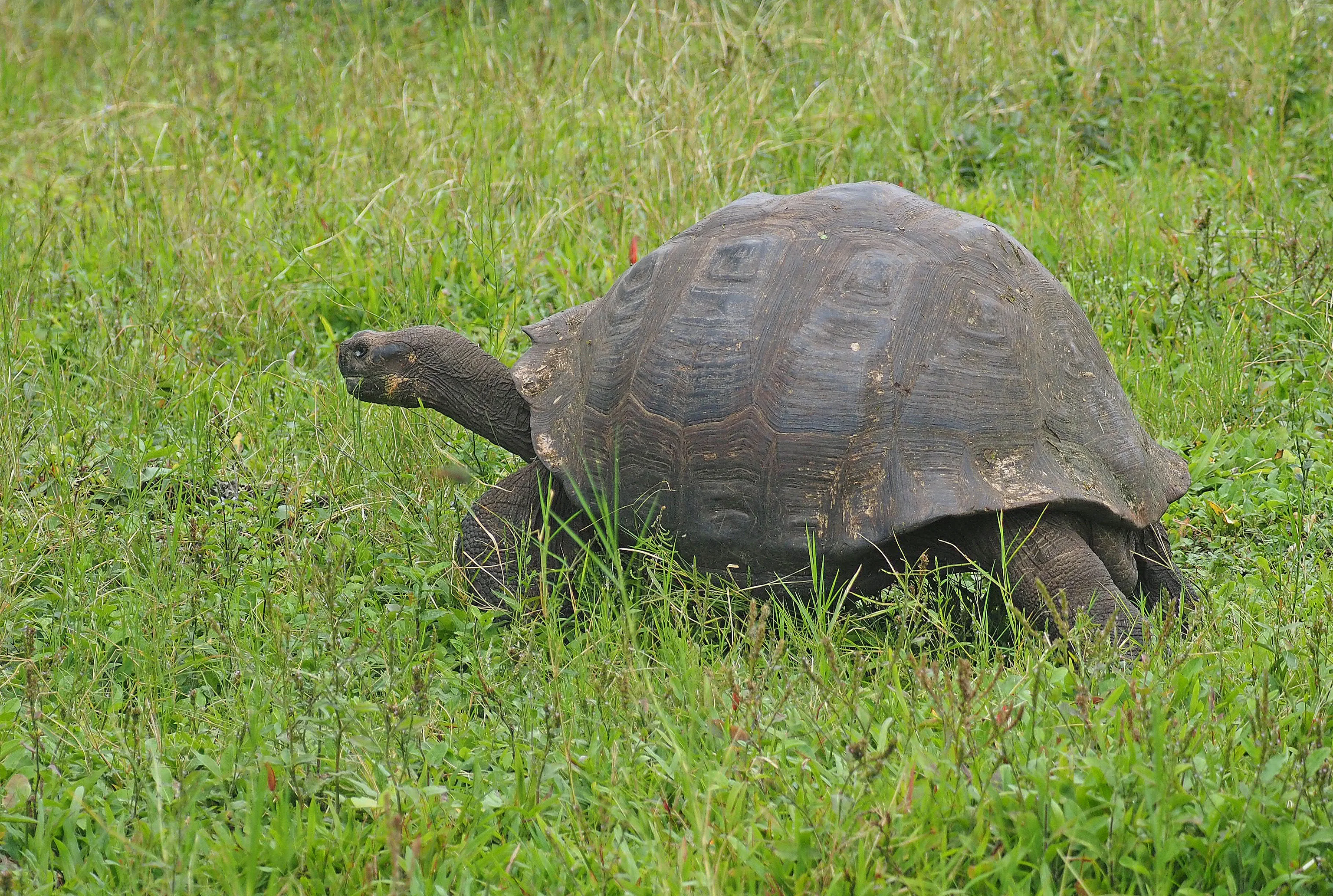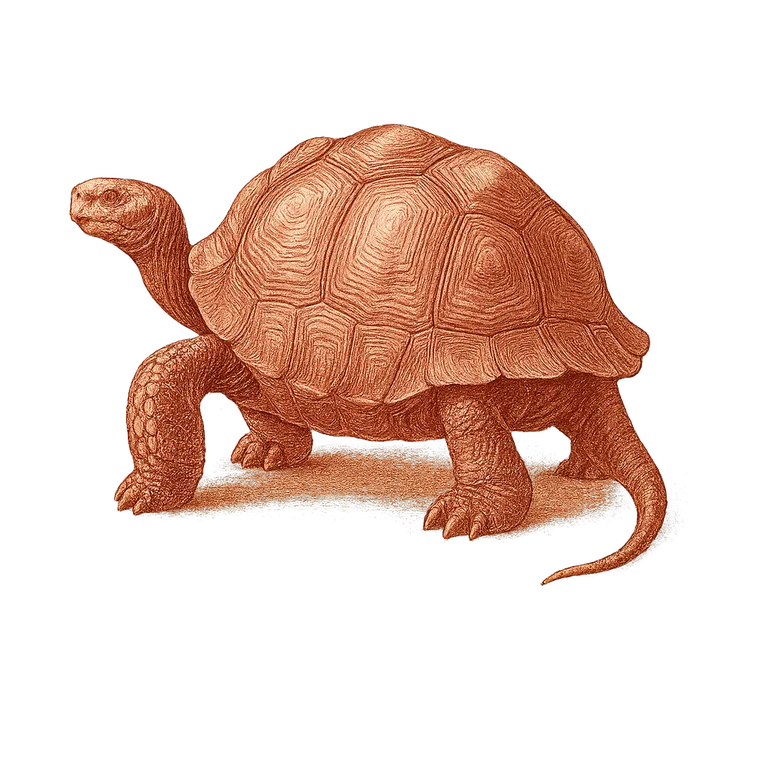
A Galápagos giant tortoise can survive a year without food or water. That toughness almost wiped them out.
Sailors discovered they could keep the tortoises alive in their ships' holds for months, as fresh meat for long voyages. About two hundred thousand were taken before 1900. Once there were a quarter of a million on the Galápagos Islands. By 1974, only about three thousand were left. A giant tortoise is not dangerous. It eats only plants.
On the island of Española, only fourteen adults remained in the 1960s. They were taken into a breeding programme. One male, Diego, fathered hundreds of young, and Española now has more than a thousand tortoises again.
A big male weighs about three hundred kilos, and they can live well over a hundred years.
In 1835 Charles Darwin was told that a tortoise's home island could be recognised from the shape of its shell. The islands themselves take their name from an old Spanish word for tortoise, galápago.