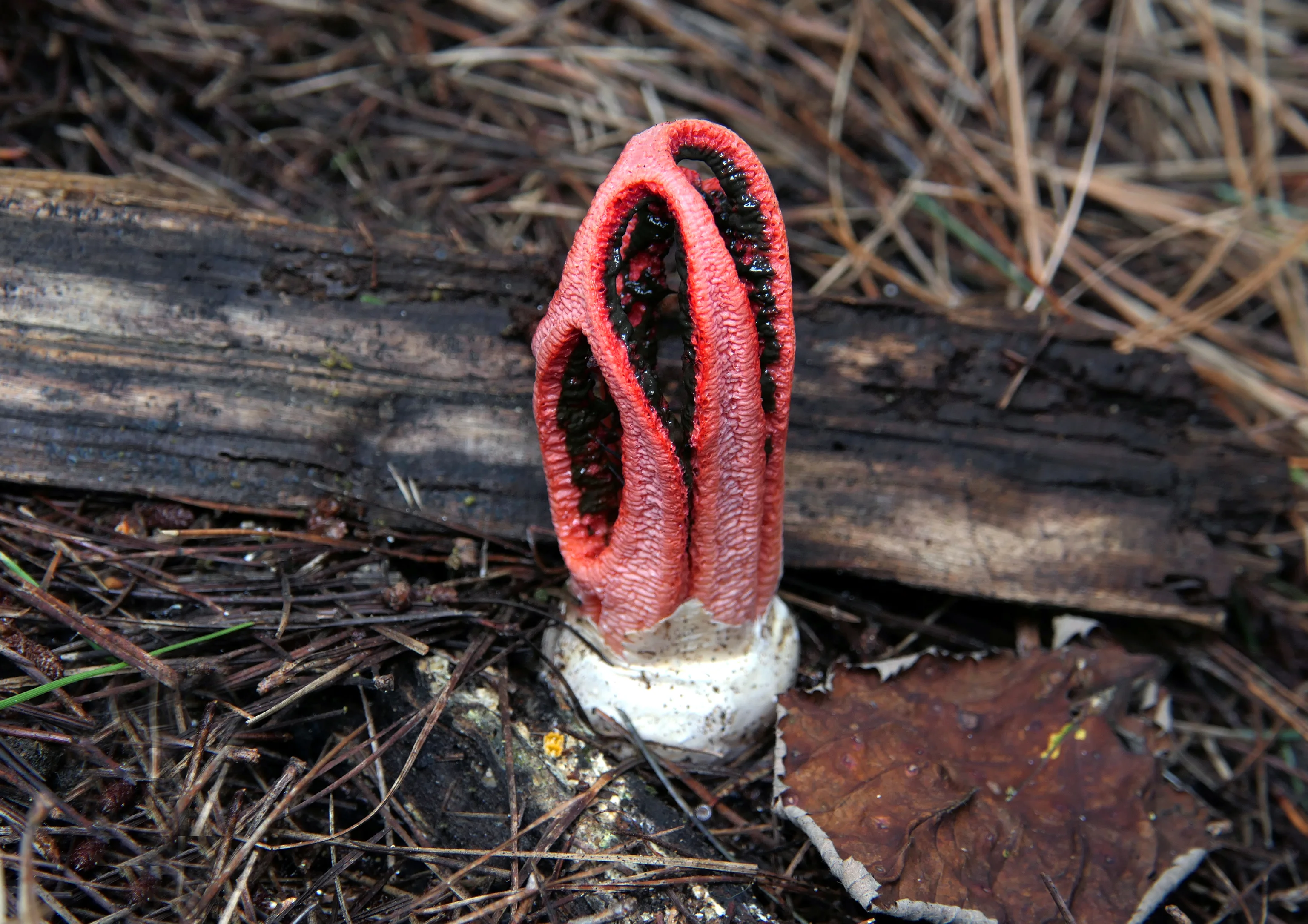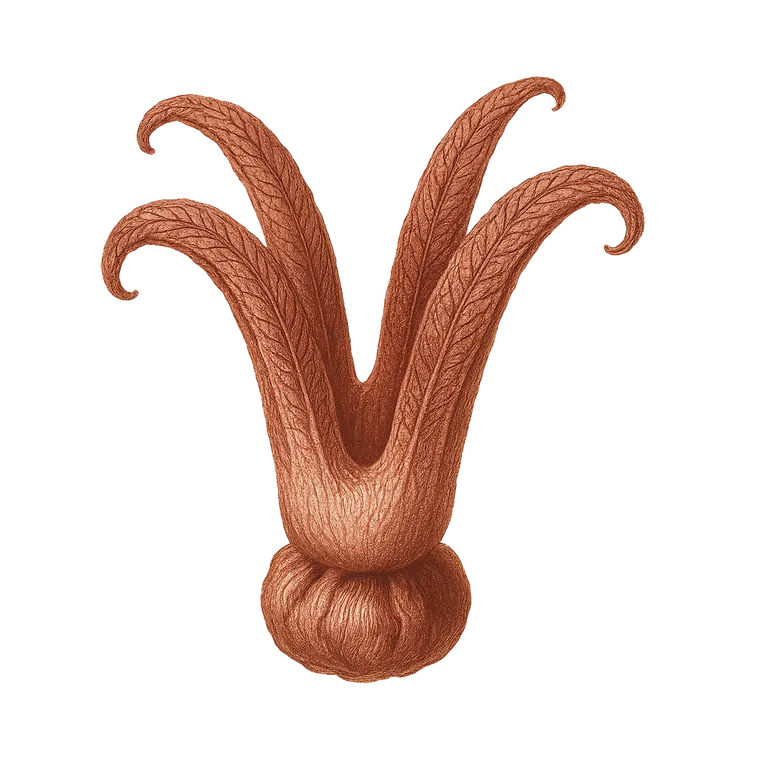
In 1914 a strange fungus appeared in Britain and France that nobody in Europe had seen before. It started as a white egg a few centimetres tall. Then the egg split open, and four to eight pinkish red arms unfolded, each about ten centimetres long.
The arms were smeared with a dark slime that smelled of rotting meat. People called it devil's fingers. Devil's fingers is not known to be poisonous, but nobody eats it, because of the smell.
It probably came from Australia or New Zealand, perhaps in wool or in supplies for the First World War.
The smell is how it spreads. Flies feed on the slime, and the spores pass through them unharmed. They are dropped wherever the flies go next.
Each fungus lasts only a day or two, but the species keeps spreading. From France it has reached Belgium, Germany, Austria, Switzerland, Italy and, lately, Poland and Ukraine. It is also called the octopus stinkhorn.