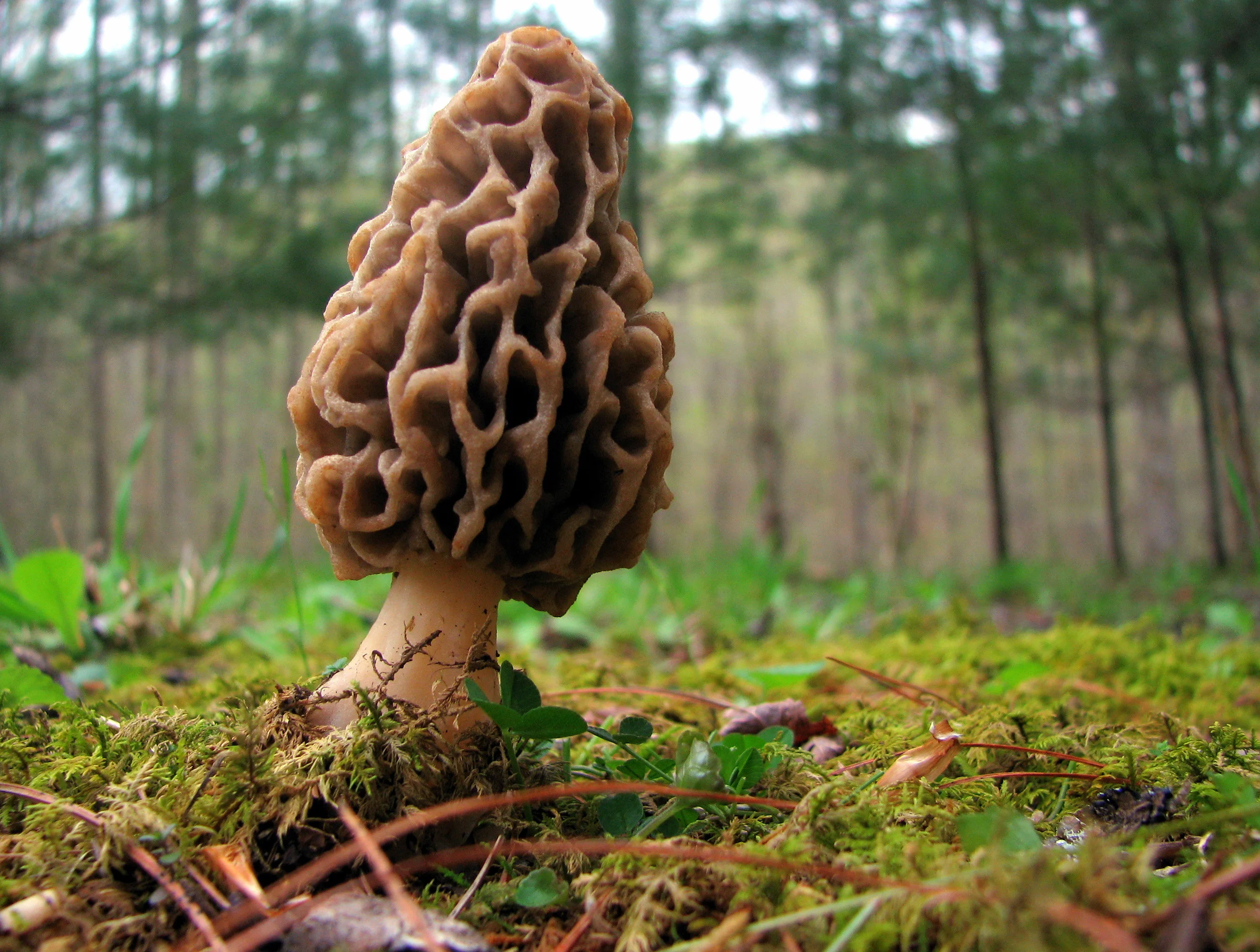
The morel tends to appear where something has gone wrong. It comes up in spring on disturbed ground, in old orchards and sometimes where a forest has recently burned. Big crops have been found around elm trees dying of disease.
Cooks prize it above almost any other mushroom, so people have tried for a long time to farm it. The first attempt began in 1892, in flowerpots in a cave, and produced a few morels nine years later. Farming has improved since, but most morels are still hunted in the wild. Morels are edible when cooked, but raw ones can make people ill.
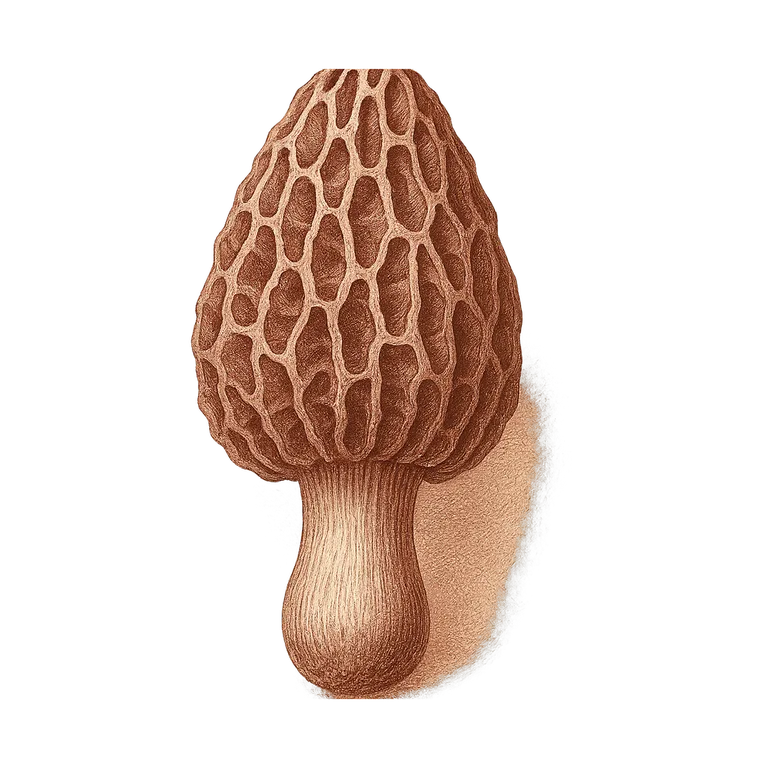
Its cap is a honeycomb of pits and ridges, and the whole mushroom is hollow, cap and stem together. Small creatures sometimes move in.
It must always be cooked, because raw morels upset the stomach. The false morel looks similar and is poisonous.
Minnesota made the morel its state mushroom, the first American state to choose one.