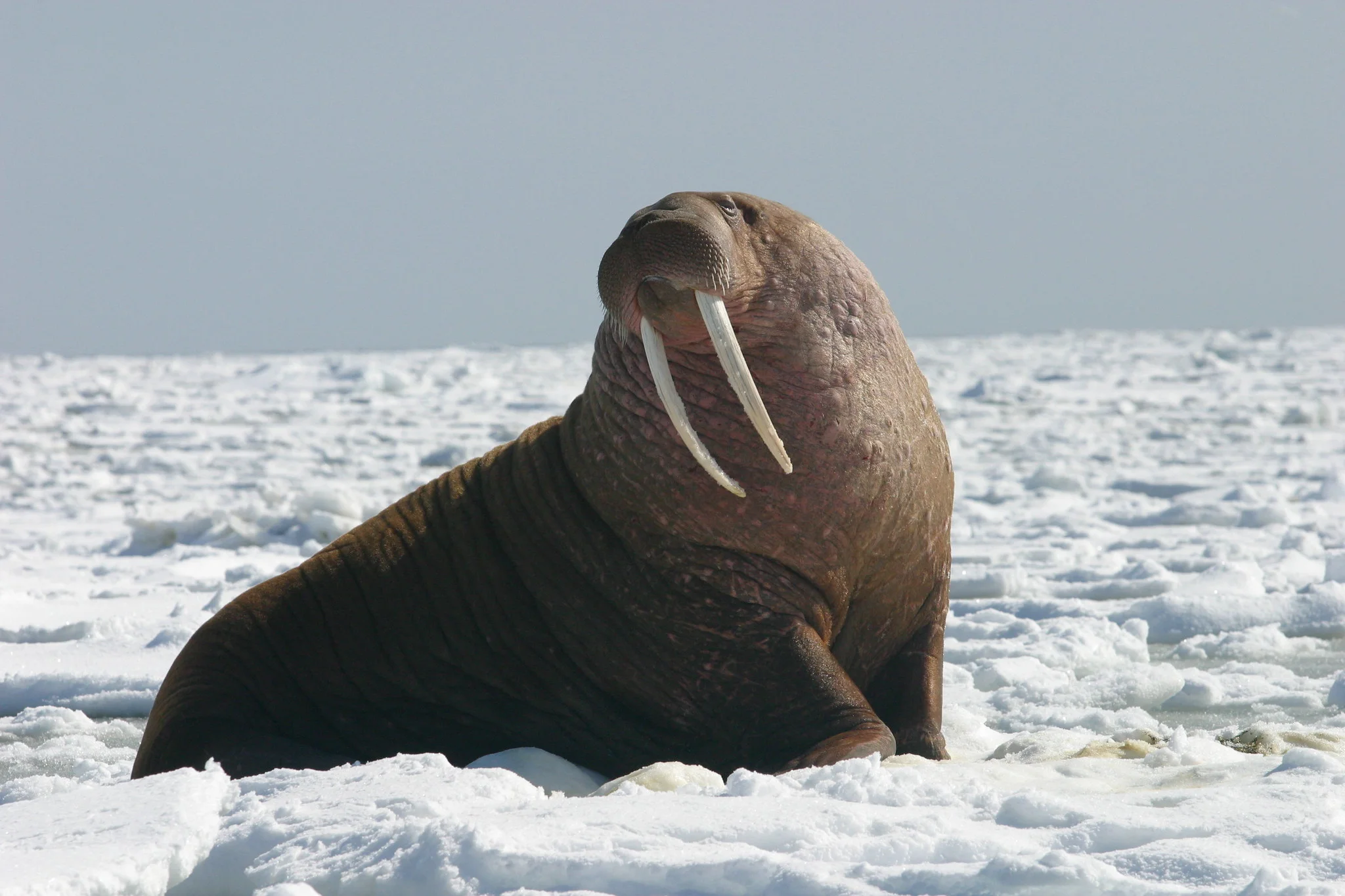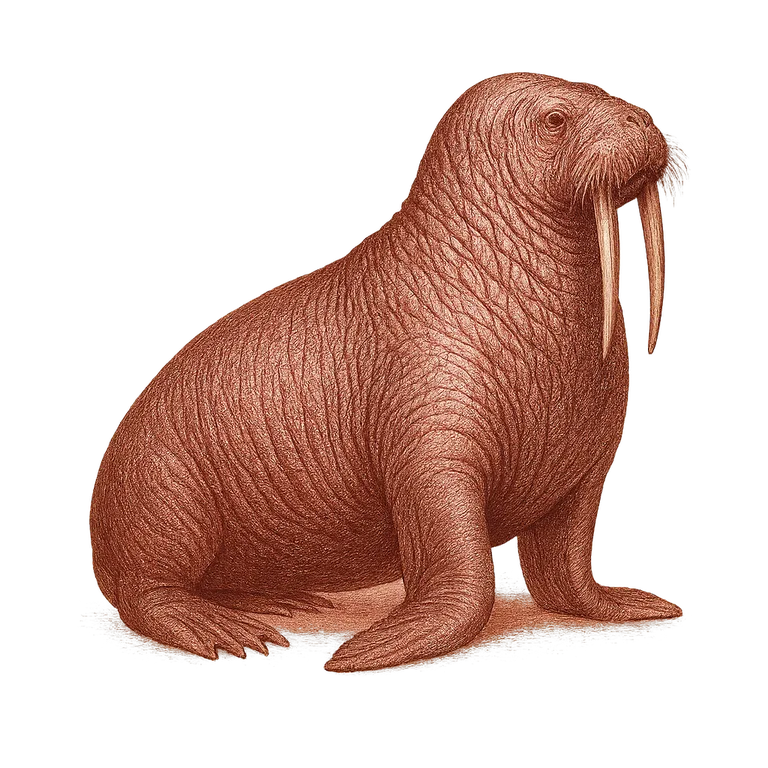
A walrus finds clams with its whiskers and sucks them out of their shells. It has four to seven hundred whiskers in rows on its snout. They can tell apart shapes a few millimetres across.
It feels along the dark seabed for clams. When it finds one, it presses its lips to the shell. Then it pulls its tongue back sharply, like a piston, and sucks the clam out. A walrus is not a seal, though they are related. It has a family of its own.
Its tusks are not for eating. They can grow a metre long. A walrus uses them to haul itself out of the water onto the ice, which is why its scientific name means tooth-walker. It also uses them to break breathing holes in the ice, and males fight with them.
An air sac in its throat works like a built-in float, so it can sleep upright in the water. In cold water its skin turns almost white, as blood moves away from it to keep the body warm.