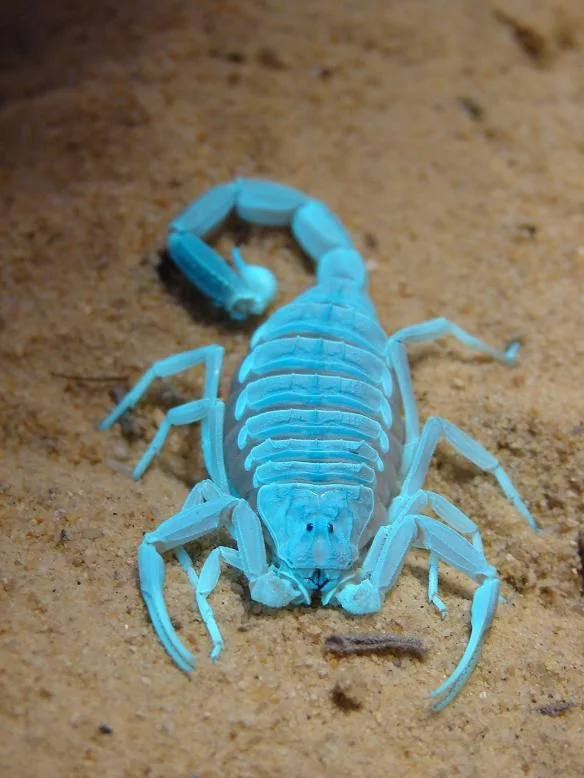
The venom of the deathstalker scorpion may help surgeons find cancer. Doctors have attached a part of the venom to a glowing dye. It sticks to cancer cells and makes them light up during an operation, so surgeons can see exactly what to remove.
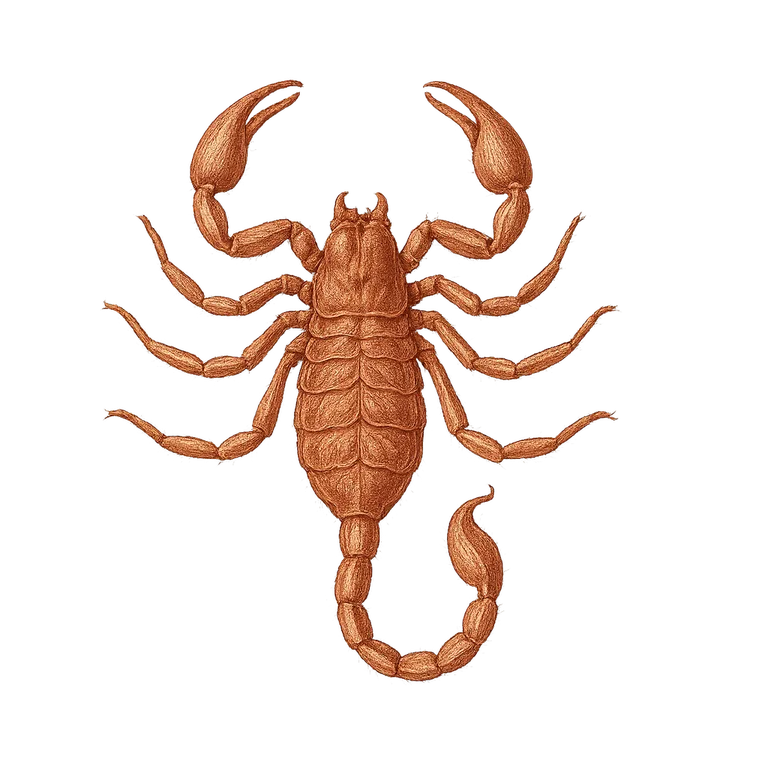
In tests on animals it picked out groups of just two hundred cancer cells. An ordinary scan needs more than half a million to see anything. Trials in people began in 2015. A scorpion is not an insect. It is an arachnid, a relative of spiders, with eight legs.
The deathstalker is a yellow scorpion about six centimetres long. It lives in deserts and dry scrub from North Africa across the Middle East to India.
It is one of the most dangerous scorpions in the world, and its sting is extremely painful. A healthy adult usually survives, but children, older people and those with heart problems are in much greater danger.