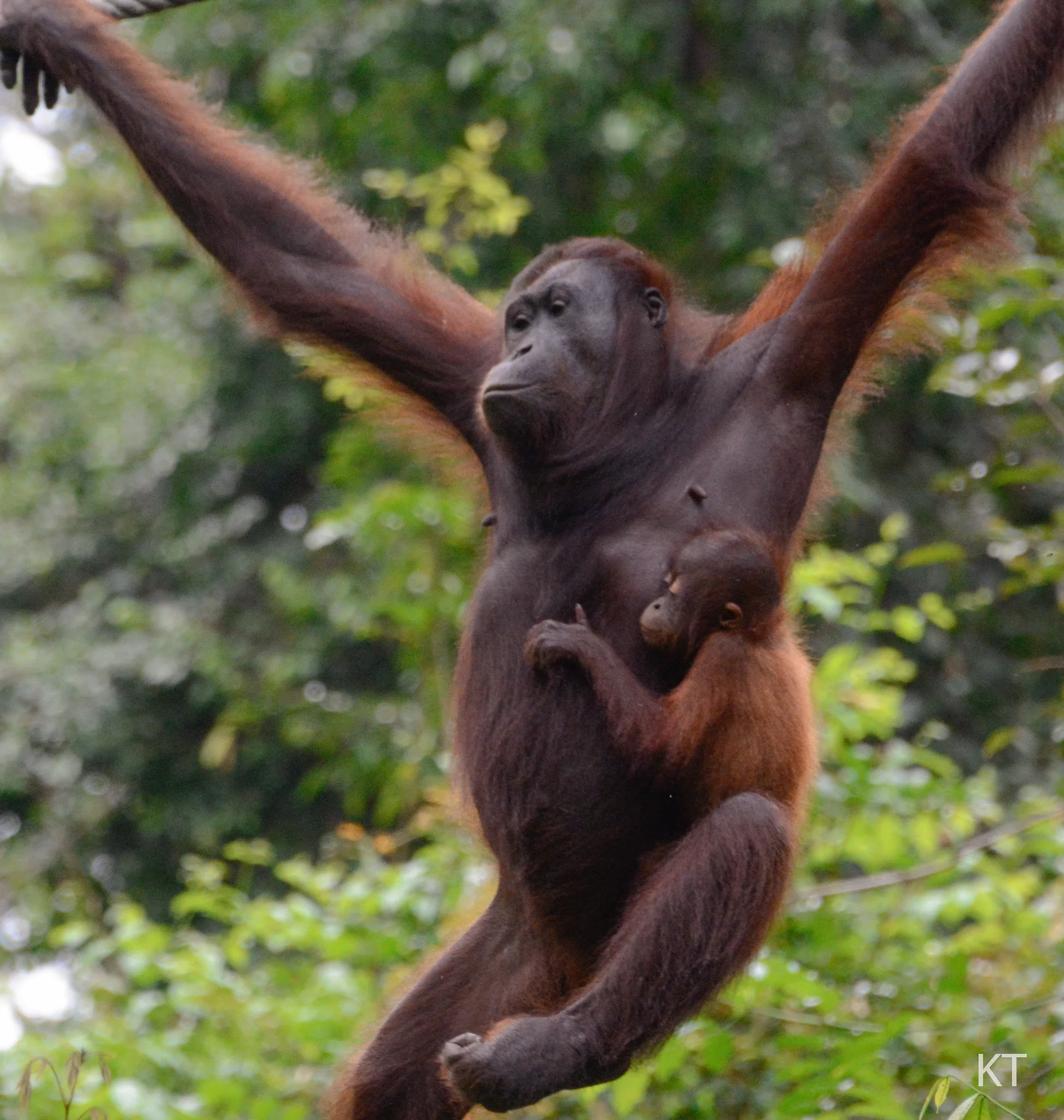
In 2022 a wild orangutan in Sumatra called Rakus had a wound on his face. Scientists watched him chew the leaves of a vine known locally as a medicine and press the pulp onto the wound. Within five days it had closed, and within a few weeks it had healed.
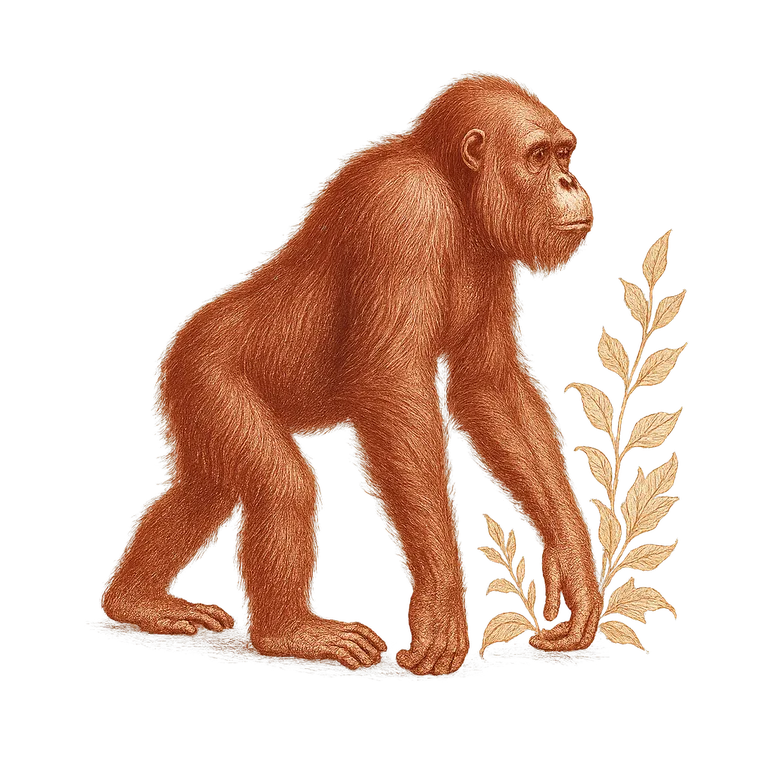
It was the first time a wild animal had been seen treating a wound with a plant known to have healing properties. An orangutan is an ape, not a monkey, and the largest animal that lives in trees.
It fits with what is known of orangutans. They use sticks to dig insects out of holes and seeds out of fruit, and sometimes keep a tool for later. Each night, an orangutan builds a nest of branches to sleep in. It may add a pillow, a blanket and even a roof against the rain.
Young orangutans learn all this from their mothers, and they have time to. A mother may nurse her child for up to eight years, longer than any other animal.
Its name comes from Malay words meaning person of the forest. All three kinds of orangutan are critically endangered.