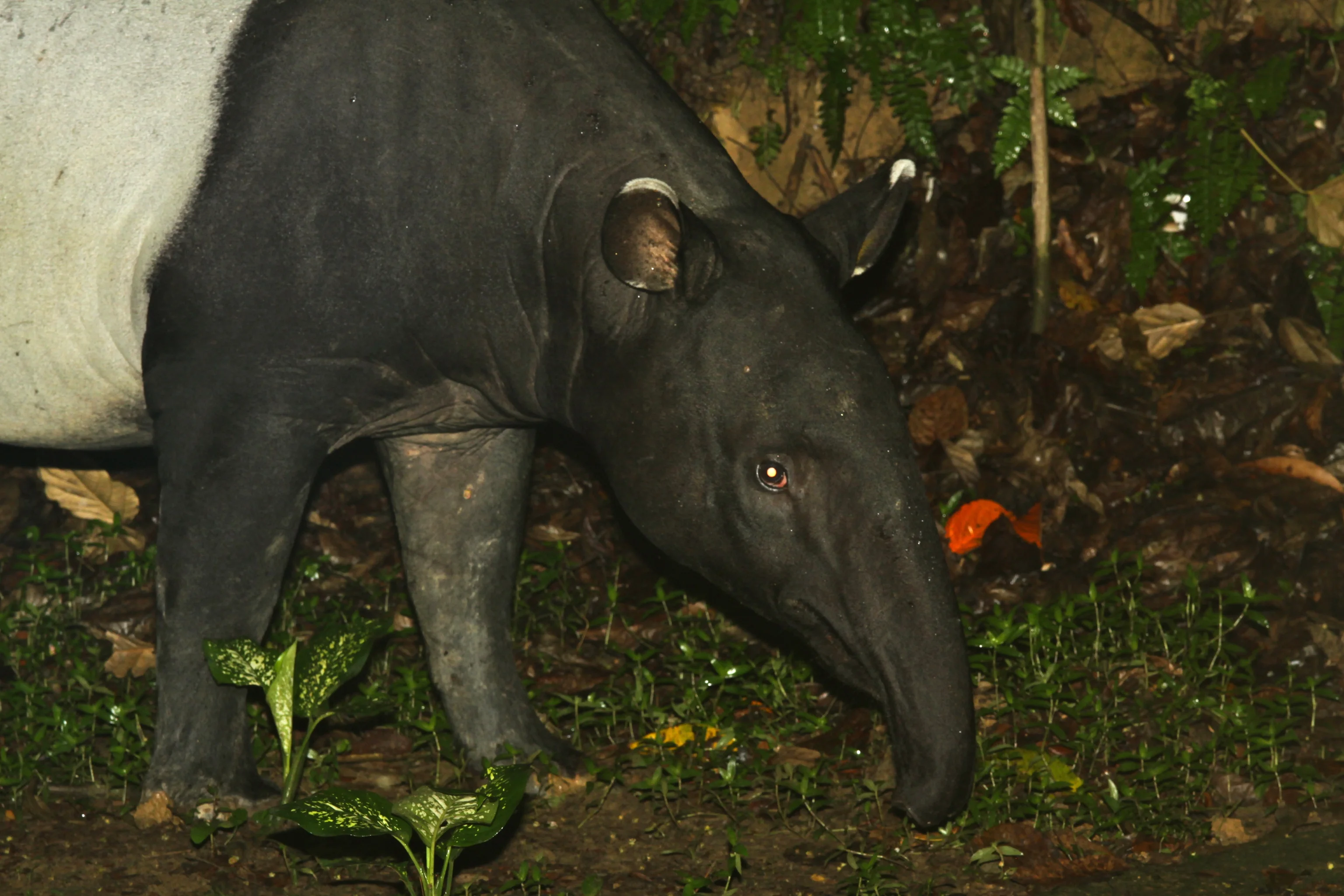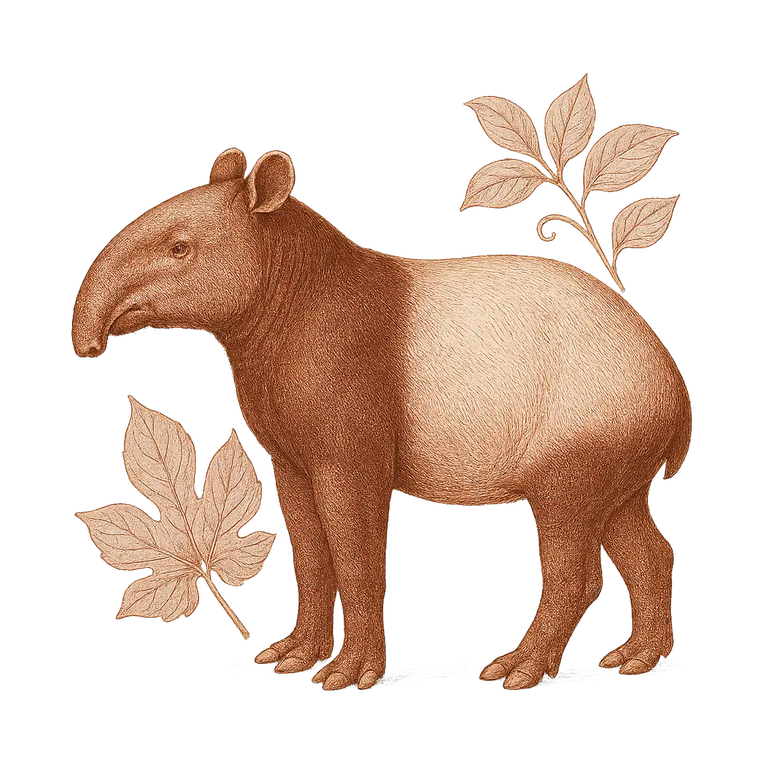
The Malayan tapir is black at the front, black at the back and white in the middle. It sounds like a terrible disguise, but in the shadowy forest the patches break up its outline. Lying still, a tapir can pass for a large rock.
Its calf wears a different disguise. It is brown, covered in white stripes and spots, like a watermelon. The pattern matches the dappled light of the forest floor and fades by the time it is six months old. A tapir is not an anteater. Its nearest relatives are horses and rhinos.
It is the largest tapir, and the only one living outside the Americas. Its nose and upper lip form a short, bendy trunk for grabbing leaves. It sees poorly but hears and smells very well, and it loves to swim.
Fewer than 2,500 adults are left in the forests of Malaysia, Thailand, Myanmar and Sumatra.