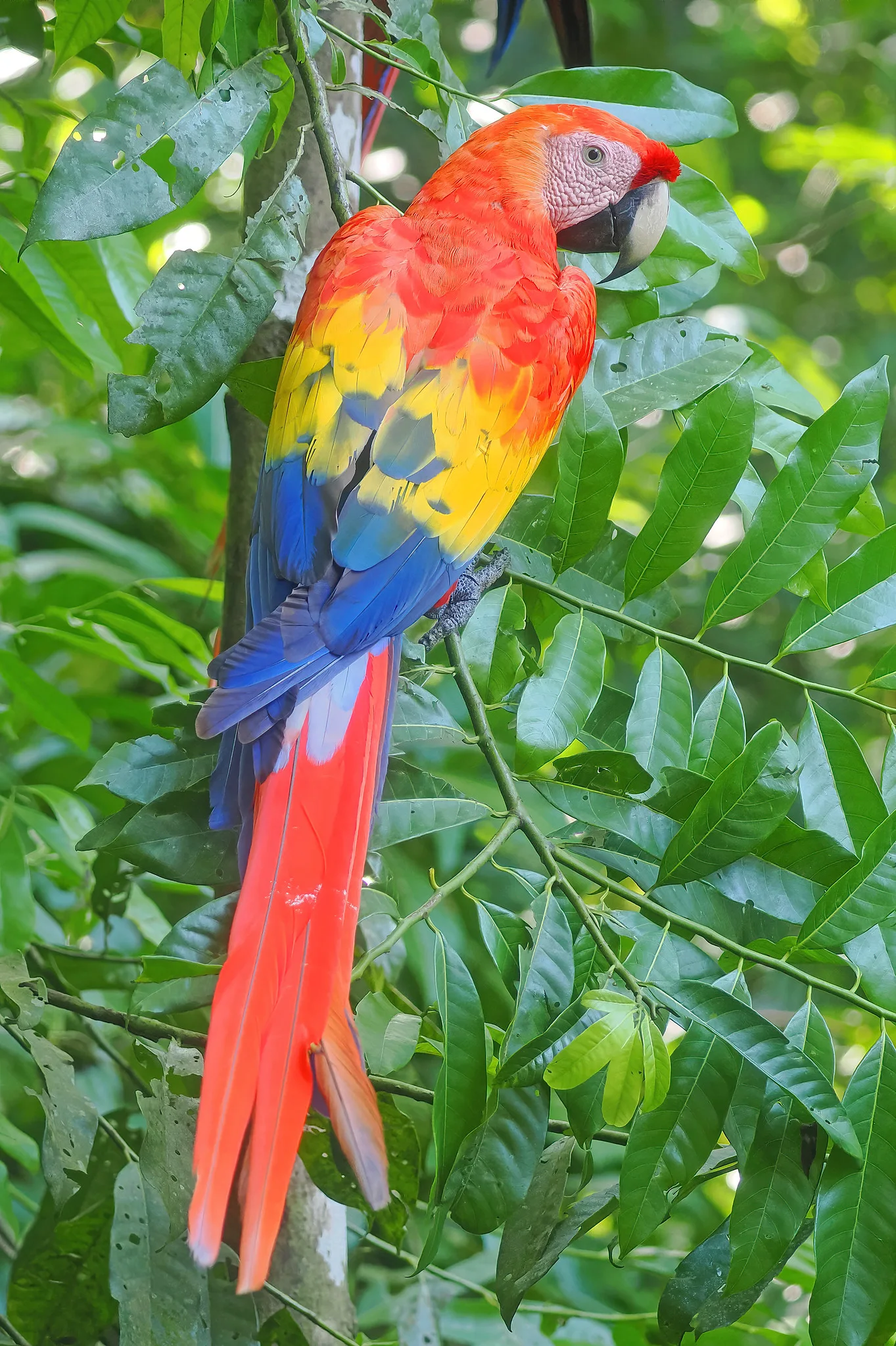
In the Amazon rainforest, scarlet macaws gather on bare riverbanks to eat clay. The clay gives them salt and minerals that are scarce in their diet of fruit, nuts and seeds.
The scarlet macaw lives in the lowland forests from southern Mexico to Brazil. It is about eighty-four centimetres long, and more than half of that is tail. Its face is bare white skin, and its screams carry for kilometres. A macaw is a parrot, one of the largest.
A pair stays together for life, and you usually see them flying side by side above the trees. A chick leaves the nest at about three months old and stays with its parents for about a year more.
People have loved these birds for a long time. About a thousand years ago they were being bred at Paquimé, in northern Mexico, where their pens and bones have been found. In captivity a scarlet macaw can live seventy-five years. It is the national bird of Honduras.