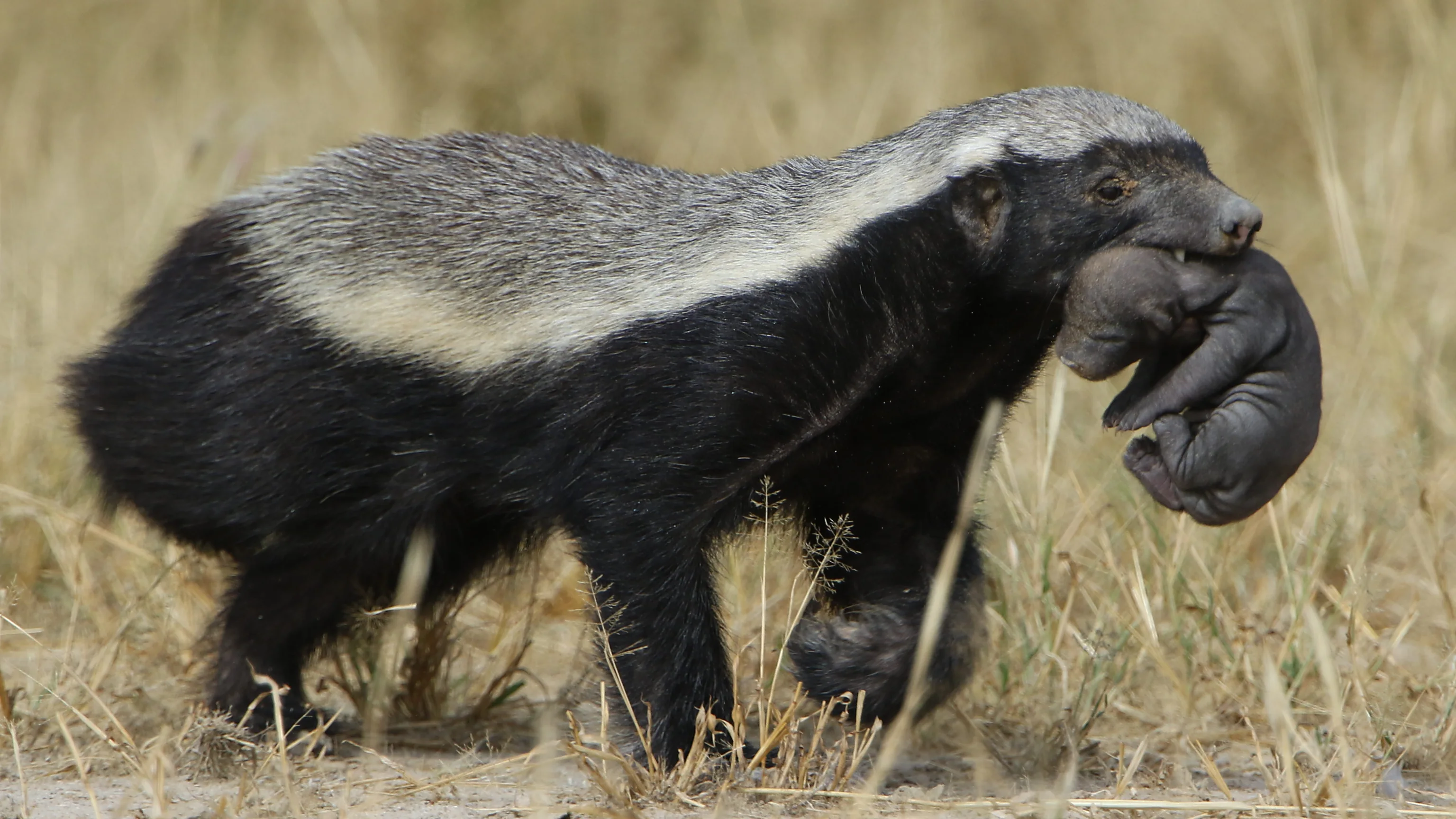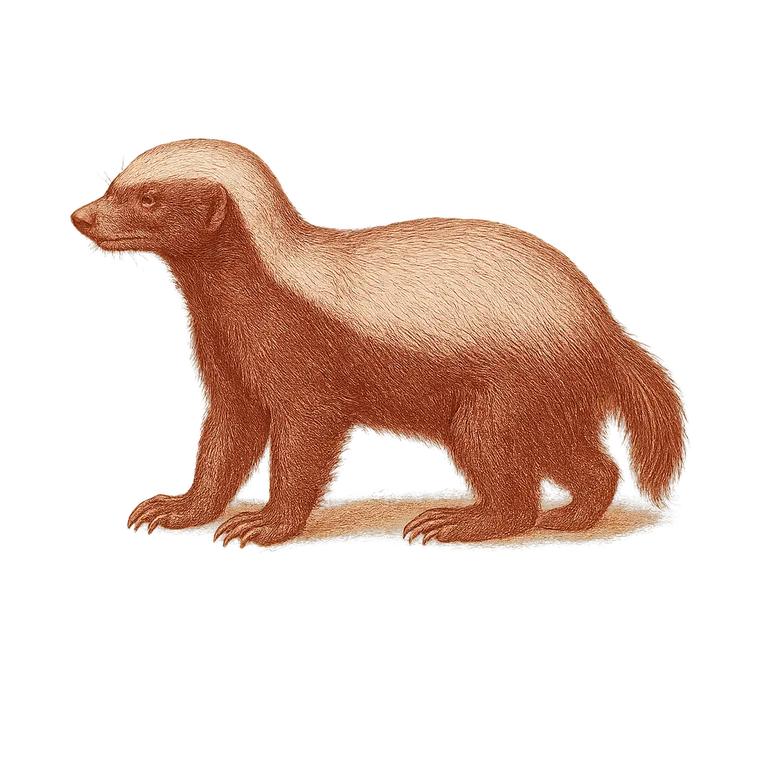
A honey badger's skin is very thick, about six millimetres at the neck, and so loose that it hardly fits. If a predator grabs one, the honey badger can twist round inside its own skin and bite back. The only safe grip is at the back of its head.
It has a temper to match. When cornered, it will attack almost anything, and has been reported driving off lions and hyenas. A honey badger can survive bites that would kill most animals its size, though it is not fully immune.
Bee stings and porcupine quills rarely get through its tough hide. It also kills and eats venomous snakes, including cobras and black mambas, and can recover from bites that would kill other animals.
It is named for raiding bees' nests, where it eats the honey and the grubs. An old story says a bird called the honeyguide leads it to the hives. There is no good evidence for it.
Despite its name, it is not a true badger. Its closest relatives are the martens and weasels.