Every morning, a family of lar gibbons goes to the edge of its patch of forest and sings. The mother and father sing a duet called the great call, which can be heard more than a kilometre away.
The song works like a fence. It tells other gibbon families that this patch of forest is taken. Each kind of gibbon has its own song, and each pair sings it in its own way. A gibbon is an ape, not a monkey. It is one of the lesser apes.
The song also carries warnings. When a tiger, a clouded leopard, a python or an eagle is near, the pair adds sharp new notes.
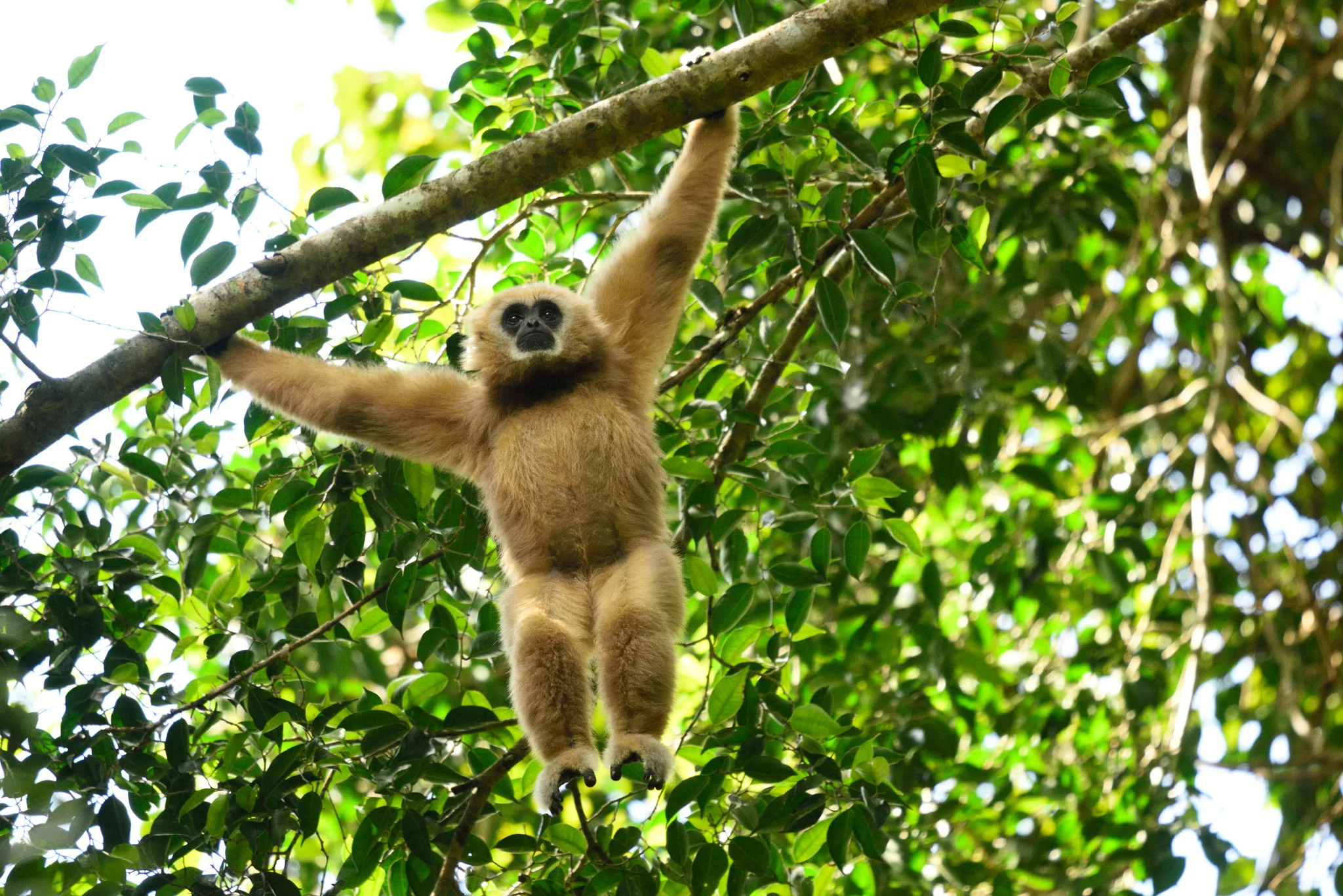
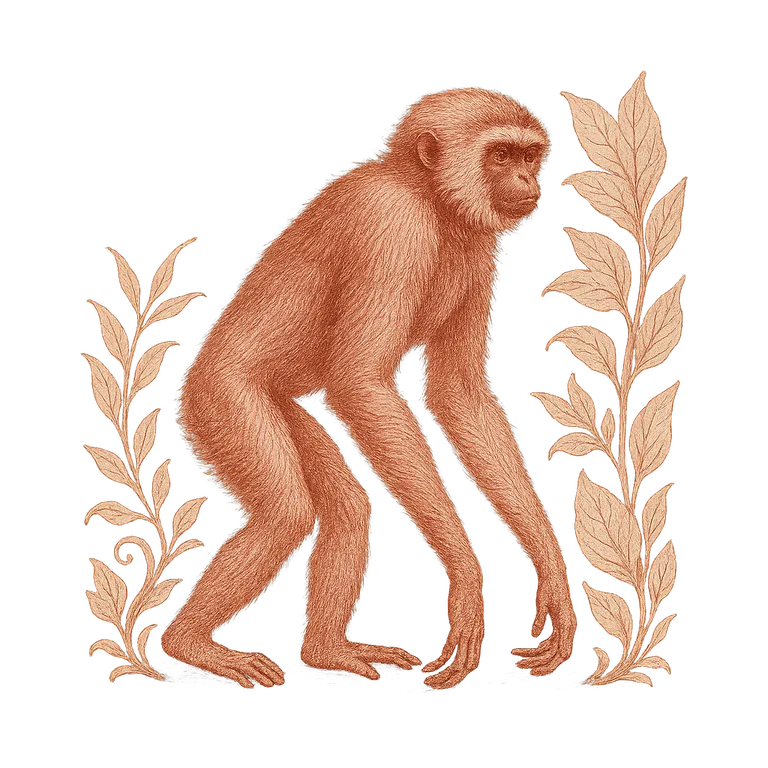
A gibbon is a small ape, with no tail. Its arms are very long, and it swings hand over hand beneath the branches, faster than any other ape. It seldom comes down to the ground. When it does, it walks upright with its arms raised over its head for balance.
The lar gibbon of South-East Asia can be black, brown or sandy, but its hands and feet are always white.