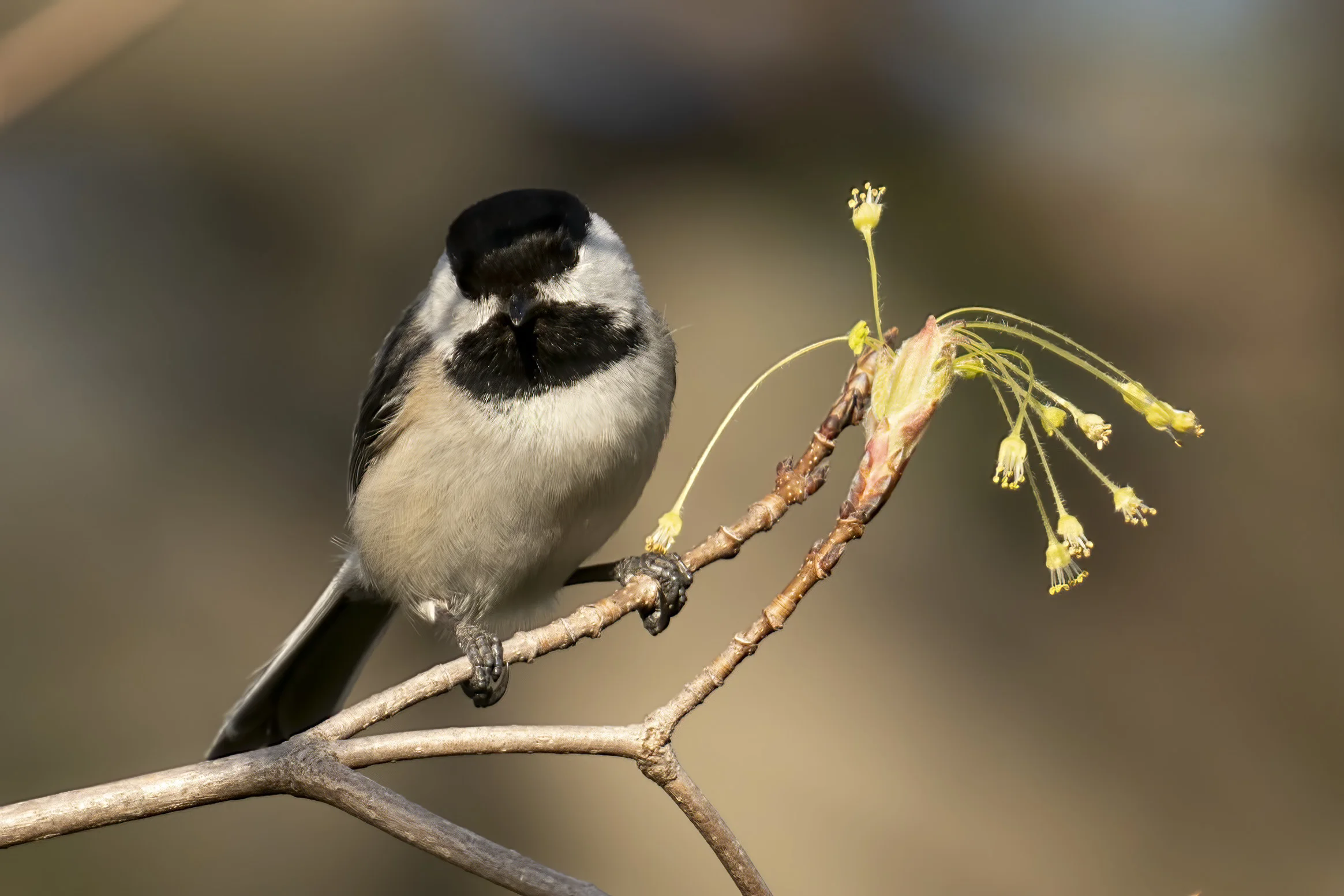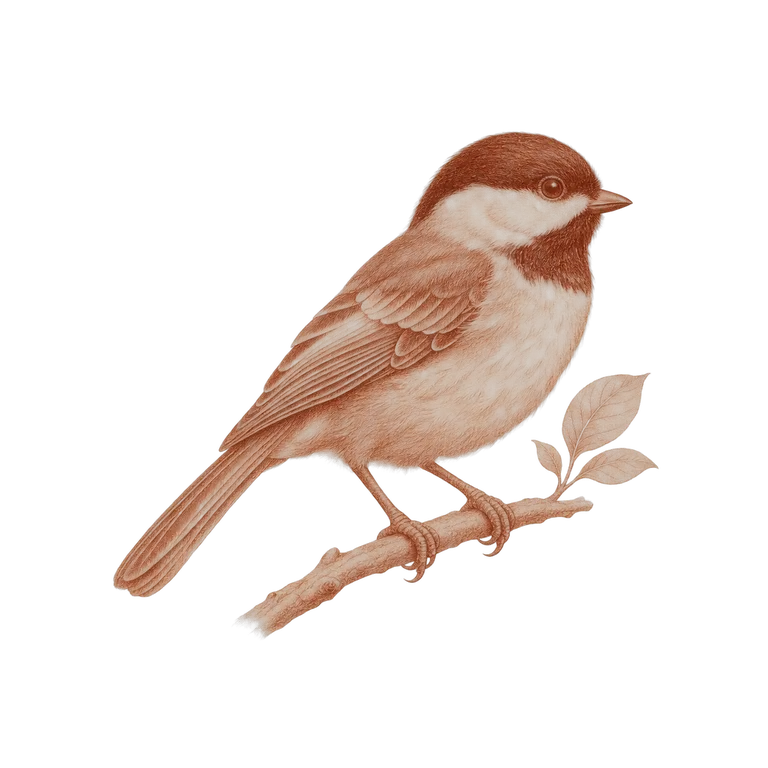
The chickadee calls its own name, chick-a-dee. Listen to how the call ends.
The dees at the end are a code. The more of them there are, the greater the danger. A chickadee is not a sparrow. It is a tit, a cousin of the blue tit.
An ordinary alarm has two. A small, dangerous hawk or owl gets four. One warning about a pygmy owl, a deadly enemy, ran to twenty-three.
Other birds know the code. Nuthatches and woodpeckers hear the alarm and act on it.
The chickadee has a second gift, and that is memory.
It hides food one piece at a time, in bark, dead leaves and knotholes. It can remember a hiding place for up to twenty-eight days.
How does so small a head hold so much?
The part of its brain that remembers places changes with the seasons. It is biggest in October and smallest in February. Chickadees from harsh places such as Alaska have a bigger one.
The bird weighs only ten to fourteen grams, and winter nights are cold. So it turns its own heat down. On a cold night its body can cool by as much as twelve degrees.
A code, a map in its head and a way to turn the heat down. All in a bird that says its own name.