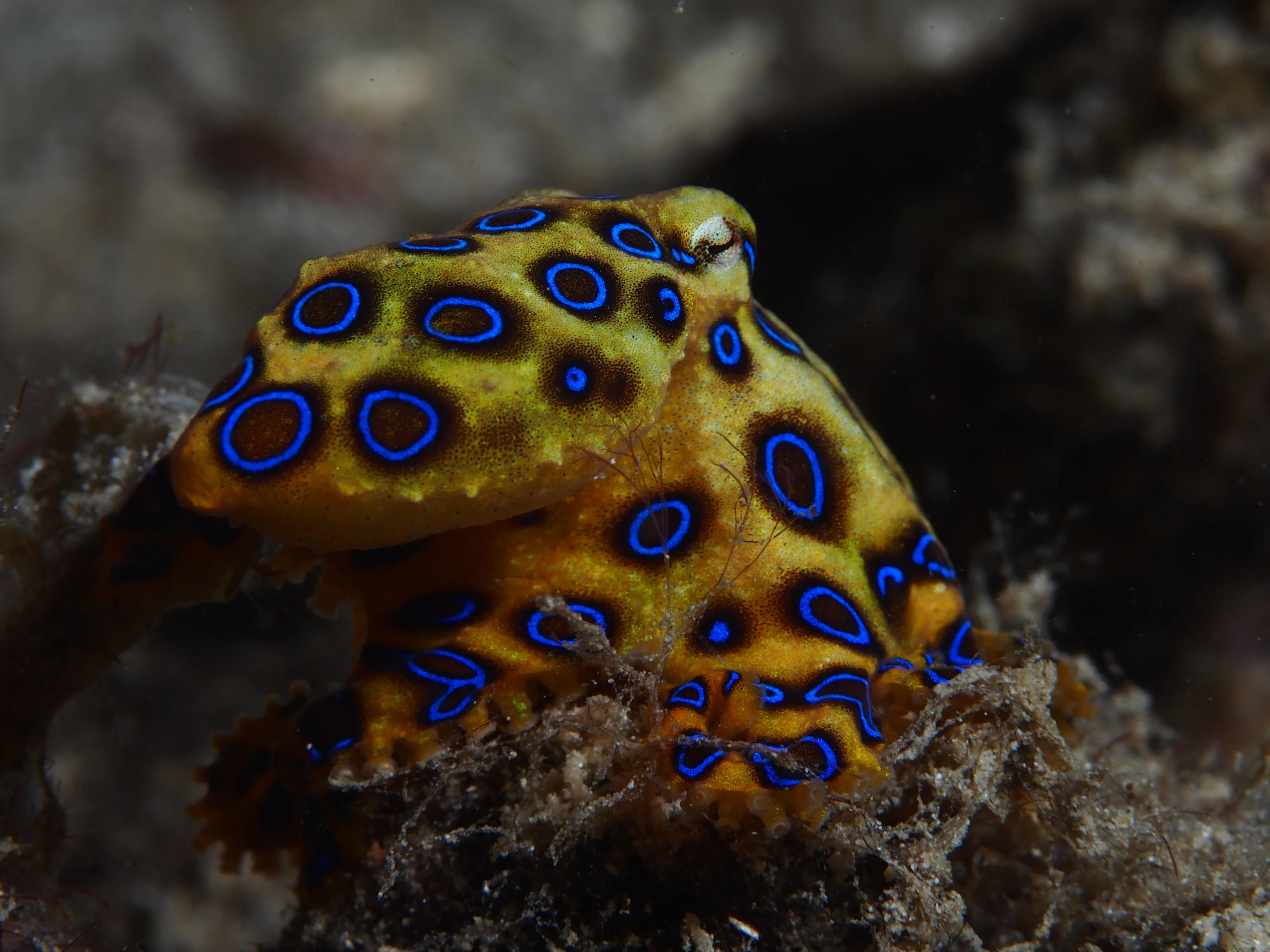
At rest, the greater blue-ringed octopus is small and yellowish brown. When disturbed, it turns bright yellow, and its sixty or so rings flash electric blue in a third of a second.
The blue comes from layers of reflective cells in its skin. Muscles normally keep each ring covered, and when they relax, the blue shows. It is a warning. Its bite is not always fatal. With quick help to breathe, most people survive.
It is one to heed. Its bite is tiny and often painless, but it can kill a person. The venom is the same as the one in pufferfish, made by bacteria living inside the octopus. It stops muscles from working, including the ones used for breathing, while the victim stays fully awake. There is no antidote.
Yet if someone keeps the victim breathing until the venom wears off, they usually make a full recovery.
It lives in warm, shallow seas around Australia and the western Pacific. The mother guards her eggs without eating, and dies when they hatch.